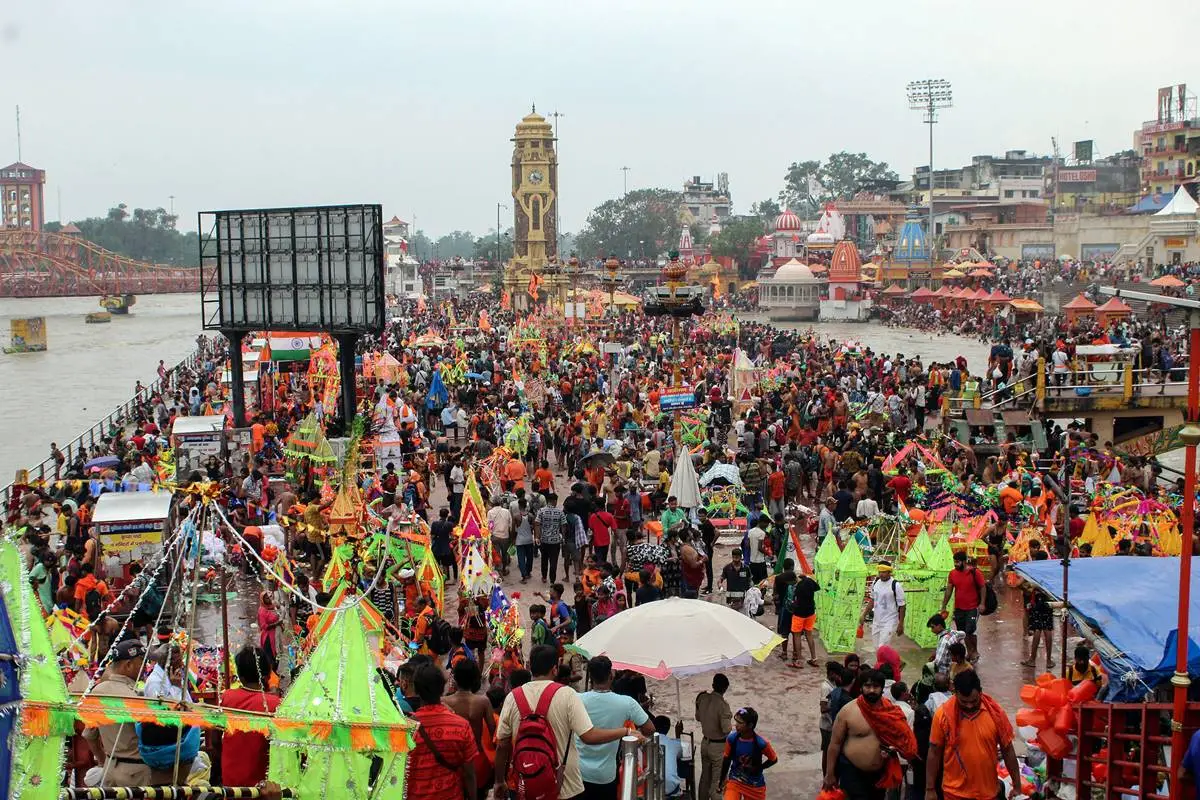
Varanasi Traffic Diversions, Road Caves Add Woes for Shrawan Pilgrims
Pilgrims and kanwariyas heading to Varanasi during the sacred Shrawan month may face significant hardship navigating key pilgrimage routes. Severely damaged roads near Godowlia, ongoing ropeway construction, and poor drainage systems are creating major bottlenecks. With the footfall expected to surge from July 11, officials are planning diversions through longer routes, raising concerns about safety, convenience, and accessibility for devotees, especially in the event of rain-induced waterlogging and infrastructure failure.
As the holy month of Shrawan approaches, critical pedestrian routes in Varanasi are in a state of disrepair. The Girjaghar-Godowlia stretch, through which a majority of pilgrims access the Kashi Vishwanath temple, remains virtually impassable due to extensive damage caused by ropeway construction. The Ghodanala drainage structure remains unrepaired, and one lane has completely collapsed, forcing foot traffic into a narrow two-metre corridor. Construction debris, steel structures, and parked e-rickshaws further restrict movement. Ropeway piling for the T29 tower triggered a deep water seepage incident on June 14, halting work and prompting nearby evacuations. Since then, repairs have been minimal, with investigations into the water source still ongoing. Amid this, authorities plan to reroute pilgrims several kilometres through Sonarpura and Jangambadi, significantly extending travel time. The disorganised ground conditions and incomplete repairs could turn into a crisis if heavy rainfall coincides with peak pilgrimage days in the coming weeks.
Infrastructure failure is not limited to inner-city pilgrimage routes. The Marhauli-Manduadih-Rathyatra path, preferred by pilgrims arriving from Prayagraj, is already prone to long-term waterlogging after even brief spells of rain. Although barricades for pedestrian traffic were erected, critical drain-cleaning operations have yet to begin. This delay could lead to flooding and bottlenecks during high pilgrim footfall. Meanwhile, a significant section of the Gilat Bazar road—an arterial route connecting Varanasi to Lucknow and Jaunpur—recently caved in, disrupting vehicle access. This route is crucial for receiving thousands of kanwariyas who travel to Varanasi by road. With key approach roads damaged and repair work incomplete, the city’s ability to handle the surge in Shrawan pilgrims is under strain. Civic authorities may face logistical challenges managing diversions, pedestrian safety, and emergency accessibility. Unless proactive drainage, traffic, and safety measures are fast-tracked, the spiritual journey for many could become physically exhausting and potentially hazardous.
With just days to go before the Shrawan influx begins, Varanasi faces serious infrastructural challenges that threaten to disrupt the annual pilgrimage flow. Damaged roads, stalled repairs, uncleaned drains, and last-minute diversions could significantly impact the spiritual experience for kanwariyas and pilgrims. If rains persist, these vulnerabilities may intensify, leading to crowd mismanagement and safety concerns. Authorities must accelerate repair timelines, clear encroachments, and improve pedestrian conditions to ensure smooth movement. Without timely intervention, the city’s preparations may fall short, leaving thousands to navigate unsafe and prolonged routes during one of Hinduism’s most sacred annual pilgrimages.