


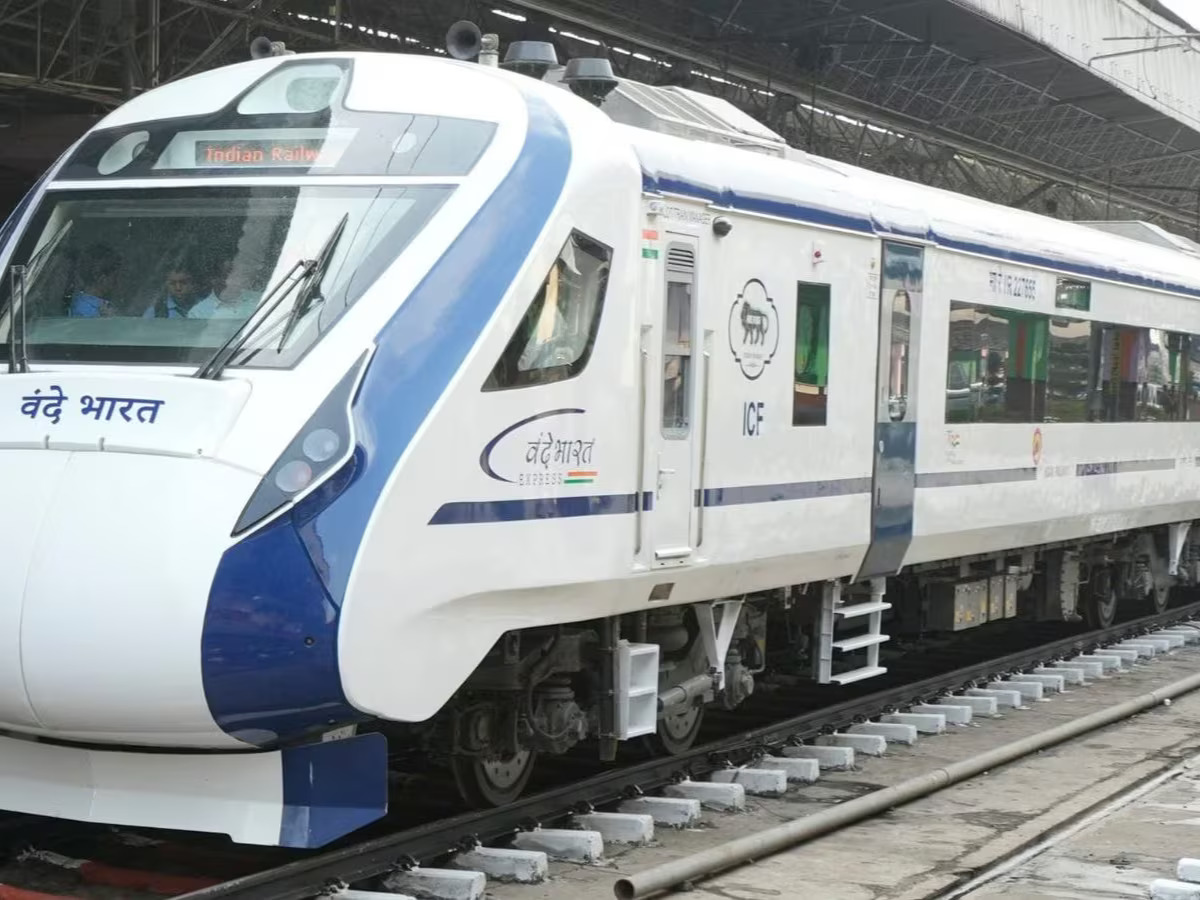
The Varanasi–Delhi Vande Bharat Express left passengers drenched and deeply distressed after a sudden air-conditioning failure was followed by water leaking from the coach ceiling during its journey this week. The incident not only caused physical discomfort for commuters who paid a premium fare but also sparked widespread concern over the upkeep of India’s flagship high-speed rail service.
A video of the incident, now viral on social media, shows water trickling steadily onto the train floor from the roof panel near seat number 76 in coach C-7. Passengers can be seen lifting bags and feet off the ground, as railway personnel allegedly failed to respond to complaints throughout the journey. One passenger, who first shared the footage online, described the experience as “extremely uncomfortable” and publicly demanded a refund while tagging top railway officials on X, formerly Twitter. It was only after the post gained attention that Indian Railways issued a formal response, blaming the malfunction on blocked drainage in the Return Air Duct of the Roof Mounted Package Unit (RMPU)—the component that handles air conditioning in the train. According to officials, the mixed-media air filters above the AC unit had clogged the drip tray’s drain holes. When the train applied brakes, condensate water, unable to exit through the tray, entered the air duct and spilled into the coach.
The Railways stated that the affected unit was cleaned upon arrival at New Delhi station and a washer was installed to ensure space between the filter and the tray, allowing better drainage in the future. The incident was classified as isolated, though maintenance checks on all RMPUs on the train set have been initiated as part of a broader review. However, no formal compensation or apology has been issued to the affected passengers, some of whom have reportedly approached consumer grievance forums. Despite the Vande Bharat Express being promoted as a symbol of modern, sustainable public transport in India, incidents like this raise doubts about its operational readiness during critical seasons such as the monsoon. The train had, in fact, been part of a pre-monsoon inspection drive conducted from May 15 to 27. Yet the failure to anticipate or prevent such a basic lapse in drainage points to systemic oversights in how Indian Railways is managing the growing fleet of high-tech trains.
As the video continues to gain traction, questions are being raised about the preparedness of railway staff to handle technical breakdowns mid-journey and the adequacy of maintenance protocols for premium-category trains. For passengers paying nearly double the fare of conventional trains, expectations of service, hygiene, and technical reliability are significantly higher. However, this incident has highlighted a gap between government projection and passenger experience. Transport experts say such incidents are a wake-up call for railway authorities to adopt predictive maintenance systems and real-time diagnostics across India’s growing electric train ecosystem. With climate variability leading to more intense seasonal rainfall, trains with sophisticated AC systems must be re-engineered to ensure resilience under varying weather conditions. If the rail sector is to be a pillar of sustainable urban mobility, comfort and safety must be inseparable priorities.
For a country pushing to reduce its carbon footprint by moving commuters away from road to rail, public trust in modern train systems like Vande Bharat will hinge not just on speed or design, but on consistent performance and responsive service mechanisms. The recurring criticism from passengers about poor complaint redressal and lack of transparency only strengthens the argument for urgent reform.
With no further official comment yet from the Ministry of Railways or the Railway Board, the incident remains a talking point not only among affected commuters but also urban planners and civic agencies advocating for smarter, more accountable transport systems. Whether the Vande Bharat Express regains its sheen or continues to face operational embarrassments will depend on how seriously these lessons are taken—both inside maintenance depots and at the policy level.
Also Read: Mumbai Railway Cancels 12 AC Services Without Any Refunds
Varanasi to Delhi Vande Bharat Faces Water Leaks Mid Journey
Suggested SEO Title
Delhi Vande Bharat AC Leak Prompts Rail Safety Review
