


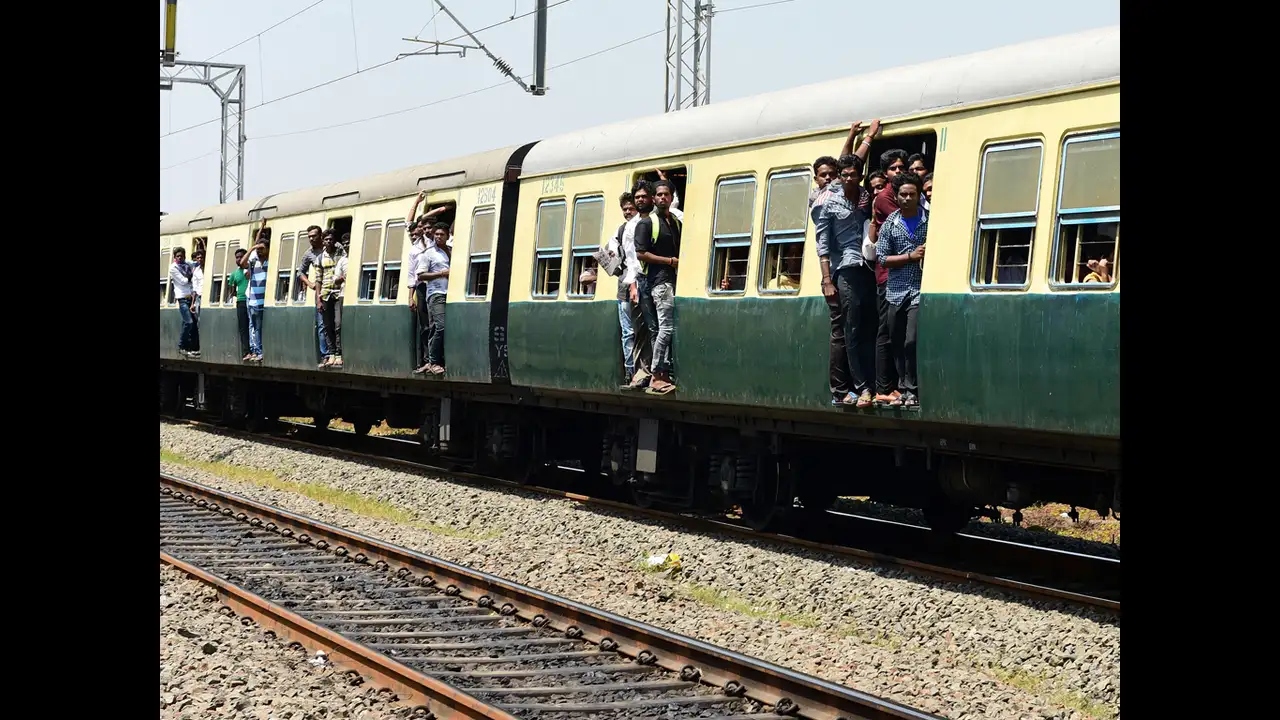
The Prime Minister inaugurated a new daily express train between Valsad and Dahod, rekindling a vital travel link in southern Gujarat.
The train service, long demanded by local communities, particularly benefits tribal populations and low-income commuters who have struggled with expensive and time-consuming alternatives in the absence of direct rail service. The new Valsad-Dahod Express will cover 346 kilometres daily with 17 coaches, significantly reducing the dependency on indirect and costly bus travel. For many, the service marks a restoration of access. The train had previously operated on the route but was discontinued, leaving a connectivity vacuum that particularly impacted tribal communities residing in the dense forest belt and remote villages.
The sentiment on the ground reflects a mixture of relief and gratitude. One resident explained that travelling by bus meant changing at multiple points, which took much longer and cost more. Now with the train, travel has become easier and more affordable. This new link is described as a “lifeline” for tribal communities who rely heavily on affordable public transport to access employment, healthcare, and education. Another local commuter called the train service a “big gift,” highlighting how it will benefit thousands of passengers, especially those from remote areas who were forced to take tedious road journeys.
The project is part of a broader package of development initiatives unveiled by the Prime Minister during the recent visit to Gujarat. Among the highlights was the inauguration of an electric locomotive manufacturing facility in Dahod, along with the flagging off of the Veraval-Ahmedabad Vande Bharat Express, further underlining the government’s focus on modern, energy-efficient rail travel. Passengers of the newly launched Vande Bharat service, especially women travellers, expressed joy over the high-speed train’s convenience and cleanliness. A traveller from Junagadh, who boarded the train en route to the Somnath temple, described it as a first-time experience of “smooth and comfortable” travel.
These rail upgrades come at a time when the Indian Railways is under transformation through Make in India and Atmanirbhar Bharat schemes. With an emphasis on electrification, reduced carbon emissions, and inclusive access, the government’s renewed focus on passenger-centric services also signals a more equitable model of infrastructure growth. While the express train launch may appear routine, its real impact lies in the socio-economic upliftment it promises. From cutting down fuel consumption to facilitating faster, cleaner transport for marginalised communities, this development ticks multiple boxes of sustainable urban and rural integration.
Though political undertones often accompany such inaugurations, the local response remains largely focused on utility and access. For residents of Valsad and Dahod, especially in under-connected tribal belts, the return of a daily train service is not just about convenience—it is about being seen, connected, and empowered.
Also Read: Chennai Rail Alliance Boosts Vande Bharat Sleeper Train Production
