Uttarakhand CM Dhami Calls for Separate Aviation Policy for Mountain States at Dehradun Conference
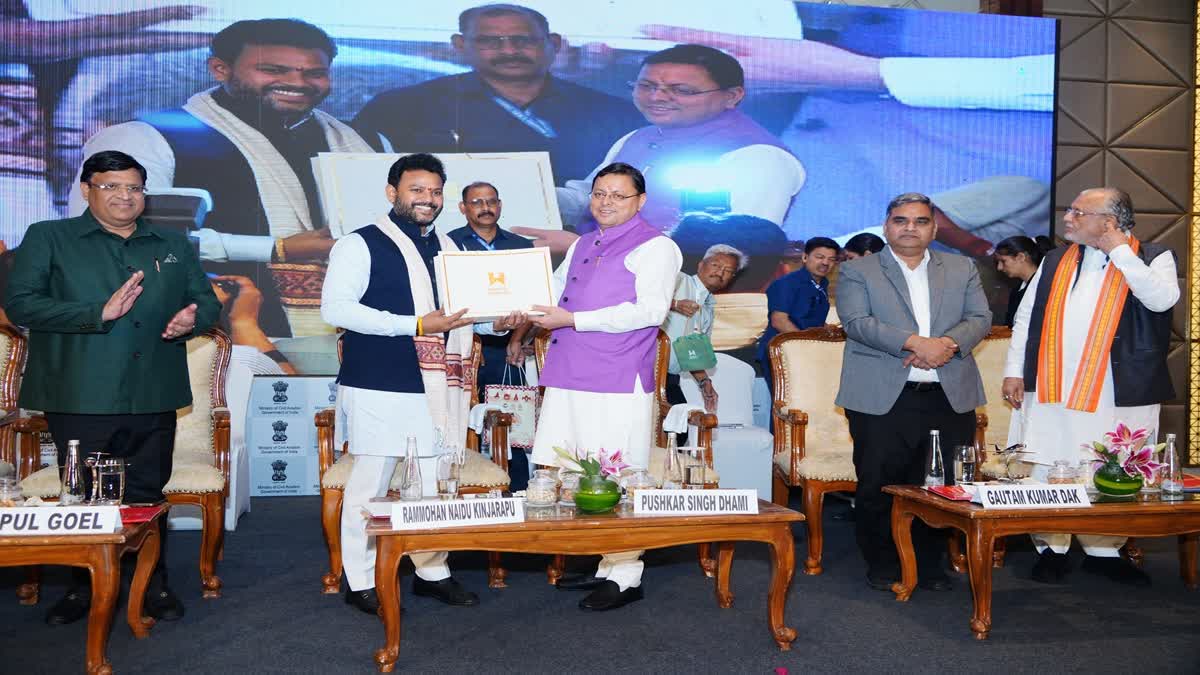
Uttarakhand Chief Minister Pushkar Singh Dhami has made a strong appeal to the central government for the creation of a separate aviation policy specifically tailored for mountain states. Speaking at the Civil Aviation Conference 2025 held in Dehradun on Friday, Dhami stressed the need for an approach that considers the geographical and logistical challenges of hilly regions such as Uttarakhand. The event was attended by Union Civil Aviation Minister Kinjarapu Ram Mohan Naidu and other ministers from North Indian states, making it a key platform for pushing regional aviation priorities.
Dhami emphasized that under Prime Minister Narendra Modi’s leadership, the aviation sector in India has witnessed historic growth, particularly through initiatives like the UDAN scheme, which has expanded air connectivity to small towns and remote areas. According to the chief minister, this has not only made air travel accessible to ordinary citizens but has also helped stimulate local economies by facilitating tourism, trade, and faster access to essential services. He described the scheme as a transformative step toward inclusive development and urged that it be taken further with targeted policies for mountain regions.
Currently, Uttarakhand is witnessing rapid expansion in its aviation infrastructure. Dhami noted that eighteen heliports are under development across the state, and twelve of them are already operational. These facilities have become vital to the state’s transportation ecosystem, particularly in regions where road access is limited or unreliable. In hilly terrain where landslides, cloudbursts, and flash floods frequently disrupt surface travel, helicopters serve as more than a convenience — they are a lifeline. The chief minister stated that air connectivity has been essential in disaster relief, emergency healthcare, and during the annual Char Dham Yatra, which attracts lakhs of pilgrims each year.
Dhami’s pitch for a dedicated “Mountain Aviation Policy” was underscored by his argument that current national aviation policies do not account for the unique topographical and meteorological conditions of hill states. He pointed out that flying in mountainous areas poses challenges very different from those in the plains, and requires specialized equipment, personnel training, and regulatory frameworks. According to him, a tailored policy would allow for focused investment, better operational planning, and improved safety in these fragile and sensitive regions.
The chief minister urged the central government to offer special financial assistance and operational subsidies to carriers that operate in these regions. He said that enhanced weather forecasting systems, a better-suited air traffic control network, and pre-disaster planning mechanisms need to be included in the policy framework. He also requested that helicopter operators provide specific mountain flight training to their pilots and maintain strict compliance with safety protocols to ensure passenger security. Dhami’s call for reform came with a clear message: without specialized policy support, mountain states risk falling behind in connectivity and development.
Union Civil Aviation Minister Ram Mohan Naidu responded to Dhami’s concerns with a reassurance that the central government is already planning extensive infrastructure expansion in hilly regions. He stated that under the Regional Connectivity Scheme, a number of airports and heliports are being constructed from Jammu and Kashmir to Arunachal Pradesh. Naidu acknowledged that the difficult terrain and unpredictable weather conditions make air operations in these areas far more complex, but also more essential. He confirmed that Uttarakhand alone currently has eighteen heliports and that the Centre’s broader aviation roadmap includes specific provisions for remote regions.
The minister highlighted that helicopter services in mountain states are crucial not just for tourism but also for managing emergencies. Naidu emphasized that the government is looking at both physical expansion and regulatory streamlining to ensure safety and efficiency in such zones. He also hinted at the Centre’s willingness to consider additional policy mechanisms that would support mountain-specific aviation needs, though he stopped short of confirming any immediate rollout of a separate policy.
The conference concluded with both state and central representatives acknowledging that mountain aviation requires more than just basic infrastructure—it needs systemic attention. Stakeholders from the aviation industry, local government bodies, and tourism departments echoed the demand for a differentiated policy that would address the challenges unique to India’s northern and northeastern hill states. One senior official from Uttarakhand’s aviation department noted that the current regulatory approach often treats hilly regions as afterthoughts rather than focus areas. He said that a dedicated policy could unlock a wave of investment and innovation in areas that are otherwise cut off due to terrain.
Tourism professionals also weighed in, suggesting that enhanced air connectivity could bring a significant boost to destinations like Auli, Chopta, Kedarnath, and Munsiyari. These spots, though scenic and culturally important, often see limited visitors due to long and dangerous road journeys. With helicopter services in place, the tourism season could be extended, and access made safer for older or less mobile travelers.
As Uttarakhand positions itself as a leader among India’s mountain states, Chief Minister Dhami’s appeal may well mark a turning point in aviation policy discourse. Whether the Centre will formalize a separate mountain aviation framework remains to be seen, but the urgency and clarity of Dhami’s message have certainly raised the stakes. With the monsoon season approaching and disaster readiness at the forefront of state concerns, the demand for targeted aviation policy has never been more relevant.