


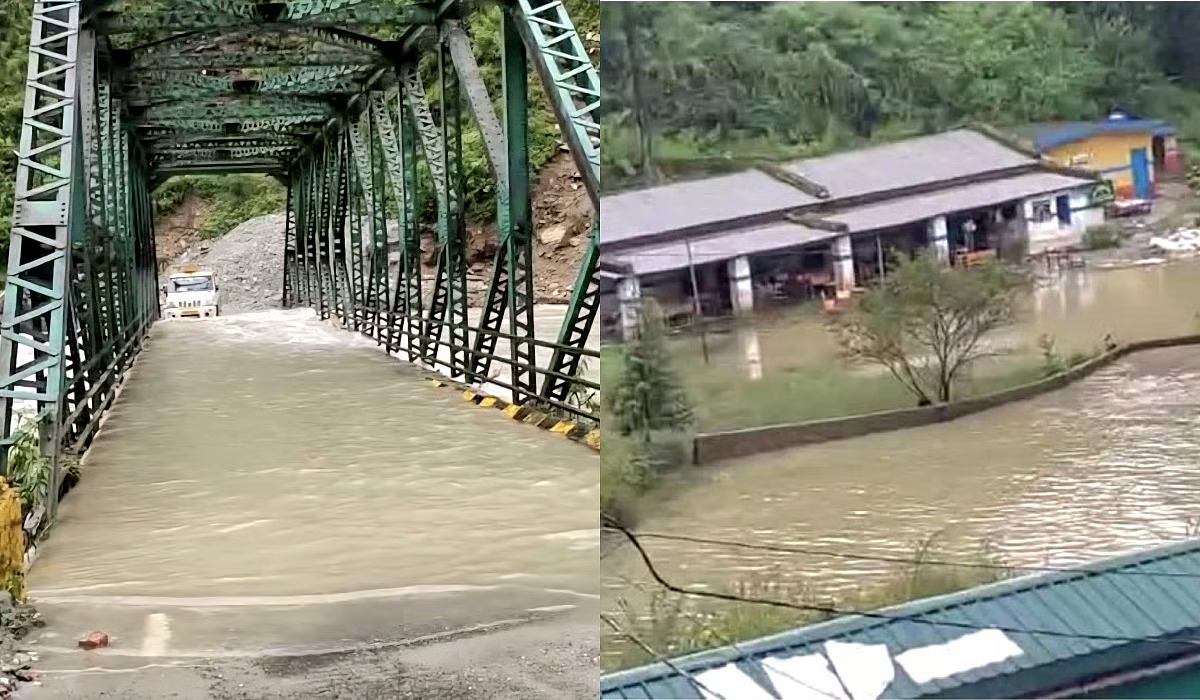
Uttarakhand is reeling under the fury of relentless monsoon rains that have cut off vital highways, submerged towns, and left rivers flowing above danger levels. The unfolding crisis has triggered red and yellow alerts across districts, forcing officials to issue flood warnings and residents to brace for further disruption. In Uttarkashi, the crisis is particularly severe. In the Cheenakholi region, school children from at least seven villages are forced to navigate broken and tilted bridges to attend classes at Government Inter College Bon. Locals report that a child narrowly escaped being swept away, underscoring the perilous conditions families endure to sustain daily life.
The Yamunotri region has witnessed alarming scenes of submergence. The overflowing Yamuna river has engulfed Syana Chatti once again, sweeping water over the motor bridge and inundating an entire school campus along with the state-run tourist bungalow. Residents describe a sense of panic, with officials rushing to assess the damage and plan relief. Connectivity remains paralysed in multiple corridors. Disaster management authorities confirm that the Yamunotri National Highway is blocked at several points, while the Gangotri Highway stands disrupted near Dharasu Bend and Netala. Restoration efforts are underway but hampered by continuous rain. Further north, the strategic Malari Highway leading to the Indo-China border has collapsed for the second time in days after flash floods in Tamak Nala washed away a motor bridge. The closure not only isolates Niti Valley villages but also obstructs movements of security forces.
The crisis extends downstream. In Rishikesh, the Ganga river breached its warning level of 339.50 metres and climbed further to 340.40 metres, heightening fears of flooding in adjoining areas. The Hydro-met division of the India Meteorological Department has warned of sustained heavy rainfall in Almora, Bageshwar, Chamoli, Dehradun, Nainital, Pauri Garhwal, Tehri Garhwal, and Rudraprayag. Officials have urged district administrations to maintain strict vigilance and ensure precautionary measures are enforced. Emergency operation centres are monitoring water levels and coordinating with disaster response teams. Red alerts highlight the possibility of very heavy rainfall, while yellow alerts warn of continued disruption and potential landslides.
The recurring devastation highlights a deeper challenge for Uttarakhand—its fragile mountain ecology, rapid urbanisation, and inadequate infrastructure resilience. Climate experts argue that extreme weather events in the Himalayan state are intensifying due to global climate shifts, and a long-term strategy integrating eco-friendly urban planning and sustainable infrastructure is essential. For residents, however, the immediate reality is stark. Villagers face isolation, children risk their lives to pursue education, and entire communities remain vulnerable to the relentless rains. As the monsoon shows no signs of easing, Uttarakhand’s struggle with nature’s fury underscores the urgent need for adaptive, resilient, and sustainable planning to safeguard lives and livelihoods.
Also Read : FASTag Annual Pass Not Valid On Key National Expressways, NHAI Issues Clarification
