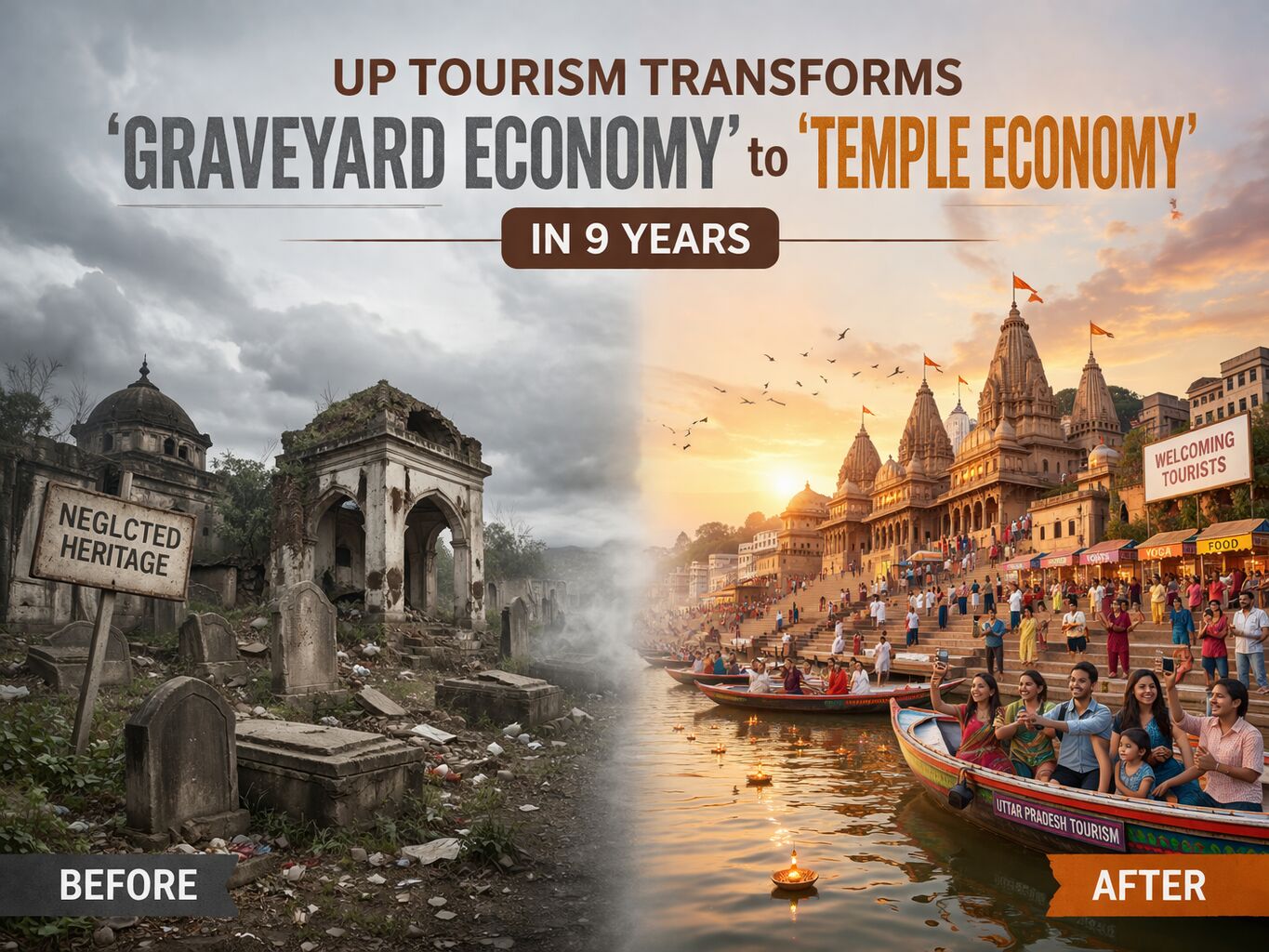
Uttar Pradesh tourism transforms economy through faith heritage
LUCKNOW — Uttar Pradesh’s tourism sector is undergoing a structural shift, with cultural heritage and faith‑based travel emerging as the principal drivers of visitor growth and economic activity. New official figures indicate that domestic and international footfall at religious and heritage destinations has surged, reshaping the state’s tourism economy and creating fresh opportunities for local businesses and infrastructure investment.
Industry and economic analysts describe this trend as a move away from a generalized tourism model toward a more niche, heritage‑anchored system that aligns with Uttar Pradesh’s extensive historical and spiritual assets. The state’s key pilgrimage cities — Ayodhya, Varanasi and Prayagraj — together accounted for the vast majority of tourist visits in 2025, underscoring how cultural memory and devotional travel now intersect with economic planning. The shift has infrastructure implications: transportation networks, airport linkages and urban amenities are being calibrated to service larger, more frequent travel flows. Connectivity upgrades, including expanded road and rail access to major cultural hubs, are seen as prerequisites for sustaining long‑term growth in both religious and heritage tourism markets. State tourism officials report that policy initiatives enacted in recent years — including targeted marketing of the Uttar Pradesh Heritage Arc and integration into national programmes like Swadesh Darshan 2.0 — have helped catalyse investor interest.
Registered tourism projects under the current policy framework span hospitality expansion, heritage conservation and community‑based accommodations. These are designed not only to boost visitor capacity but also to generate employment in peri‑urban and rural nodes connected by heritage routes. Economists note that while pilgrimage‑centric tourism offers high footfall volumes, its long‑term economic impact depends on improving quality of stay, diversifying experiences and managing seasonal spikes in demand. The rise of festivals like the Deepotsav celebrations and religious gatherings underscores the importance of event‑based tourism in extending visitor stays and supporting ancillary enterprises such as food services, handicrafts and local transport. There are also early signals that alternative circuits — such as Buddhist heritage trails and eco‑tourism in protected forest areas — could broaden the state’s appeal beyond strictly religious tourism. Inclusivity in heritage interpretation and infrastructure planning will be critical as Uttar Pradesh seeks to position itself competitively within India’s national tourism landscape.
Urban planners point out that balancing the influx of visitors with climate‑resilient infrastructure and equitable community benefits is increasingly central to the sector’s sustainability. As Uttar Pradesh continues to refine its tourism strategy, success may hinge on integrating cultural stewardship with economic development across its diverse urban and rural environments.