


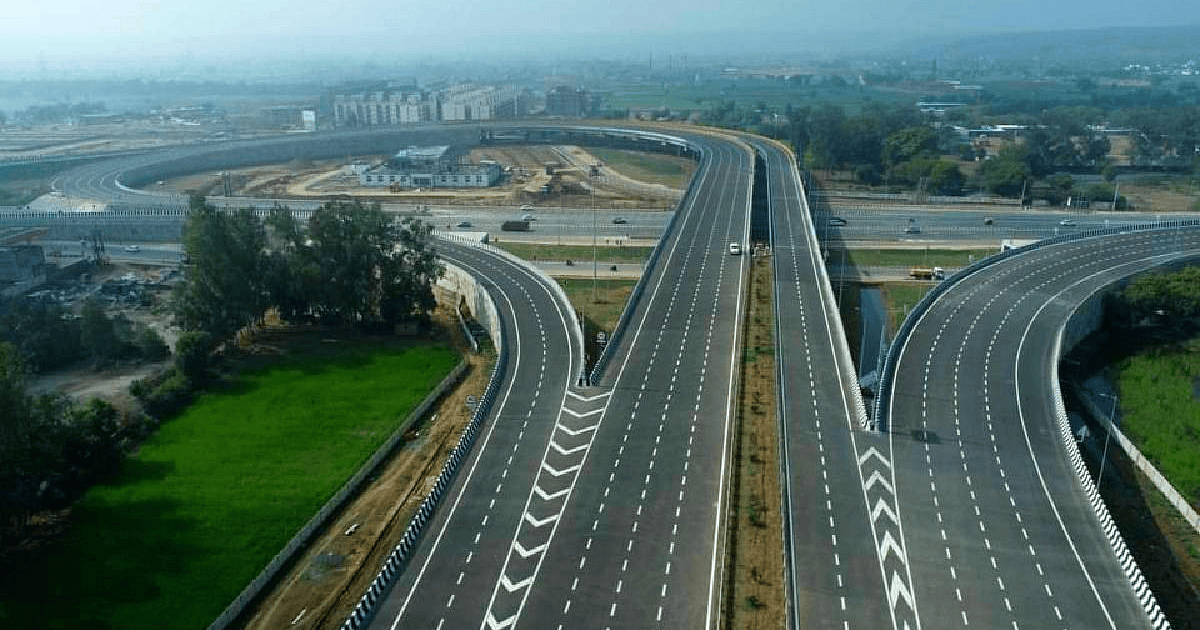
Uttar Pradesh now controls 42 per cent of India’s total access‑controlled expressway network, a remarkable leap following the inauguration of the Gorakhpur Link Expressway, the state government announced on Friday. Spanning 91 km, the Gorakhpur Link Expressway strengthens the state’s transport infrastructure dramatically. It elevates UP’s share from 38 per cent to 42 per cent, on a national baseline of 2,900 km of access‑controlled roads.
This marks UP as the only Indian state with the largest expressway network in both operational and developmental phases . Beyond transport, the Gorakhpur Link Expressway serves as a catalyst for socio‑economic uplift. A total investment of approximately ₹7,200 crore—₹3,400 crore on construction and the rest on land acquisition—converted 1,100 hectares from 22,000 farmers, laying the groundwork for industrial zones and logistics hubs. The project, crossing four districts, ushers a wave of opportunities across Purvanchal’s agrarian economies . The government disclosed that UP now operates seven expressways, with three more under construction—notably the 594 km Ganga Expressway, the 35 km Ballia Link, and the Lucknow–Kanpur Greenfield Expressway (63 km)—and eight proposed ones.
Once the Ganga route opens, UP’s expressway share will skyrocket to 62 per cent, effectively meaning six out of every ten kilometres of national expressway infrastructure will lie in UP. Infrastructure experts note that this network surge aligns with UP’s industrial ambitions. The measures are expected to empower freight corridors, reduce travel time, cut carbon emissions, and foster equitable regional growth, bringing remote districts into the development mainstream . However, such rapid expansion must withstand scrutiny on multiple fronts. Environmental sustainability, especially displacement, water‑table impacts, and carbon footprints, requires proactive mitigation. Equally vital is ensuring the network benefits women and vulnerable communities, by integrating safety, last‑mile access, and inclusive planning.
UP’s Chief Secretary stated these expressways are “not limited to big cities” but connect diverse regions such as Bundelkhand, Purvanchal and the Terai—embodying a push for balanced urban‑rural mobility . For policymakers, the expressway expansion is a powerful instrument: it can revive lagging regions, fast‑track logistics chains, and reinforce national infrastructure resilience. Yet the challenge is aligning such megaproject drives with zero‑carbon, gender‑neutral, sustainable urbanisation, the stated goal of progressive city planners.
Also Read :Thane Roads to Shut at Night for Metro Work
