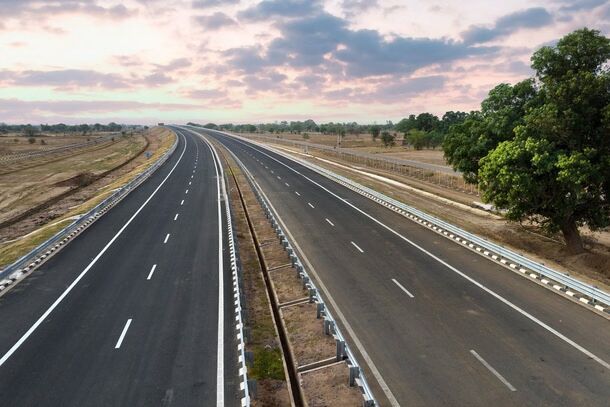
Uttar Pradesh Ganga Expressway Push Signals Logistics Shift
Uttar Pradesh’s flagship road infrastructure programme is entering its final stretch as the state government intensifies oversight of the nearly completed Ganga Expressway project, one of India’s longest greenfield expressways designed to transform freight mobility and regional connectivity across northern India.
At a recent high-level infrastructure review in Lucknow, the state administration assessed progress on the expressway and several related transport and logistics projects, directing departments to accelerate remaining works and resolve land acquisition challenges tied to upcoming expressway links. Officials reported that the main carriageway of the Ganga Expressway project—a 594-kilometre controlled-access highway connecting Meerut in western Uttar Pradesh with Prayagraj in the east—has largely been completed, with finishing works such as signage, toll infrastructure and safety installations underway. The expressway is expected to significantly shorten travel time across the state’s east–west corridor while improving long-distance freight movement between industrial centres in western Uttar Pradesh and agricultural regions in the central and eastern districts.
Infrastructure economists say such high-capacity road networks can reshape logistics patterns by reducing transportation costs and opening new development corridors. Beyond the expressway itself, the review covered progress on a broader network of planned and under-construction connectivity projects, including several link expressways intended to integrate regional highways with major economic clusters. Authorities have been asked to speed up land acquisition for these routes, which are expected to improve last-mile connectivity to industrial zones and logistics hubs. Transport planners note that the expansion of expressway infrastructure across Uttar Pradesh has become central to the state’s economic development strategy. Over the past decade, a series of large expressways—including the Purvanchal and Bundelkhand corridors—have reshaped inter-city travel and encouraged investment in manufacturing, warehousing and real estate along new mobility corridors.
The Ganga Expressway project is particularly significant because it connects 12 districts and runs across a wide swath of the state, linking agricultural regions with urban consumption centres and industrial nodes. Analysts say the corridor could also support the development of logistics parks, food processing clusters and new urban townships along its alignment. The review meeting also assessed progress on related strategic infrastructure initiatives, including the development of a multi-modal logistics hub in Greater Noida, improvements in irrigation projects and expansion of energy generation capacity.
Urban development specialists argue that integrating highways with logistics hubs and industrial zones is essential for sustainable regional growth. Efficient freight corridors can reduce congestion in major cities while encouraging balanced development across smaller towns and emerging economic centres. However, planners caution that rapid road expansion must also be matched by environmental safeguards and urban planning frameworks. Expressway corridors often trigger land speculation and unplanned urbanisation unless supported by clear land-use policies and sustainable infrastructure planning.
As finishing works progress and link corridors move into development stages, the Ganga Expressway project is poised to become a defining element of northern India’s evolving transport network—potentially reshaping how goods, people and investment move across one of the country’s most populous states.