


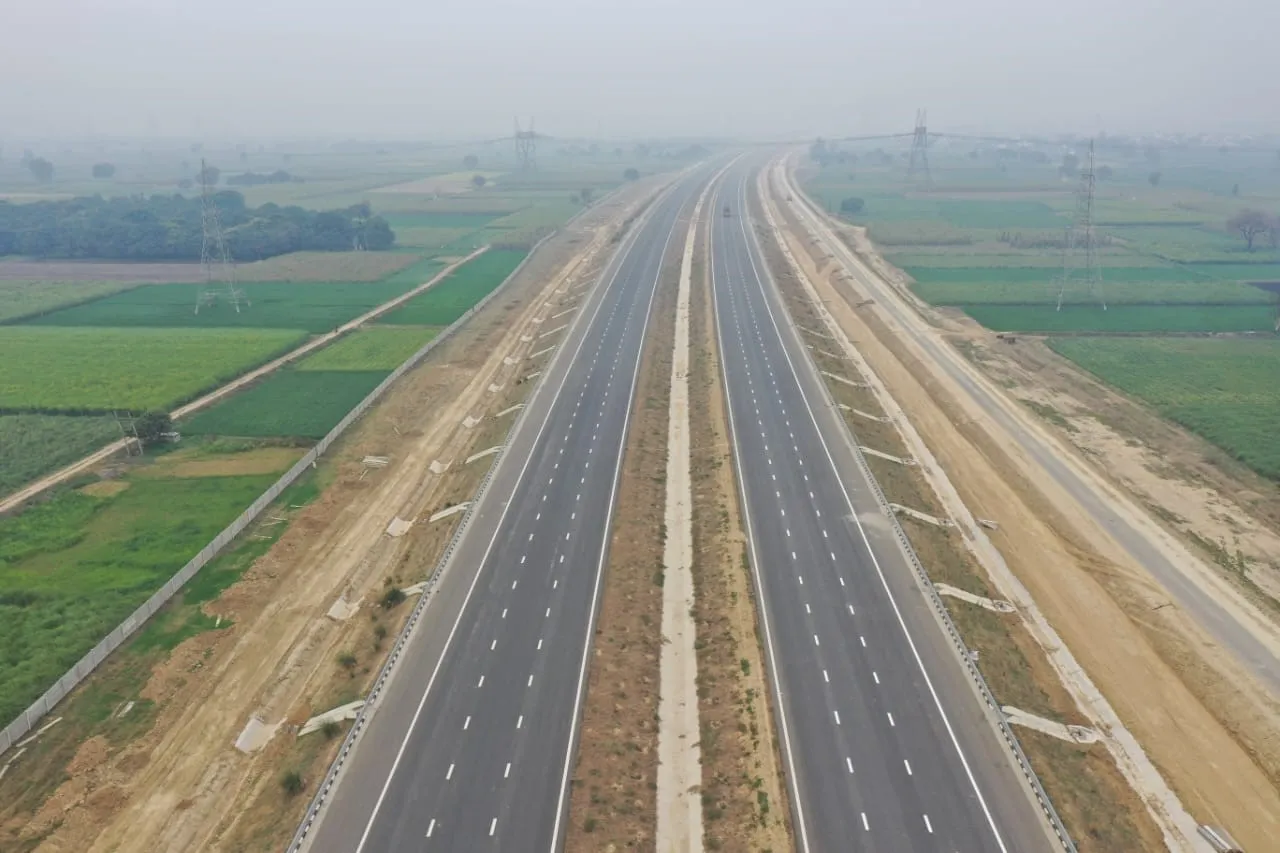
Uttar Pradesh is preparing to operationalise the Ganga Expressway next month after successful trials of its contactless tolling system, marking a major milestone for one of India’s most ambitious greenfield road infrastructure projects. Stretching nearly 600 kilometres across the state, the expressway is expected to transform long-distance mobility, logistics efficiency, and regional economic integration across central and western Uttar Pradesh.
Authorities overseeing the project confirmed that trial operations of FASTag-enabled toll plazas have demonstrated system readiness, with automated barriers responding accurately to tagged vehicles at controlled speeds. Transport planners say this phase is critical, as tolling efficiency directly affects traffic flow, safety, and emissions on high-speed corridors. The adoption of fully electronic toll collection also aligns with national goals of reducing congestion, idling time, and fuel wastage at highway interfaces. The Ganga Expressway traverses a diverse and largely agrarian landscape, connecting industrial districts in western Uttar Pradesh with eastern economic centres. Infrastructure experts view the corridor as a structural intervention rather than a standalone road one that could shorten freight travel times, stabilise supply chains, and improve access to markets for smaller towns along the route. Once opened, the expressway is expected to significantly cut travel time between Meerut and Prayagraj, reshaping regional mobility patterns.
Beyond scale, the project is drawing attention for its approach to road quality and safety assurance. The expressway has been subjected to real-time monitoring using sensor-based and artificial intelligence-backed inspection systems. Specially equipped vehicles fitted with accelerometers and vibration sensors are being deployed to assess surface quality, ride comfort, and elevation consistency across all lanes. Officials involved in the programme say this allows defects to be identified and corrected during construction, rather than after commissioning a departure from traditional post-build inspection models. Urban infrastructure analysts note that this shift could have long-term implications for highway asset management in India. Continuous quality monitoring reduces lifecycle maintenance costs, enhances commuter safety, and improves durability key considerations as climate variability increases stress on transport infrastructure.
The expressway’s design includes a dense network of bridges, interchanges, flyovers, and underpasses to maintain local connectivity while enabling uninterrupted high-speed travel. Planners say such grade-separated designs are essential to balancing regional accessibility with expressway safety, especially in areas where highways intersect with rural settlements and water bodies. As the final approvals and safety clearances move towards completion, attention is now turning to operational readiness, enforcement, and land-use planning around interchanges. Economists caution that without careful regulation, rapid real estate activity along expressway corridors can lead to unplanned sprawl. Managed correctly, however, the Ganga Expressway could support decentralised growth, lower logistics emissions, and more equitable regional development.
With its opening imminent, the project stands as a test case for how large-scale road infrastructure can integrate technology, safety, and sustainability into India’s next phase of mobility expansion.
Also Read: NHAI Lucknow Kanpur Expressway Enters Final Phase
Uttar Pradesh Ganga Expressway Enters Operational Stage
