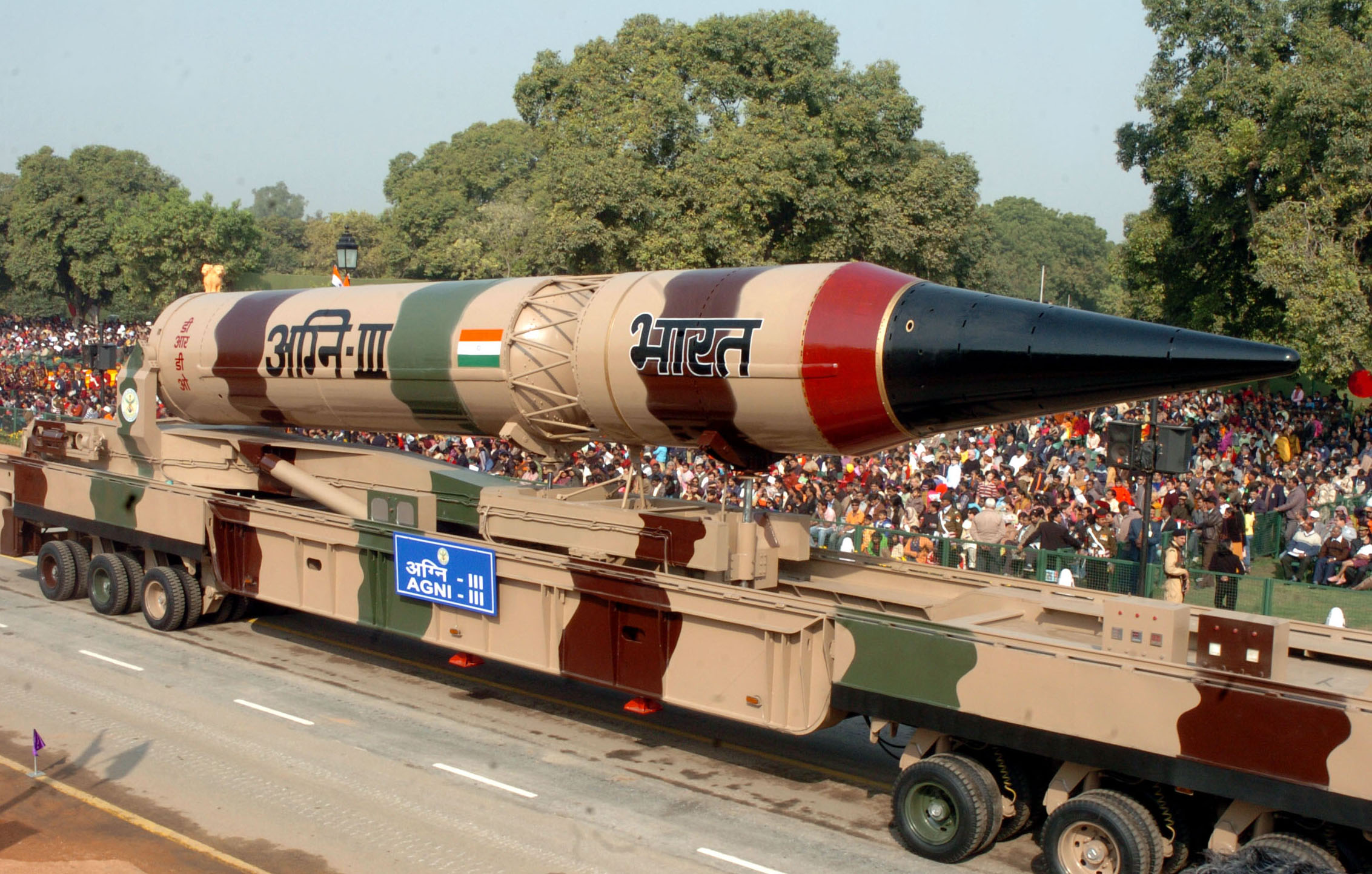
The AGNI-III (Strategic System) passes through the Rajpath during the 60th Republic Day Parade-2009, in New Delhi on January 26, 2009.
Uttar Pradesh has taken another step towards consolidating its position as a national defence manufacturing hub, with nearly 1,600 hectares of additional land now opened for allotment under the Uttar Pradesh Defence Industrial Corridor (UPDIC). The expansion strengthens the state’s push to attract capital-intensive manufacturing while signalling a broader shift towards decentralised, job-oriented industrial growth across multiple regions.
Officials confirmed that the corridor has already allotted close to 978 hectares of land to 62 companies, translating into committed investments of nearly ₹12,000 crore and more than 14,000 direct jobs. A further pipeline of 110 memoranda of understanding is expected to add almost ₹23,000 crore in investments and create over 38,000 additional employment opportunities, underlining growing private sector confidence in the state’s industrial ecosystem. According to senior officials at the Uttar Pradesh Expressways Industrial Development Authority, the government has approved over 2,090 hectares across six strategic nodes — Aligarh, Kanpur, Lucknow, Jhansi, Chitrakoot and Agra. Land acquisition is largely complete, enabling faster project execution and reducing regulatory uncertainty, a key factor for defence and aerospace investors with long gestation periods.
Regional allocation data reflects a diversified growth model rather than concentration in a single urban centre. Aligarh has emerged as a leader in company allotments, while Kanpur has attracted the largest land parcels per investor, indicating interest from large-scale manufacturers. Jhansi has seen significant uptake in area allotment, positioning Bundelkhand as a new industrial geography, while Lucknow continues to draw a higher number of medium-sized firms. Officials said land allotment at Chitrakoot, Agra and Aligarh Phase Two is expected to begin shortly. Under direct state-level oversight, nearly 200 MoUs have already been signed, including a substantial number of binding industrial agreements. These represent proposed investments exceeding ₹34,800 crore and potential employment for over 52,000 people.
Urban economists note that the corridor’s multi-node structure could reduce migration pressure on large cities by creating skilled jobs closer to smaller urban centres. The model also allows supporting infrastructure housing, logistics, public transport and utilities to be planned alongside industrial growth, improving long-term liveability. Industry experts say the next phase will test the corridor’s ability to integrate sustainable practices, including energy-efficient industrial design, workforce inclusion and low-emission logistics. If executed well, the Uttar Pradesh Defence Industrial Corridor could emerge not only as a manufacturing backbone but also as a template for balanced, future-ready industrial urbanisation in India.