


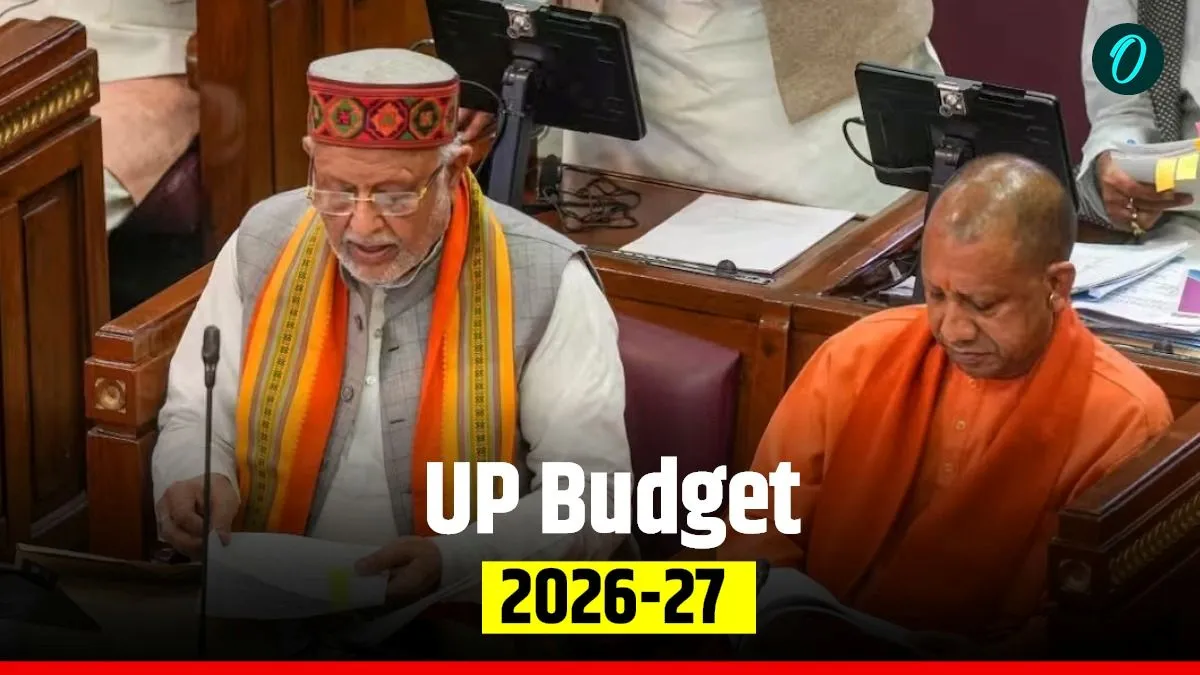
Uttar Pradesh is preparing to table its largest-ever state spending plan, with the Uttar Pradesh Budget 2026 projected at nearly ₹9 lakh crore. To be presented during the ongoing Assembly session in Lucknow, the financial blueprint is expected to channel significant resources towards regional infrastructure, women-led welfare programmes and industrial expansion—moves that could reshape growth patterns in eastern and southern districts.
Officials familiar with the allocations indicate that Purvanchal and Bundelkhand will receive dedicated development funding of close to ₹1,900 crore, aimed at bridging historic gaps in infrastructure and employment. Urban economists note that such ring-fenced regional allocations can help rebalance investment flows that have traditionally favoured western Uttar Pradesh.A substantial share of the Uttar Pradesh Budget 2026 is expected to focus on connectivity. Plans include strengthening linkages between major expressways, expanding industrial townships and accelerating land aggregation for large manufacturing zones. The proposed expansion of the Bundelkhand Industrial Development Authority is likely to require acquisition of over 23,000 acres, signalling a long-term industrial corridor strategy anchored in logistics and export-oriented manufacturing.
Infrastructure and basic services could see allocations exceeding ₹2.5 lakh crore, according to senior finance department officials. This includes urban roads, power distribution upgrades and renewable energy investments. Energy analysts suggest that parallel spending on grid modernisation and solar capacity will be critical if the state intends to align industrial growth with lower-carbon development pathways.Women-focused provisions are also expected to feature prominently in the Uttar Pradesh Budget 2026. Enhanced social security pensions, higher honoraria for frontline health and nutrition workers, and expanded credit access for women’s self-help groups are under consideration. Development specialists argue that such measures strengthen local economies by increasing disposable income and supporting micro-enterprise activity, particularly in smaller towns and peri-urban areas.
Education sector reforms are likely to include revised compensation structures for contract instructors and insurance coverage for school staff. Approximately 25,000 instructional personnel may benefit from arrear payments, according to administrative sources. Policy analysts say consistent funding for human capital is essential if the state aims to sustain long-term productivity gains.Industrial incentives, including support for advanced manufacturing and semiconductor-linked investments, are expected to complement the infrastructure push. Real estate consultants observe that industrial policy clarity often triggers ancillary housing and commercial development around new production clusters.
Tourism-linked urban upgrades, particularly in heritage and pilgrimage centres, may also receive targeted spending. Urban planners caution that while tourism corridors can generate employment, they must integrate mobility planning, waste management and affordable housing to avoid strain on civic infrastructure.As the Uttar Pradesh Budget 2026 is finalised, markets and municipal bodies will closely track how allocations translate into on-ground execution. For a state positioning itself as a manufacturing and logistics hub, the balance between fiscal expansion, social inclusion and environmental resilience will determine whether headline outlays convert into durable urban transformation.
Also Read:Mumbai Partners With Veolia To Reshape Water Supply
Uttar Pradesh Budget 2026 targets regional equity
