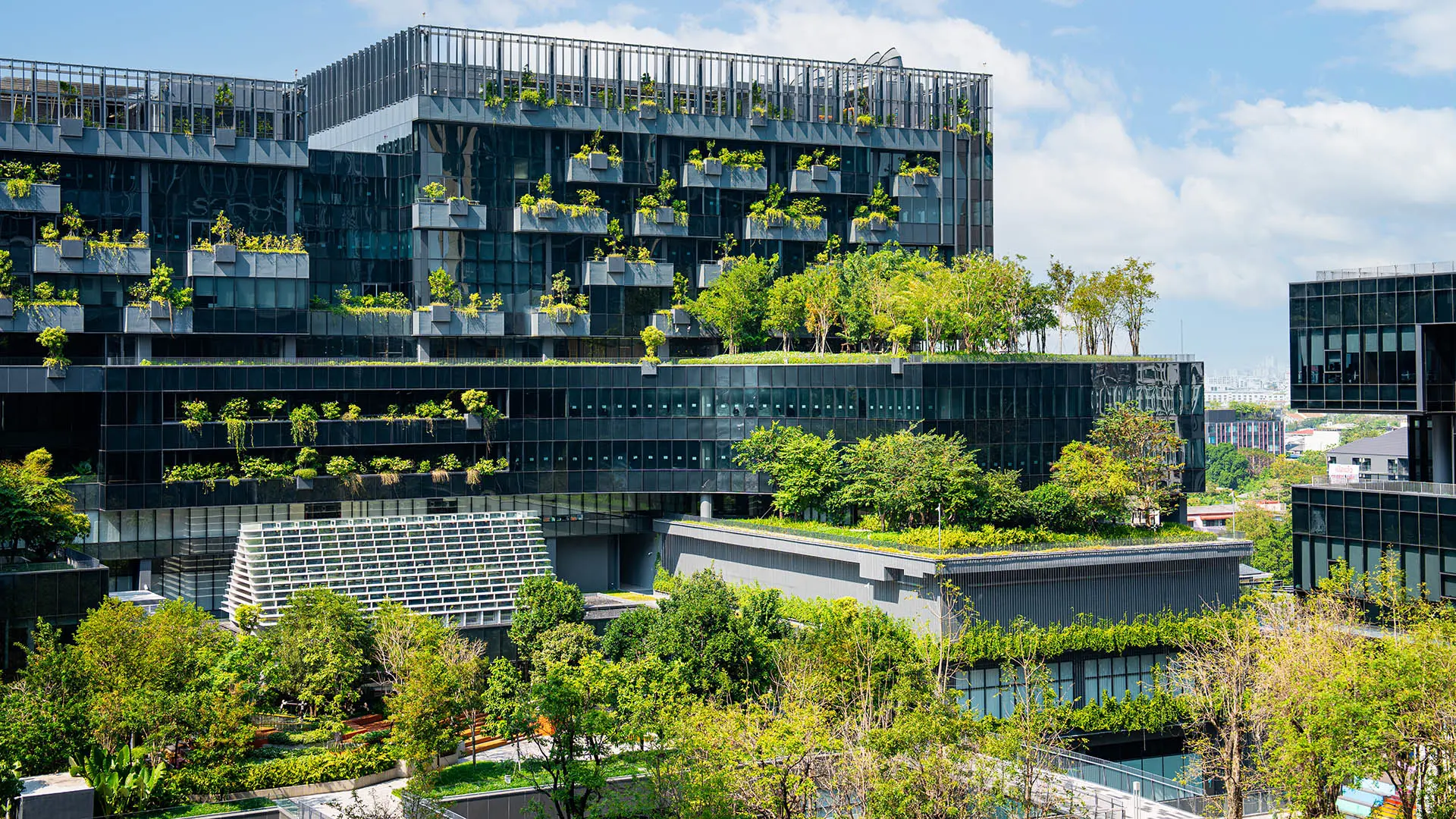
The United States has unveiled the latest iteration of its landmark green building rating system—LEED v5.
Introduced by the US Green Building Council (USGBC), the revised system significantly raises the bar on environmental performance, climate resilience, and human-centred design. It is being hailed as a blueprint for how the built environment can not only reduce emissions but also enhance health, well-being, and equity. With over 25 years of global influence, the LEED (Leadership in Energy and Environmental Design) certification has long served as the gold standard for sustainability in the construction sector. The newly launched LEED v5 is seen as a crucial evolution, informed by a sweeping consultation involving thousands of green building experts. The updated framework places particular emphasis on aggressive decarbonisation targets, integrating lifecycle carbon assessments and long-term emission reduction strategies across building operations, materials, refrigerants, and mobility-related infrastructure.
Experts from the USGBC highlighted that decarbonisation now accounts for half of the total score in the LEED v5 rating. This shift acknowledges the pivotal role buildings play in driving global emissions and presents clear action plans to create ultra-low-carbon assets. Every project applying for LEED v5 certification will need to generate a projected operational carbon profile, supported by a comprehensive pathway towards net-zero emissions. This approach, they say, ensures that climate goals translate into measurable, impactful outcomes. The new version also prioritises the quality of life within buildings, directly addressing occupant well-being, community health, and ecological balance. As cities around the world grapple with post-pandemic recovery, citizens and workers alike are demanding not just green infrastructure but humane environments. LEED v5 responds to this sentiment by embedding criteria that measure indoor air quality, daylight access, biophilic design, and broader social equity factors. In doing so, it recognises the power of design to foster dignity, inclusivity, and community pride in the urban fabric.
A defining innovation in LEED v5 is the mandatory climate resilience assessment. All registered projects must now evaluate their exposure to environmental risks, including extreme heat, flooding, and wildfires. These insights are then used to guide design decisions that mitigate vulnerability and safeguard long-term building value. According to experts, this ensures a forward-looking strategy where economic resilience and environmental stewardship go hand in hand. The USGBC has underscored that LEED v5’s transparency mechanisms are equally transformative. Every certified project will now receive a detailed impact report, empowering owners and developers to communicate their sustainability achievements to investors, regulators, and the public. Additionally, a new feature—the “project priorities” category—allows LEED v5 to be customised based on local climate, economic, or cultural conditions. This global adaptability ensures that cities from Mumbai to Mexico City can tailor certification to their unique sustainability challenges.
Officials point to robust data validating the business case for LEED certification. On average, LEED-certified buildings enjoy a 21.4% premium in market sales value, 11% higher rental yields, and over 20% savings in water, energy, and waste costs. These performance metrics continue to attract institutional capital and ESG-focused investors, driving demand for environmentally sound assets in both commercial and residential sectors. Urban planners, architects, and developers in India have shown increasing interest in LEED and other green certifications, particularly as cities push for zero-carbon growth models. The launch of LEED v5 is likely to provide a valuable framework for Indian metros aiming to transition towards cleaner, more liveable spaces.
Sustainability strategists working on early LEED v5 projects in Asia have noted that the standard is not just a checklist but a powerful storytelling tool. By documenting and verifying environmental and social performance, LEED v5 helps urban developers express a compelling narrative of positive change—critical for public trust and stakeholder engagement. The process leading up to LEED v5’s finalisation involved two public comment rounds in 2024, with over 7,000 contributions from stakeholders globally. This collective effort ensured that the standard is not only technically robust but also democratically shaped. The revised framework is now open for registration across new construction, interior design, and commercial retrofit projects.
In an era defined by the climate crisis and mounting urban inequality, LEED v5 reaffirms that sustainability is no longer optional—it is a fundamental obligation. By aligning real estate development with climate goals and social equity, the US has positioned its green building code as a global benchmark for the next generation of resilient, inclusive cities.
US Launches New Era of Eco Smart Buildings