


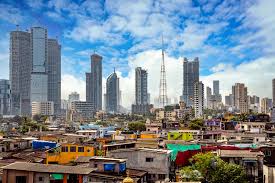
India’s largest urban housing markets entered a markedly slower growth phase in 2025, with average residential prices across eight major cities rising by just 6%, signalling a clear shift from the sharp escalation seen a year earlier. The deceleration reflects a maturing market shaped by cautious homebuyers, calibrated supply pipelines, and a renewed focus on long-term urban stability rather than speculative momentum.
While prices continued to edge upward, the pace varied widely by city. Technology-driven markets in southern India maintained relative strength, supported by end-user demand and steady employment growth. Bengaluru emerged as a notable outlier, recording double-digit appreciation and overtaking the National Capital Region to become the country’s second-costliest housing market after Mumbai’s metropolitan region. Hyderabad also posted moderate gains, reflecting sustained absorption in mid-income and self-occupied segments. In contrast, western and northern markets showed clear signs of cooling. Mumbai’s wider metropolitan region experienced modest price movement, suggesting consolidation after several years of premium-led growth. Pune and Ahmedabad saw near-flat increases, pointing to buyer resistance at higher ticket sizes. The National Capital Region, which had witnessed an exceptional surge the previous year, reverted to more measured growth as affordability pressures and selective demand tempered momentum. Chennai remained largely stagnant, underscoring the uneven nature of India housing prices across regions. Market fundamentals, however, remained largely stable. Total residential sales across the eight cities declined by about a tenth compared to the previous year, marking the lowest annual volumes since 2022.
New supply also contracted, indicating that developers responded to softer demand by slowing project launches rather than resorting to aggressive discounting. Urban planners and industry analysts note that this restraint helped prevent a build-up of unsold stock, keeping inventory levels within manageable limits. Notably, unsold inventory growth was concentrated in premium and luxury segments, where longer decision cycles and higher capital outlays continue to weigh on liquidity. Mass and mid-income housing, often closer to employment centres and public transport corridors, demonstrated greater resilience. This divergence highlights the importance of aligning housing supply with evolving urban needs, including affordability, connectivity, and climate-responsive design.
As India’s cities prepare for the next growth cycle, the current slowdown is being viewed less as a correction and more as a recalibration. With developers prioritising financial discipline and city authorities increasingly focused on infrastructure-led, people-first expansion, the trajectory of India housing prices heading into 2026 will likely depend on how effectively urban growth balances economic opportunity with liveability and environmental resilience.
Urban India Records Softer Housing Price Growth
