


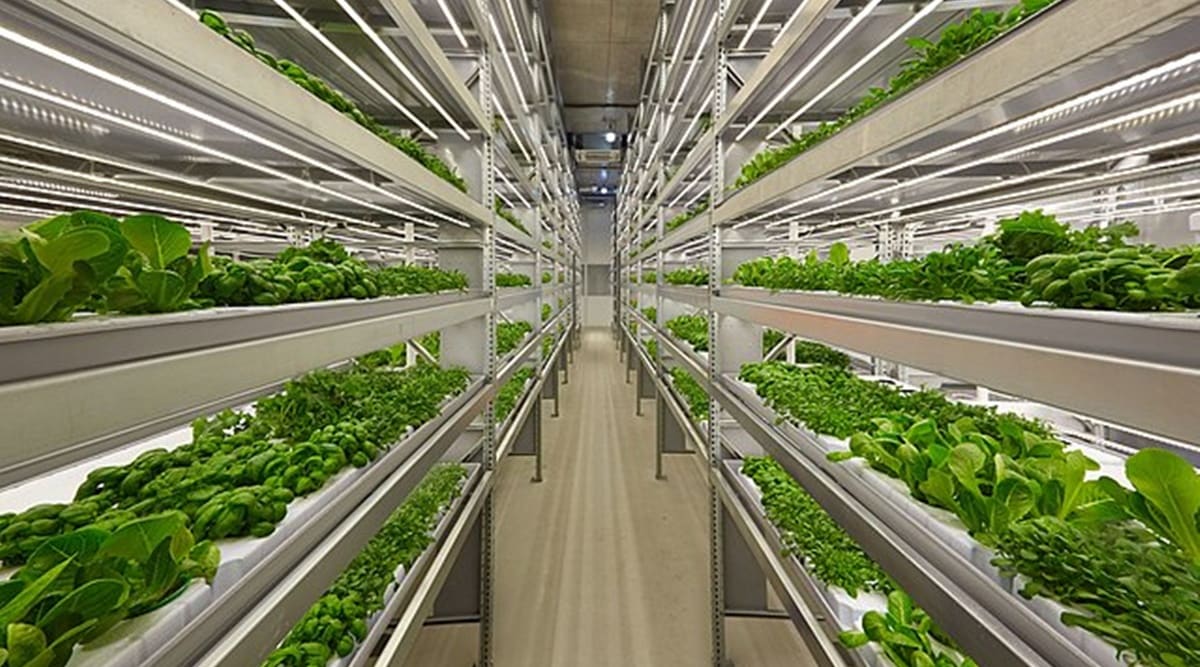
Global vertical farming market, valued at USD 5.81 billion in 2023, is forecast to surge to USD 35.76 billion by 2032. This reflects an impressive compound annual growth rate of 22.42% during the 2024–2032 period—driven by urbanisation, food security concerns, and a clear shift toward green technology.
With traditional agriculture facing rising challenges from erratic weather patterns, soil degradation, and water scarcity, vertical farming offers a resilient alternative. Crops are cultivated in vertically stacked layers, often within climate-controlled environments, eliminating dependency on natural seasons and reducing the footprint of food production in densely packed urban zones.
One of the most compelling growth drivers is the increasing demand for food security in urban areas. As city populations rise, there is growing pressure to produce food closer to consumption points. Vertical farms reduce the need for long-distance transportation, thereby slashing carbon emissions and offering fresher produce to local markets.Further fuelling the momentum are technological innovations. Integration of artificial intelligence (AI), machine learning (ML), and the Internet of Things (IoT) is transforming how urban farms are designed and managed. These tools enable precision agriculture—monitoring crop health, adjusting nutrient levels in real time, and predicting yields with striking accuracy.
The farming techniques at the core of this revolution—hydroponics, aeroponics, and aquaponics—are also evolving. These soil-free systems drastically reduce water usage, in some cases by over 90% compared to conventional farming. Simultaneously, LED grow lights have become more crop-specific and energy-efficient, reducing operational costs while improving quality and yield.Policy backing is also shaping the vertical farming landscape. Governments in North America, Europe, and Asia-Pacific are increasingly viewing vertical agriculture as a key component of climate adaptation and food strategy. Financial incentives, research grants, and smart city initiatives are encouraging adoption, particularly in cities like Singapore, Tokyo, Amsterdam, and New York.
North America continues to dominate in terms of market share, largely due to early adoption and heavy investment by startups and agritech giants. Meanwhile, Europe is expanding steadily, led by its environmentally conscious consumers and stricter farming regulations. The Asia-Pacific region is forecast to see the highest growth, thanks to rapid urbanisation, limited arable land, and strong government support in countries such as Japan and China.The product mix in vertical farming is also diversifying. While leafy greens like spinach and lettuce remain mainstays, advances in lighting and nutrient delivery are enabling the cultivation of strawberries, herbs, tomatoes, and even grains in vertical environments—broadening the commercial appeal.
The market, however, remains competitive. Companies like AeroFarms, Bowery Farming, Infarm, Kalera, and Plenty Unlimited Inc. are investing heavily in automation, modular farm units, and container farming to scale efficiently and maintain quality. Strategic collaborations and R&D are expected to play a critical role in determining future leaders in the sector.
Looking ahead, vertical farming is positioned not just as an innovation in agriculture but as a cornerstone of future urban living. With buildings and warehouses being repurposed into productive farming hubs, the sector promises to redefine how cities feed themselves—more sustainably, equitably, and resiliently.
Also Read : Goa’s Coastal Village ODPs Struck Down HC
