


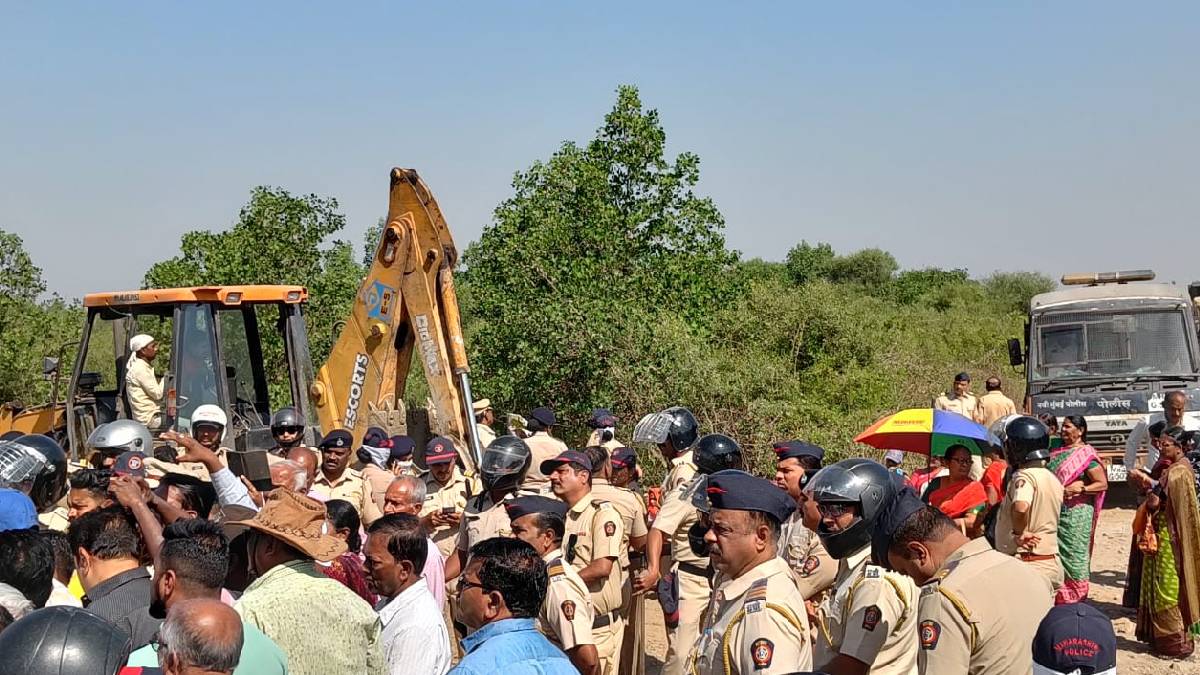
More than 40 years after their displacement for the Jawaharlal Nehru Port project, 256 families from Uran’s Sheva Koliwada are appealing to the Bombay High Court to enforce a long‑pending rehabilitation plan under the Maharashtra PAP Rehabilitation Act, 1976. The petition seeks enforcement of a cleared proposal made on 24 January allocating over 10 hectares for resettlement.
The Maharashtra Small Scale Traditional Fish Workers Union has petitioned on behalf of 88 former farmers and 168 non‑farmers who were displaced in 1983. They have since lived in substandard camps at Hanuman Koliwada without access to adequate water, sanitation, drainage or reliable electricity—conditions that have persisted since 1986, according to an official representing the union. They assert that the failure to provide promised civic infrastructure has burdened them with ongoing hardship and indignity. Under the India’s Project Affected Persons Rehabilitation Act of 1976, statutory obligations require that affected communities receive timely resettlement and compensation. A government proposal approved earlier this year identified 10.16 hectares of land allotted for the Uran PAPs’ rehabilitation. However, neither the Jawaharlal Nehru Port Authority (JNPA) nor the Union Ministry have taken steps to execute the plan, the petition states.
In April, JNPA reportedly informed petitioners that the proposal was under Cabinet review, with approval expected by May. Despite repeated affirmations, no action has been initiated. The petition seeks immediate interim relief—including ₹50 lakh compensation per family for prolonged displacement and mental distress, improved interim civic infrastructure, and a court‑supervised committee to oversee the rehabilitation process. The Mumbai High Court filing further highlights that in 1982 the state government had committed to resettling families displaced by the port’s expansion. Land was reportedly acquired in Boripakhadi in 1985–86, but only two hectares were developed into a temporary transit camp—the remainder still lies undeveloped. An expert on coastal resettlement noted that leaving PAPs in neglected, unsafe camps undermines both human dignity and environmental equity in coastal development.
Traditional fishing livelihoods were disrupted in the wake of the port’s construction, yet no alternate employment or support systems have ever been facilitated, the petition contends. An official from a public policy institute focused on sustainable urban planning commented that while infrastructure sustainability often emphasises green zoning or energy efficiency, rehabilitation equity must remain central in coastal projects—especially when traditional economies are displaced. In response, a JNPA spokesperson affirmed that the port authority has fulfilled its mandate and that responsibility for resettlement falls to the state administration. “Nonetheless, as a special case, JNPA has proposed land and an accompanying budget for rehabilitation. The proposal is awaiting Cabinet sanction,” the spokesperson stated.
Legal experts say that invocation of the Maharashtra PAP Act in court is a significant step, given that rehabilitation obligations under the Act carry binding statutory weight. If successful, the Uran petitioners could set a precedent for timely enforcement of rehabilitation schemes across India, ensuring that project‑affected persons are not left stranded in indefinite limbo. Civil society advocates stress that rehabilitation is not merely a matter of compliance or construct; it reflects the equitable and inclusive ethos needed in India’s emerging coastal megacity framework. Mumbai’s suburbs regularly bear the brunt of infrastructural development, yet PAP concerns such as sustainable housing, livelihood restoration and participatory planning receive limited attention.
Environmental sustainability specialists underline that providing permanent civic amenities and livelihood restoration aligns with net‑zero carbon city planning—replacing high‑carbon relief camps with eco‑friendly homes connected to reliable electricity, clean water, and sanitation. The petition also calls for interim civic improvements to the transit camps—potable water, sanitation, drainage, structural upgrades and essential services—as part of the court’s immediate directives. PAP groups caution that without basic living standards, hopes of meaningful rehabilitation remain elusive. The High Court is expected to schedule hearings shortly. Petitioners emphasise that they seek neither favours nor charity but enforcement of commitments made in law and policy decades ago. As the case moves forward, eco‑urban experts and human rights advocates are watching closely, hoping for a precedent that merges sustainable development with social justice.
For now, the delay in land allocation and rehousing offers a stark reminder of the gap between developmental ambition and delivery—raising critical questions about how India builds cities that are not just smart, but inclusive and equitable. Whether justice will be served after forty years, and whether sustainable rehabilitation can become a model rather than an afterthought, remains to be seen at the court’s ruling.
Also Read : Mumbai Air India Flight Hit by Medical Emergency
