


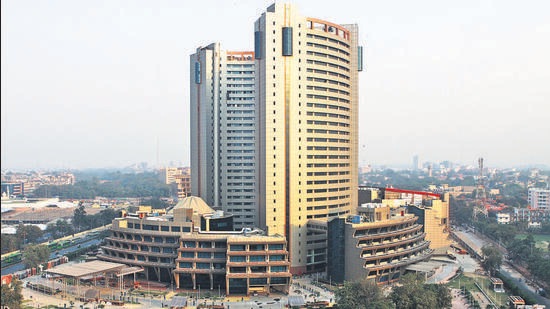
The unified Municipal Corporation of Delhi (MCD) has officially come into existence today, marking a significant shift in the city’s civic administration. With Ashwani Kumar and Gyanesh Bharti assuming their roles as special officer and commissioner respectively, the unification of North, South, and East Delhi Municipal Corporations has been realised under the Delhi Municipal Corporation (Amendment) Act, 2022.
The legislative process for this unification began with the bill’s approval by the Lok Sabha on March 30, followed by the Rajya Sabha on April 5. The Act received presidential assent on April 18, thereby paving the way for the reestablishment of a singular municipal body in the national capital. This move reverses the 2012 decision by the then Sheila Dikshit government to trifurcate the municipal corporation in an effort to decentralise civil administration. However, the division resulted in imbalanced resources, unequal responsibilities, and financial difficulties, particularly for the North and East Delhi Municipal Corporations.
The merger is expected to balance resources, income, and expenses, addressing the financial instability that plagued the North and East bodies, which struggled to regularly pay their employees. The unified MCD is anticipated to enhance civil planning, streamline operations, and standardise rates for services such as parking and property tax.
A significant administrative change accompanying the unification is the reduction of wards from 272 to 250, necessitating a delimitation exercise before upcoming elections. The central government will establish a delimitation commission to manage the demarcation of these new wards.
Ashwani Kumar, a 1992-batch IAS officer of the AGMUT cadre, has been appointed as the special officer and will oversee the unified MCD’s operations until a new House is elected. His role is crucial in stabilising the newly unified civic body, with a focus on improving sanitation services and providing the best civic amenities to the public. “Sanitation is a basic and obligatory function of any civic body and its impact is always clearly visible on the ground,” Kumar stated, emphasising his commitment to enhancing these services across the city.
Gyanesh Bharti, a 1998-batch IAS officer also of the AGMUT cadre, will serve as the commissioner of the unified MCD. Previously the commissioner of the South Delhi Municipal Corporation, Bharti brings significant experience and is expected to play a key role in ensuring the smooth transition and effective management of the unified body.
The unified MCD aims to streamline governance and improve the efficiency of municipal services in Delhi. With this strategic consolidation, the city anticipates better resource allocation, enhanced service delivery, and a more balanced financial structure for its municipal operations. The successful implementation of these changes will be critical in addressing the historical challenges faced by the city’s civic administration and in paving the way for a more organised and efficient municipal governance system in Delhi.
