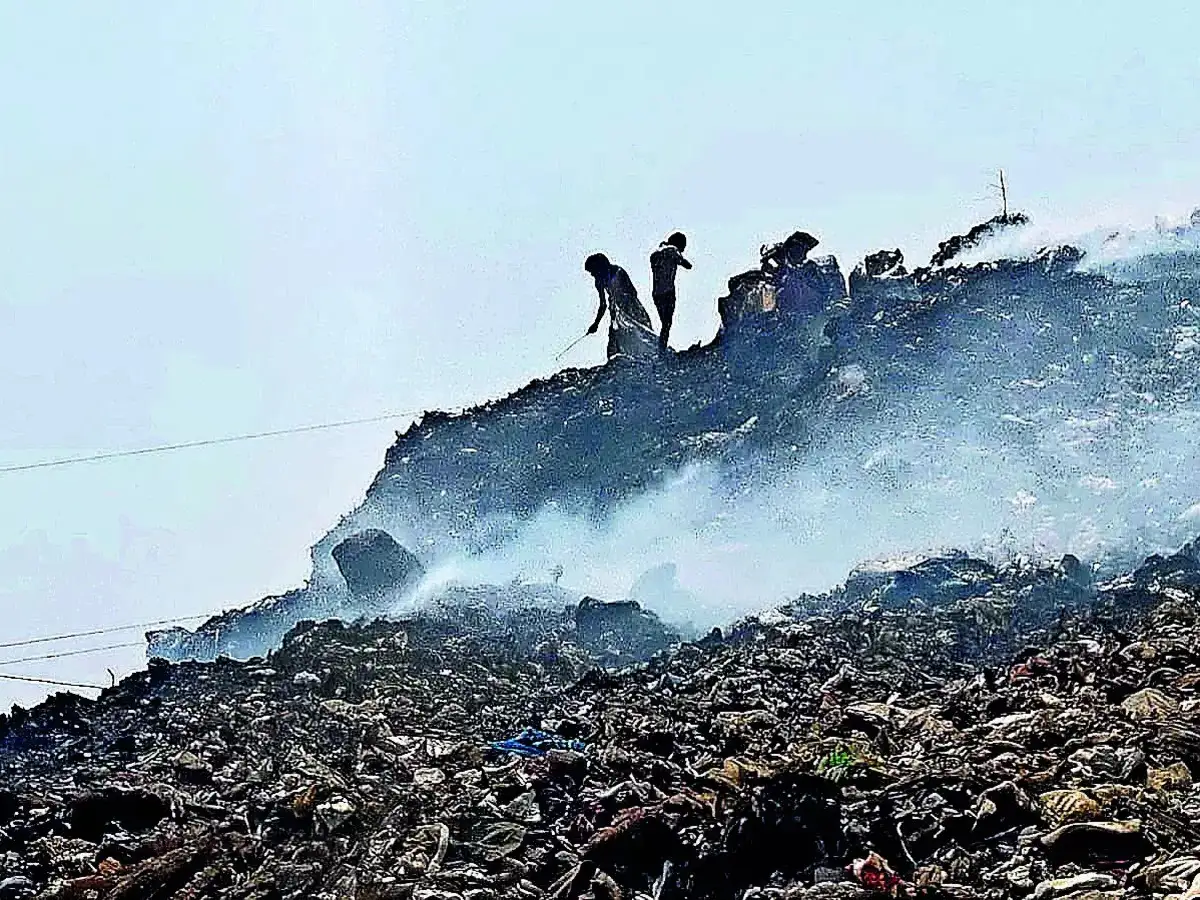
A worsening waste management crisis in Ulhasnagar has brought air quality concerns into sharp focus, with persistent smoke emissions from a local dumping ground impacting thousands of residents and raising broader questions about urban environmental governance. The situation has intensified in recent weeks, prompting health concerns not only for vulnerable populations but also for prominent community figures advised to relocate temporarily due to deteriorating air conditions.
The affected site, located in a densely populated neighbourhood, has become a source of recurring fires and toxic smoke, particularly during late evening and night hours. Residents in surrounding areas report that the air becomes difficult to breathe, with indoor confinement often the only immediate response to the worsening conditions. For many households, this has become a daily reality during the summer months when heat accelerates waste decomposition and increases the risk of combustion. Urban health experts point out that prolonged exposure to such emissions can have serious consequences, especially for children, older adults, and individuals with pre-existing respiratory conditions. The proximity of residential buildings and educational institutions to the dumping ground further amplifies the risk, turning what should be a localised waste management issue into a wider public health challenge.
The Ulhasnagar pollution crisis also highlights systemic issues in waste handling practices. Reports from local representatives indicate that the site may be receiving materials that are not meant for open dumping, including hazardous and organic waste that can trigger fires. Inadequate segregation and the absence of scientific landfill management techniques are believed to be contributing to the frequent outbreaks of smoke. From an urban planning perspective, the situation underscores the need for decentralised and sustainable waste management systems. Cities across the Mumbai Metropolitan Region are grappling with similar challenges, where legacy dumping grounds continue to operate in close proximity to expanding residential zones. Without interventions such as waste processing, biomining, and stricter enforcement of disposal norms, these sites risk becoming long-term environmental liabilities.
Civic authorities have acknowledged the issue and indicated that steps are being taken in coordination with environmental regulators to address the immediate concerns. Measures under consideration include fire control strategies, improved monitoring, and efforts to reduce emissions from the site. However, residents and urban policy observers suggest that temporary fixes will not be sufficient without a comprehensive overhaul of waste management infrastructure. The Ulhasnagar pollution crisis serves as a reminder of the human cost of delayed urban reforms. While the relocation of high-profile individuals has drawn attention to the issue, thousands of residents continue to live with its consequences daily.
As cities expand and populations grow, the need for resilient and environmentally responsible waste systems becomes increasingly urgent. Addressing such crises will require not only technical solutions but also sustained administrative focus and community engagement to ensure cleaner and safer urban living conditions.
Ulhasnagar Waste Crisis Triggers Health And Air Concerns