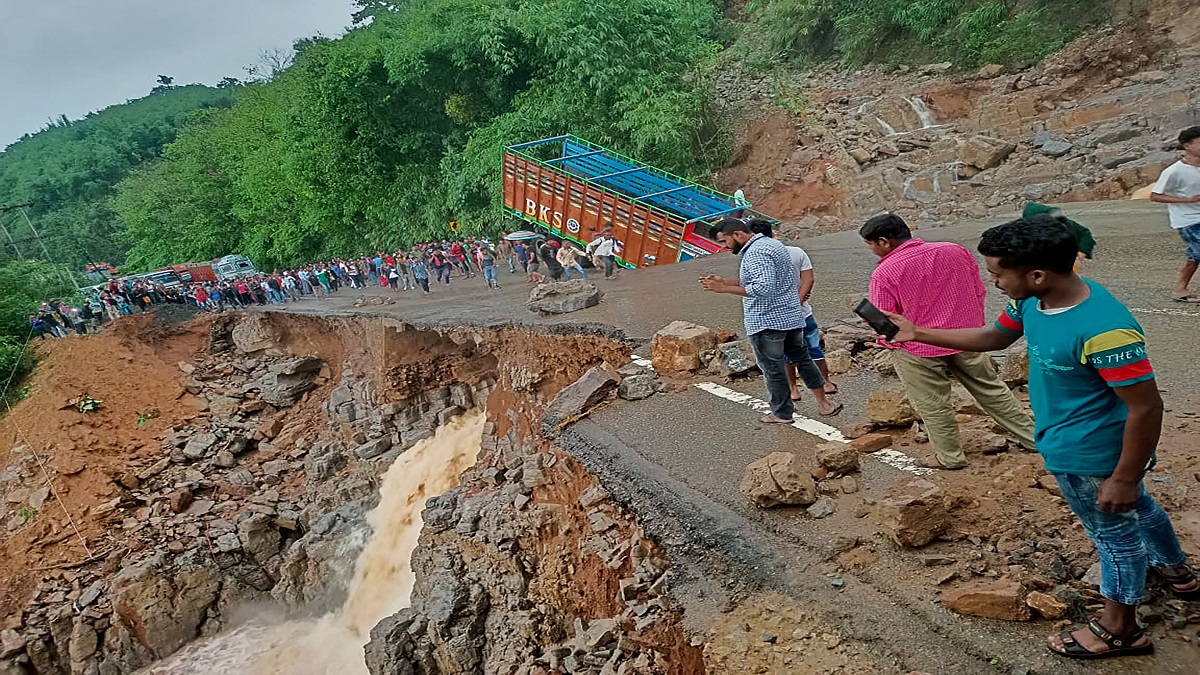
Tripura Faces Isolation as National Highways Crumble
Tripura is currently grappling with an acute infrastructure crisis as its vital National Highways are rapidly deteriorating, leading to significant isolation of the state. Following extensive public outcry and a visit by a central government inspection team, the state government has assured swift commencement of urgent repair works. This emergent situation not only disrupts daily life and commerce but also casts a long shadow over the quality of recently completed infrastructure projects, highlighting critical challenges in ensuring resilient, sustainable, and equitable urban and regional connectivity in the Northeast.
The primary artery connecting Tripura to the rest of India, the stretch between Churaibari and Agartala, has become nearly impassable. Relentless monsoon rainfall and subsequent landslides across the Longtharai and Atharamura hill ranges have resulted in widespread debris accumulation, severe waterlogging, and collapsed road segments. This has brought interstate transportation and essential logistics to a grinding halt, causing immense frustration among transporters and local residents who feel increasingly cut off from the mainland. The economic implications are severe, with disruption to supply chains and an adverse impact on regional trade and commerce.
Adding to the gravity of the situation is the alarming condition of other newly constructed roads, including the Kamalpur–Agartala route via Khowai and those traversing the Jampui Hills. Despite being part of ambitious national highway expansion schemes, these roads are exhibiting premature signs of wear and tear, raising serious questions about the standards of construction and the accountability of contractors involved. Public sentiment reflects a deep-seated concern regarding inadequate engineering practices, a glaring absence of clear signage, and minimal adherence to safety protocols at numerous work sites across the state.
A significant systemic issue contributing to public frustration is the apparent lack of a functional grievance redressal mechanism. Citizens report having no centralised platform to report road failures or receive updates on repair timelines. This administrative vacuum has amplified feelings of neglect and disenfranchisement among the populace, who are left without adequate channels to voice their concerns or hold responsible agencies accountable. Such a deficit in governance transparency undermines public trust and impedes collective efforts towards building resilient and citizen-centric infrastructure.
In response to these pressing issues, the state leadership has pledged decisive action to not only restore critical connectivity but also ensure the long-term durability of infrastructure. Calls from citizens for an independent audit of roadworks, stringent accountability from contractors, and enhanced oversight by the National Highways Authority of India (NHAI) are growing louder. This crisis presents a pivotal moment for a comprehensive re-evaluation of infrastructure development policies in Tripura, pushing for a renewed commitment to high-quality, eco-friendly, and transparent projects that genuinely serve the interests of all citizens, fostering a truly connected and equitable future for the state.