


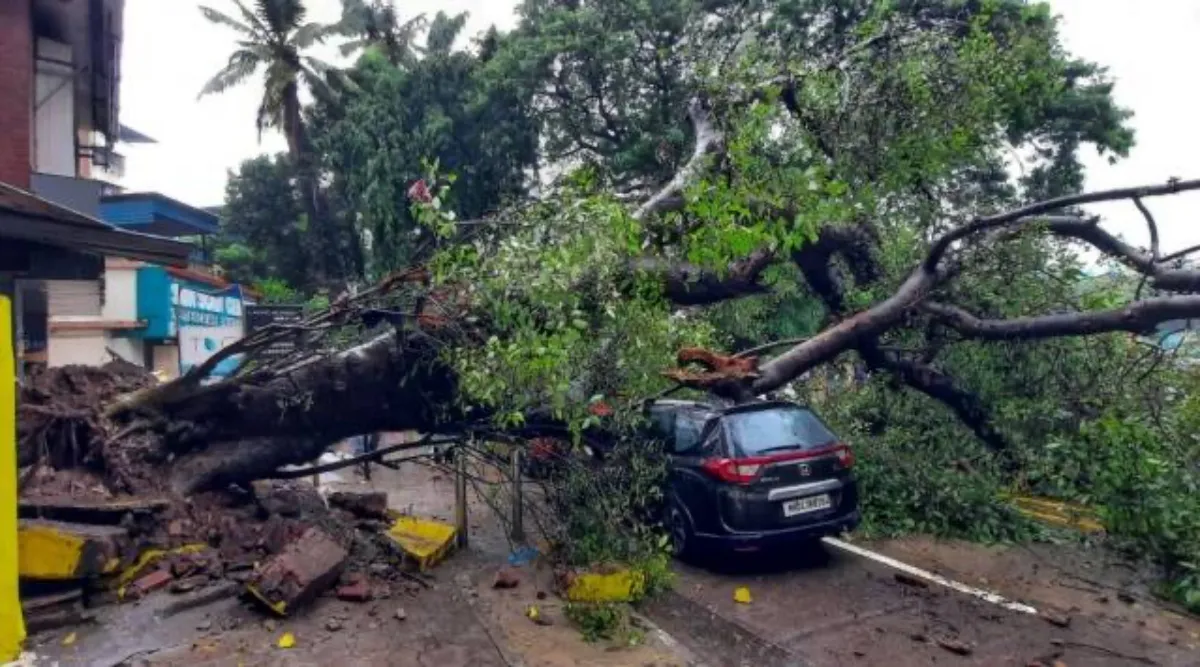
Mumbai witnessed another tragic incident on Tuesday as a 57-year-old woman lost her life due to a tree collapse in the Sanjay Nagar locality of Parel. This marks the second fatal tree-related accident in the city within two days.According to civic officials, the deceased was walking along the road around 10 am when a banyan tree suddenly crashed onto her. The victim, identified as Mistry, became trapped beneath the massive trunk. It took the concerted efforts of nearly 30 people to extricate her from under the fallen tree.
Mistry was promptly transported to the civic-run KEM Hospital, where she was later declared dead. The incident has raised significant concerns about the safety and maintenance of trees in urban areas, especially during the monsoon season.Civic authorities have stated that the banyan tree in question was not under their direct maintenance. “This tree was not planted by us. Even though its maintenance was not our responsibility, we had trimmed its top branches during our pre-monsoon pruning drive. Since the tree was planted on the roadside, the roots were unable to penetrate deeply into the ground, leading to its eventual collapse,” explained an official. The banyan tree is estimated to be at least 20 years old.The tragic incident followed another fatal tree collapse on Monday, when a 45-year-old man, Amit Jagtap, died after a banyan tree fell on him while he was riding his two-wheeler near BDD Chawl.
Data from the Brihanmumbai Municipal Corporation (BMC) reveals that since the onset of the monsoon on June 9, there have been 106 recorded complaints related to tree collapses. In an attempt to prevent such incidents, the BMC conducts an annual pre-monsoon pruning drive. This year, the target was set to prune 1.11 lakh trees between April and June, aiming to reduce the weight of branches and mitigate the risk of them collapsing during storms or strong winds.These incidents have sparked a debate on the adequacy of the city’s tree maintenance efforts. While the BMC undertakes significant pruning activities, the incidents highlight the challenges of managing urban greenery in densely populated areas. The precarious placement of trees and inadequate root systems, especially for older and larger trees, pose a continuing risk during the monsoon season.The recent fatalities underscore the urgent need for a comprehensive review of urban tree management practices in Mumbai. Enhanced monitoring, regular maintenance, and strategic planning for tree planting could help mitigate the risks posed by ageing and unstable trees. As the city continues to develop, balancing the preservation of green spaces with public safety remains a critical concern for urban planners and civic authorities alike.
