


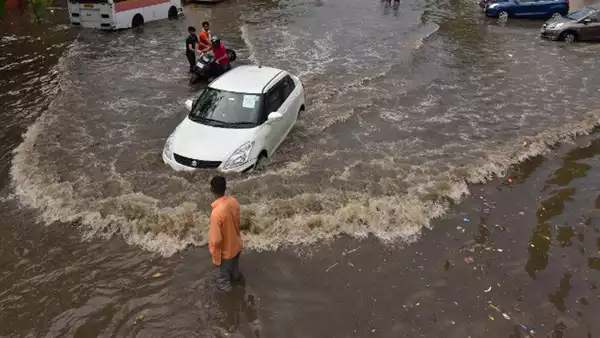
Jaipur encountered significant urban flooding and traffic disruptions on Wednesday evening, triggered by a brief yet intense two-hour downpour across the city. The aftermath of the rainfall left major thoroughfares such as MI Road, Sikar Road, and Ajmer Road submerged, leading to severe traffic congestion and challenges for commuters.
Social media platforms were inundated with videos depicting vehicles submerged in rainwater, with two-wheeler riders navigating through knee-deep floods. In the historic Walled City area, establishments in Chandpol Market and Gangauri Bazaar experienced water ingress, highlighting vulnerabilities in the city’s drainage infrastructure. Local shopkeepers expressed dismay over the rapid flooding, attributing it to inadequate preparedness by civic authorities. “Not even an hour of rain, and Jaipur is flooded. The drainage system really has gone down the drain in the city,” lamented one shopkeeper, reflecting widespread frustration over the recurring issue.
The Jaipur Municipal Corporation (JMC) promptly activated flood control rooms and circulated helpline numbers for residents across affected zones. Residents were urged to report waterlogging and related issues to facilitate swift response and assistance. Officials from the JMC acknowledged the impact of the heavy rainfall within a short timeframe, assuring residents that efforts were underway to alleviate the waterlogging. The Chairperson of the sewerage committee confirmed that all drains were cleared prior to the monsoon season, emphasizing that the water would naturally recede within one to two hours.
As Jaipur strives to enhance its resilience against such weather-related challenges, stakeholders are advocating for sustained investments in infrastructure upgrades and proactive maintenance of drainage systems. The incident underscores the necessity for a comprehensive approach to urban planning that prioritizes climate resilience and sustainable development.
