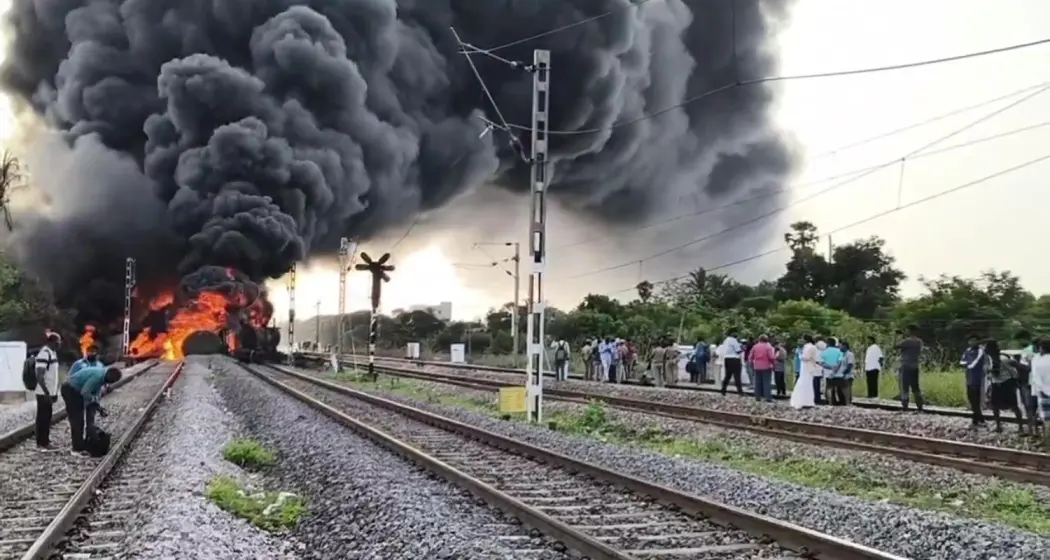
Tiruvallur Air Quality Deteriorates After Fire On Diesel-Laden Freight Train
Air quality in Tamil Nadu’s Tiruvallur district plummeted on Sunday after a fire broke out on a diesel-laden freight train, triggering a sudden spike in airborne pollutants. According to real-time data from air quality monitoring networks, the AQI touched 68 by 10:30 am, falling into the ‘Poor’ category. The Central Pollution Control Board (CPCB) issued a warning citing elevated levels of particulate matter, attributed to the combustion of petroleum products during the incident.
According to real-time data captured at 10:30 am from the World Air Quality Index platform, Tiruvallur’s AQI stood at 68. While not in the ‘Severe’ range, the spike was significant enough for the Central Pollution Control Board (CPCB) to issue a cautionary statement. The board attributed the air quality deterioration to the intense combustion of petroleum-based products—specifically diesel—that released harmful particulate matter into the local atmosphere. Petroleum fires are known to emit a complex mix of pollutants, including nitrogen oxides, sulphur dioxide, volatile organic compounds (VOCs), and fine particulate matter (PM2.5 and PM10), which can have serious short- and long-term health consequences. Residents in and around the affected zone reported a heavy smoky haze throughout the morning, with visibility impacted and respiratory discomfort experienced by vulnerable groups including children and the elderly.
While fire and rescue services reportedly contained the blaze, the environmental after-effects have raised concerns about the emergency preparedness and pollution management mechanisms in place for such incidents. Experts say that such accidental emissions can have prolonged localised impacts, especially in urban peripheries with limited green buffers or existing pollution burdens. CPCB officials noted that while the AQI reading had not entered the ‘Very Poor’ or ‘Severe’ zones, the suddenness of the change was a concern. They urged local authorities to step up ambient air monitoring and advised residents to avoid prolonged outdoor exposure. Precautionary health measures, including the use of masks and staying indoors during peak pollution hours, were recommended.
This incident also brings to light the risks associated with transporting large volumes of diesel and other flammable materials through densely populated or environmentally sensitive areas. Environmental activists have demanded a thorough investigation into the cause of the fire and a public report on its ecological impact. As the immediate air quality effects begin to stabilise, the CPCB and Tamil Nadu Pollution Control Board are expected to continue monitoring the area over the next 48 hours. Meanwhile, calls are growing for a comprehensive disaster management protocol that prioritises both fire safety and environmental safeguards in freight operations involving hazardous materials.