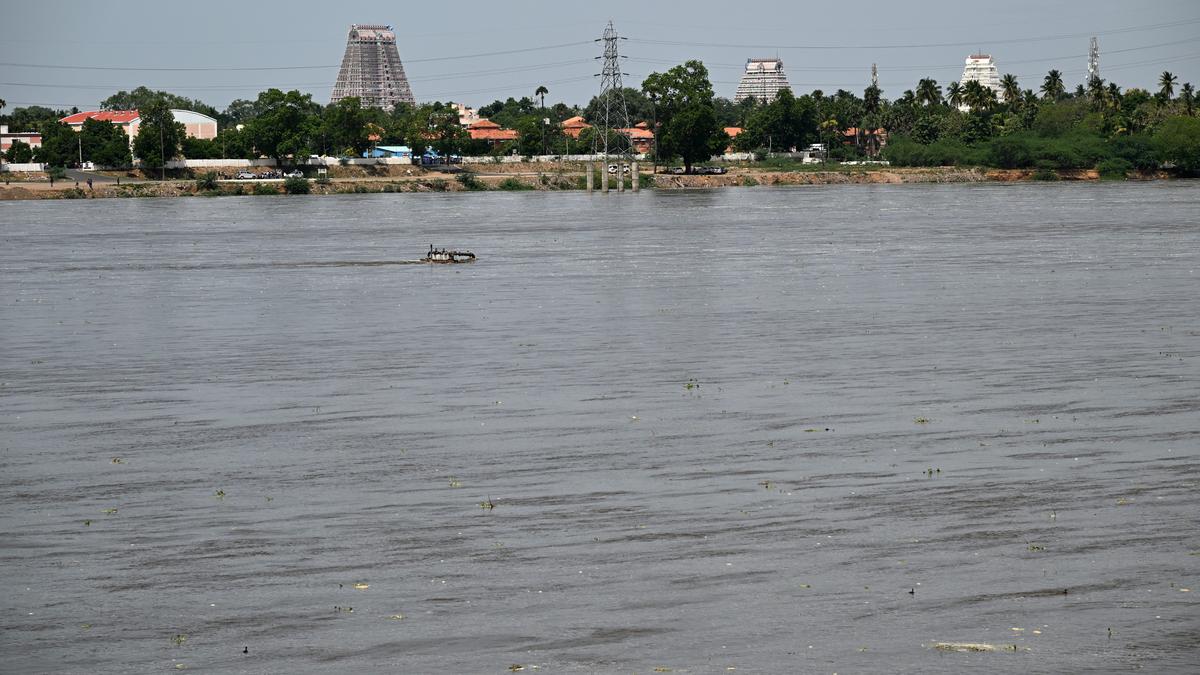
Tiruchi’s Tower Work Stalls as Kollidam Water Level Surges
Construction of high-tension power transmission towers in Tiruchi has been brought to a halt due to rising water levels in the Kollidam River. The infrastructure project, aimed at replacing two collapsed towers from last year’s floods, was underway when surplus water discharge forced a suspension of work. While emergency power supply is being managed from an alternate substation, residents across multiple neighbourhoods continue to face frequent electricity outages and voltage fluctuations.
The Tamil Nadu Transmission Corporation (Tantransco) had initiated the reconstruction of two high-tension towers in the Kollidam riverbed to restore stable power to areas like Thiruvanaikoil and Srirangam. These towers had collapsed last monsoon due to heavy discharge from Upper Anicut, causing widespread disruptions. The ₹3 crore project included a new multi-circuit tower and a reinforced foundation designed to endure water pressure. However, with the Water Resources Department recently releasing surplus water into the river, construction has been suspended as a safety measure. Experts confirmed that while one tower has been successfully erected, all materials and equipment for the second are being safeguarded until conditions improve. Continuous monitoring is being conducted to assess erosion risks and ensure the structural safety of the completed tower. Despite the use of advanced pile foundation techniques, officials prefer caution until the water fully recedes. The monsoon’s impact underscores the vulnerability of riverside infrastructure in flood-prone regions.
In the absence of completed transmission towers, power supply to affected areas such as Nochiyam, Mannachanallur, and No. 1 Tollgate is being managed via the Samayapuram substation. However, residents continue to report unstable power, with frequent outages and voltage drops disrupting daily life. The situation is particularly concerning for households with elderly residents and those dependent on electronic medical equipment. Infrastructure specialists argue that future power projects near major river systems should integrate climate-adaptive designs and redundancy mechanisms to avoid repeated service lapses during seasonal discharges. Meanwhile, civic bodies are coordinating closely to track rainfall, dam releases, and potential risks to ongoing works in water-adjacent zones. While flood-resilient engineering is built into the design, authorities stress that uninterrupted access to the site is crucial for timely completion. The project timeline remains uncertain, contingent on the pace of water recession and on-ground assessments by technical teams.
As the Kollidam River continues to carry high volumes of discharge, Tiruchi’s critical transmission tower work remains suspended, affecting power stability in multiple neighbourhoods. While precautionary steps and engineering foresight have prevented damage so far, the recurring impact of monsoonal surges points to the need for resilient planning and quicker recovery protocols. Residents remain hopeful that once the water recedes, construction will resume without further delay. The project’s completion is essential not only for restoring normal power supply but also for reinforcing the region’s preparedness against future climate-linked disruptions to essential infrastructure.