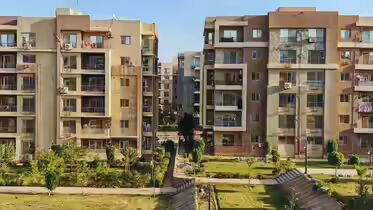
Luxury housing demand in India is no longer limited to large metropolitan markets, with a growing share of high-end real-estate investment shifting toward smaller cities that are benefiting from improved infrastructure and rising incomes.
Recent market data suggests the luxury real estate growth beyond metros trend is accelerating, as developers and buyers increasingly view tier-two cities as long-term investment destinations rather than secondary markets. Financial-sector research shows that demand for higher-priced homes is rising even in cities that were traditionally dominated by mid-income housing. In several tier-two markets, homes priced above ₹1 crore are gaining market share, while lower-priced housing segments are seeing slower growth. Analysts say this reflects a combination of rising land prices, changing buyer aspirations and the impact of new highways, airports and urban infrastructure projects that are improving connectivity between emerging cities and major economic centres. The shift is also being supported by changes in the way housing finance is expanding across the country.
A recent lending report found that tier-two and tier-three cities now account for a majority of new home-loan volumes, highlighting the growing financial capacity of buyers outside traditional metro markets. Urban economists say this trend is closely linked to the luxury real estate growth beyond metros, as rising incomes and easier access to credit are enabling more buyers to consider premium homes in cities where land and construction costs are still relatively moderate. Infrastructure investment is playing a decisive role in reshaping the geography of high-end housing demand. New expressways, regional airports and metro-rail expansions are reducing travel time between smaller cities and major business hubs, making it easier for professionals and entrepreneurs to live outside metros without losing access to economic opportunities.
According to industry research, several emerging urban centres are now seeing strong price appreciation expectations, with land values in some tier-two cities projected to rise significantly over the next few years as infrastructure projects are completed. The change is also visible at the top end of the market. Even within larger urban regions, high-end property demand is shifting from core city centres to peripheral or emerging zones that offer larger homes, better planning and lower congestion. Recent market reports show that new wealth creation, including startup-led income growth and professional migration to smaller cities, is influencing the way developers design premium housing projects. Urban planners believe the broader significance of this shift lies in how India’s cities are evolving. As luxury housing spreads beyond traditional metros, smaller cities are increasingly being planned around mixed-use developments, better public infrastructure and more sustainable urban layouts. Instead of high-density growth in a few major cities, the trend points toward a more distributed model of urban expansion that could reduce pressure on metro infrastructure while creating new economic hubs across the country.
The luxury real estate growth beyond metros trend therefore reflects more than a change in buyer preference. It signals a deeper transformation in India’s urban economy—one where infrastructure investment, rising incomes and new employment opportunities are reshaping how and where people choose to live. If current momentum continues, the next phase of high-end housing demand may be defined not by traditional metros, but by emerging cities that are quickly positioning themselves as the country’s next real-estate growth centres.