


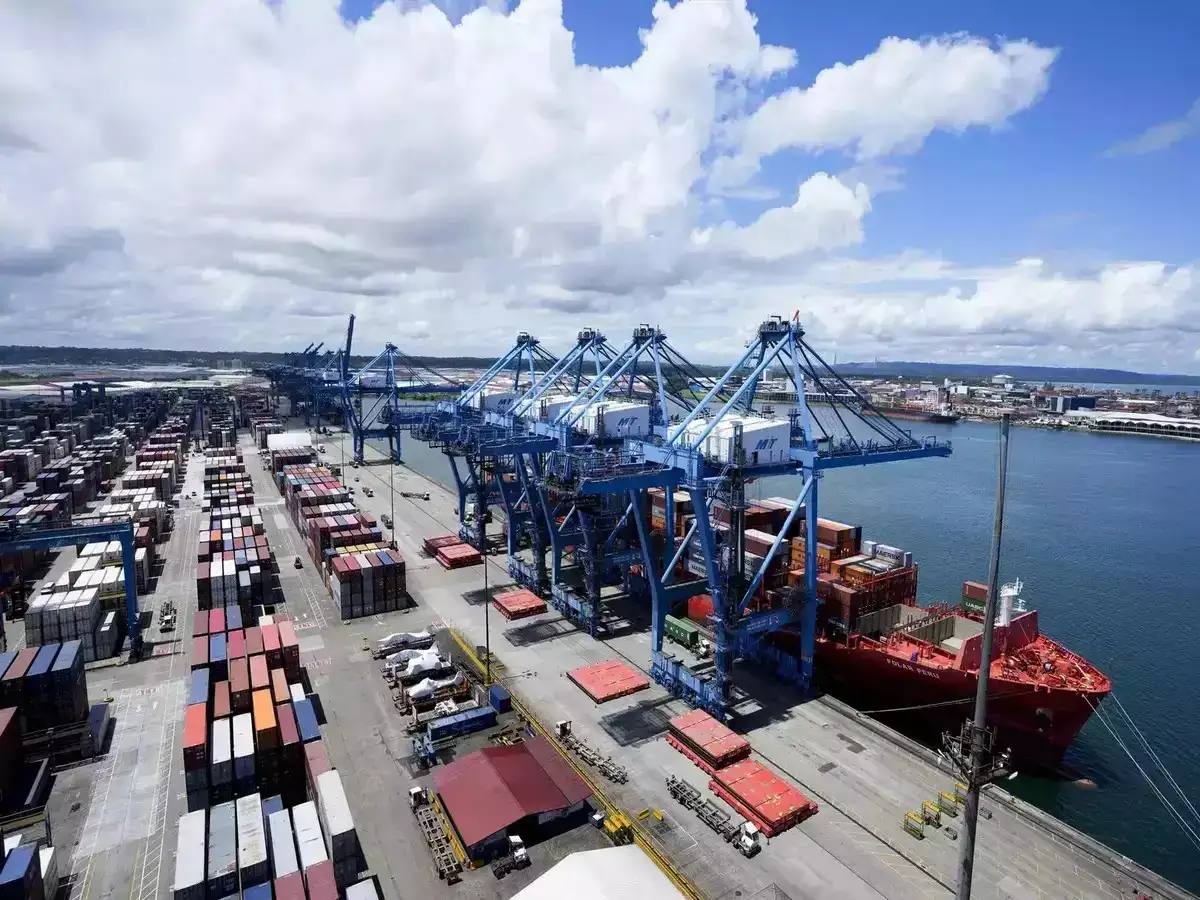
In a setback to India’s port-led development vision, the much-anticipated outer harbour expansion project at VOC Port in Thoothukudi, Tamil Nadu, has once again failed to attract any qualified bidders, forcing the port authority to cancel the tender for a second time. With an estimated project cost of ₹70,560 crore, the mega maritime infrastructure initiative is now at risk of further delay as authorities reconsider the plan’s structure and feasibility.
Originally floated in December 2024 under the Public-Private Partnership (PPP) model, the Request for Proposal (RFP) was meant to invite global developers and operators to transform VOC Port into a modern gateway for international trade. However, the absence of serious commercial interest has led the port authority to withdraw the bid from active circulation. Senior officials are now expected to return to the drawing board to address the concerns that may be deterring potential investors, including viability gap funding, regulatory clarity, and projected traffic volumes.
The VOC Port Authority had projected the outer harbour to serve as a critical anchor in India’s Blue Economy ambitions, with the capacity to handle large container and bulk cargo vessels that currently bypass the Tamil Nadu coastline in favour of Colombo or Singapore. Once operational, the project would have significantly reduced logistics costs, boosted local employment, and enhanced Thoothukudi’s role as a regional trade hub. But experts suggest that the project’s massive scale, coupled with muted global investor sentiment and environmental constraints, may have contributed to its poor market response.
Meanwhile, in Karnataka, the port infrastructure story offers a more optimistic chapter. Sea Lord Containers, a subsidiary of Aegis Logistics, has successfully commissioned a new cryogenic LPG terminal in Mangalore. The facility, operational since 12 June 2025, adds a substantial 82,000 metric tonnes of static storage capacity to India’s energy logistics infrastructure. Developed by SCL for Aegis Vopak Terminals, the facility aims to bridge supply chain gaps in the clean fuel segment and reduce import dependency bottlenecks. The project is also expected to be formally transferred to Aegis Vopak Terminals Ltd, a strategic joint venture that leverages Aegis’s downstream capabilities with Vopak’s global storage expertise.
Adding to the momentum in India’s port-linked energy infrastructure, the Cochin Port Authority has signed a strategic MoU with Oil India to establish a shore base in support of offshore hydrocarbon exploration in the Kerala-Konkan Basin. The proposed shore base at Willingdon Island, announced on 12 June, will include warehousing, dry bulk handling systems, and essential port infrastructure tailored to Oil India’s upcoming drilling campaign scheduled for later in 2025. This collaboration is expected to not only strengthen India’s domestic energy security but also revitalise Cochin’s standing as a vital logistics node for offshore exploration.
As India seeks to decarbonise and expand its maritime trade capacity, the contrasting fortunes of these port developments underscore a critical lesson: while public-private partnerships remain essential, they must be structured with financial prudence, stakeholder alignment, and sustainable outcomes at their core. As VOC Port prepares for a third attempt to secure developers, port planners will need to innovate financing mechanisms, ensure ecological safeguards, and align closely with India’s wider net-zero and inclusive growth goals.
Also Read : Goa CM Bans Ola Uber to Protect Locals
