


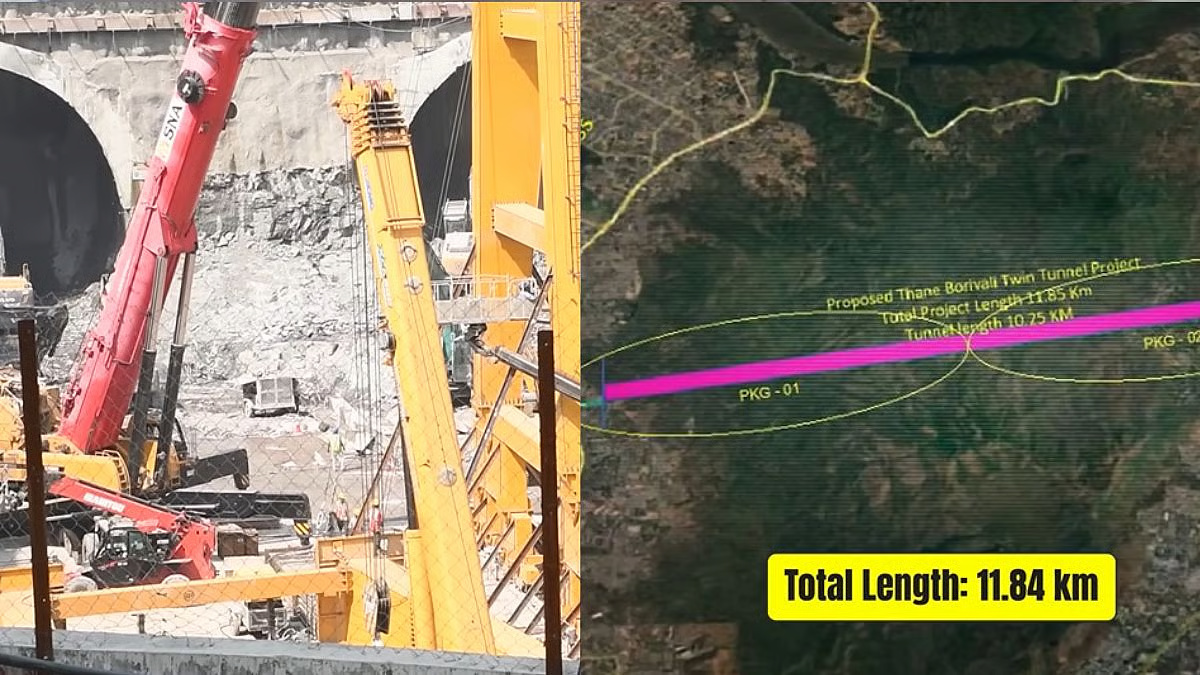
Construction activity for the Thane–Borivali tunnel has entered a more intensive phase, prompting a six-month diversion of traffic between Mulla Baug and Neelkanth Green. The rerouting, enforced by Thane Traffic Police from 14 November until 11 May 2026, aims to create uninterrupted working stretches for the 11.8-kilometre twin-tube tunnel being built beneath the Sanjay Gandhi National Park. Once complete, the infrastructure is expected to reduce cross-city travel time from nearly 90 minutes to as little as 15 minutes.
The project, implemented by the metropolitan development authority, is one of the largest urban tunnelling efforts attempted within the Mumbai Metropolitan Region. Officials said the extended closure of local roads is necessary to accelerate excavation, stabilisation, and environmental mitigation works. “The diversions are temporary but essential to maintain construction safety and ensure that the project progresses within timelines,” an official noted. Residents in the surrounding neighbourhoods have raised concerns that the altered traffic pattern may worsen congestion along narrow internal roads. Many have also expressed anxiety about dust, vibrations, and round-the-clock movement of construction vehicles. These concerns have prompted political representatives and local organisations to seek more community-friendly solutions, emphasising that major mobility upgrades must not come at the cost of public health.
In response, state leadership has directed modifications to the tunnel design. The exit point on the Thane side will now be extended by around 200 metres so that the opening is positioned farther from dense residential clusters. Additionally, instead of transporting excavated material through heavy trucks, the agency will deploy a closed conveyor-belt system. Urban planners say such measures reflect a growing shift in Indian infrastructure projects, where environmental safeguards and community sensitivities are beginning to influence design decisions. Experts suggest the Thane–Borivali tunnel could eventually become a catalyst for more sustainable regional mobility by reducing congestion and cutting fuel consumption stemming from long detours through the arterial Ghodbunder Road. A transport expert noted that “long-range tunnels reduce idling emissions and improve the efficiency of cross-city travel, especially when integrated with broader climate-responsive mobility plans.”
Despite these longer-term advantages, commuters are preparing for several months of slower travel. Traffic Police have urged road users to follow diversion signage and use navigation apps updated with the new routing details. The administration has also been advised to enhance pedestrian safety, improve lighting along detour roads, and deploy additional marshals at critical junctions to reduce bottlenecks. Officials maintain that the diversion period will be closely monitored, with the possibility of mid-course adjustments if severe congestion arises. While the construction phase is likely to remain demanding for daily commuters, planners emphasise that the tunnel is expected to bring long-term relief, provide a more equitable mobility corridor, and reduce surface-level environmental stress once operational.
Also Read: Navi Mumbai Airport Begins Akasa Air Operations Bringing Affordable Domestic Connectivity
