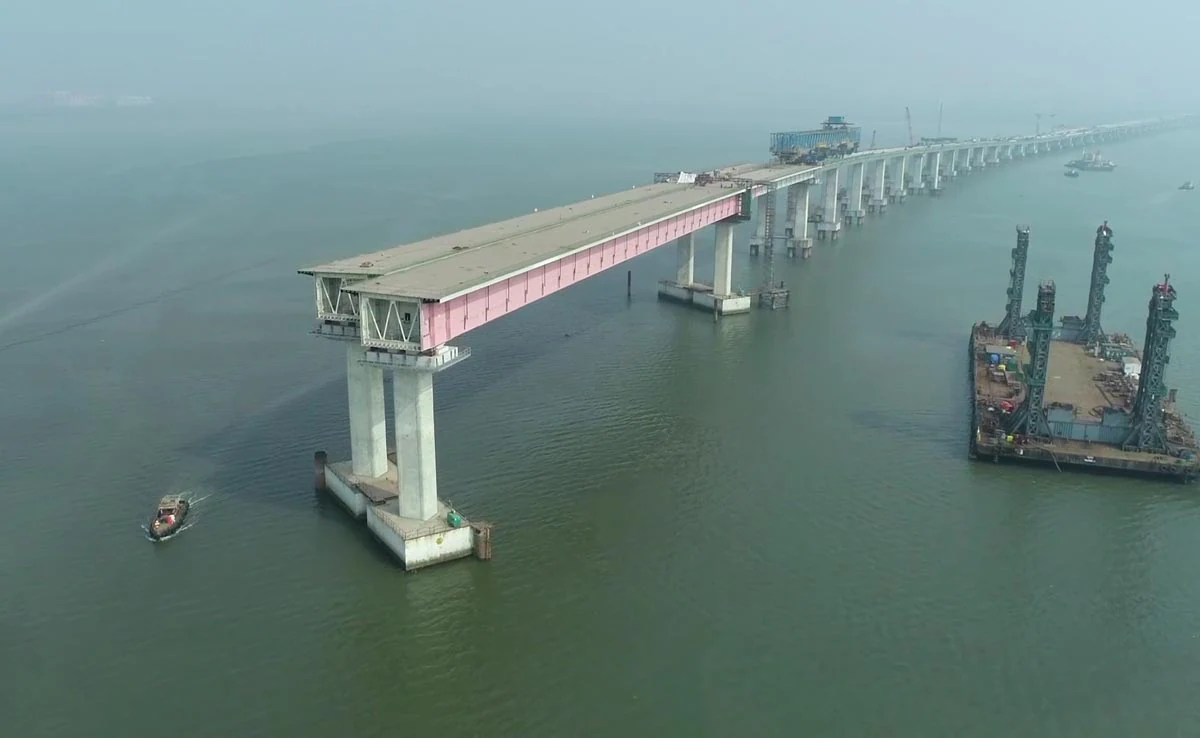
A new cross-creek road corridor connecting Thane and Navi Mumbai is set to reshape mobility across the Mumbai Metropolitan Region (MMR), with authorities approving a ₹723 crore infrastructure project aimed at easing chronic congestion and improving east–west connectivity. The initiative is expected to significantly shorten travel durations between two of the region’s fastest-growing urban centres, with wider implications for commuting patterns, real estate dynamics, and regional planning.
The Thane Navi Mumbai link project proposes a direct route across Thane Creek, offering an alternative to heavily burdened corridors such as the Airoli bridge and Thane–Belapur Road. These existing routes currently handle a substantial share of intercity traffic, often resulting in prolonged delays during peak hours. By redistributing traffic flows, the new link is expected to reduce travel time by up to half an hour for daily commuters. For residents and workers moving between Thane, Ghansoli, Airoli and other nodes in Navi Mumbai, the Thane Navi Mumbai link project could improve predictability in travel, a key factor influencing both quality of life and economic productivity. Reduced congestion also has secondary benefits, including lower fuel consumption and potentially decreased vehicular emissions along overburdened stretches.
Urban development experts view the project as part of a larger recalibration of infrastructure priorities within the MMR. As residential and commercial growth accelerates beyond Mumbai’s core, the need for cross-regional connectivity has intensified. The Thane Navi Mumbai link project addresses a structural gap in the network, where limited crossing points over the creek have historically constrained movement and amplified traffic pressure. At the same time, planners caution that road expansion alone may not fully resolve congestion challenges unless supported by integrated public transport systems. The MMR is simultaneously investing in metro corridors, suburban rail upgrades, and multimodal transport hubs. Aligning such projects with new road infrastructure will be essential to ensure balanced and sustainable mobility outcomes.
From a real estate perspective, improved connectivity tends to influence land values and development interest along emerging corridors. Areas in proximity to the proposed alignment could see increased demand, particularly from homebuyers and businesses seeking better access between employment hubs and residential zones. However, industry observers emphasise the importance of regulated growth to prevent unplanned urban sprawl and infrastructure strain. Environmental considerations are also expected to play a role as the project advances through design and clearance stages. Infrastructure development across ecologically sensitive zones such as creek systems requires careful planning to mitigate long-term impacts, particularly in a region already facing climate-related vulnerabilities including flooding and coastal stress.
As the Thane Navi Mumbai link project moves towards implementation, its success will depend not only on timely execution but also on how effectively it integrates with the region’s broader vision for resilient and inclusive urban growth. For a metropolitan area grappling with rising travel demand, the project marks a critical step, but also underscores the need for coordinated, future-ready infrastructure planning.
Thane Navi Mumbai Link To Cut Commute Time