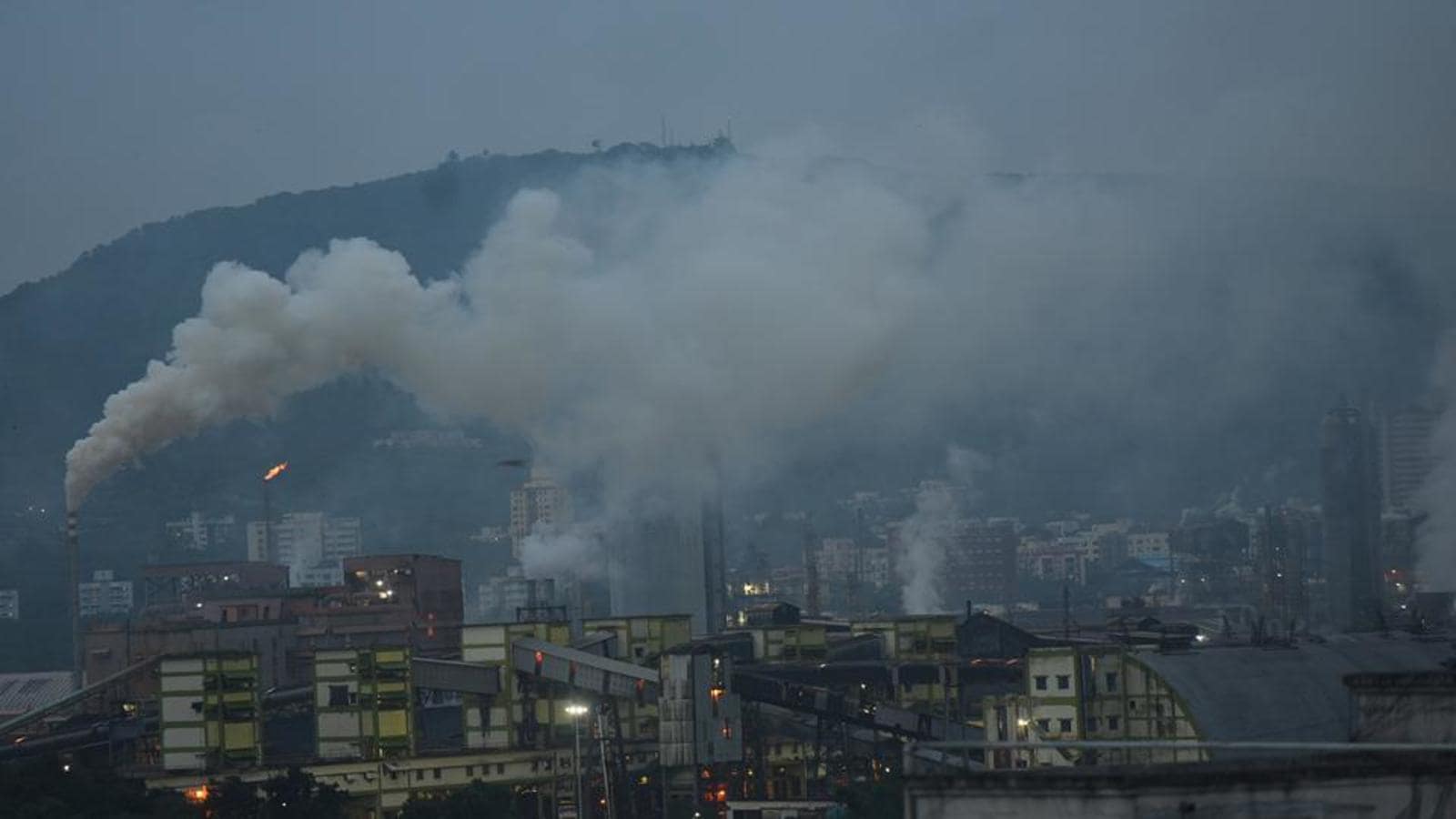
As winter sets in, Maharashtra’s cities are once again grappling with a sharp spike in air pollution levels, exposing millions of residents to worsening respiratory and cardiovascular risks. A new analysis by environmental organisations has found that particulate matter concentrations — particularly PM2.5 and PM10 — continue to exceed safe limits in several urban centres, including Thane, Navi Mumbai, Bhiwandi, and Boisar.
The report, jointly prepared by the Vataavaran Foundation and Environcatalyst, examined air quality data from across the state for 2024–25. It revealed that despite some progress in reducing pollution since 2019–20, overall air quality remains far from meeting national and global standards. Experts attribute this recurring seasonal deterioration to factors such as unchecked construction dust, industrial emissions, vehicular exhaust, and the drop in wind speed during winter that traps pollutants near the surface. In Mumbai, the average PM2.5 concentration was recorded at 35 µg/m³ — within India’s national limit but nearly double the World Health Organization’s (WHO) recommended level of 15 µg/m³. PM10 levels stood at 91 µg/m³, with officials noting that intermittent monsoon rains earlier in the year may have temporarily improved the city’s air quality. However, the situation in neighbouring Thane and Navi Mumbai appears more concerning.
Thane’s PM2.5 level averaged 38 µg/m³ and PM10 reached 83 µg/m³, driven largely by road congestion and nearby industrial activities. Navi Mumbai — a rapidly expanding urban and industrial corridor — saw PM10 levels surge by nearly 100% since 2019–20, now touching 102 µg/m³. Environmental experts warn that the combination of construction, heavy vehicular density, and limited greenery in newly urbanised areas has amplified particulate matter generation. Other cities in the Mumbai Metropolitan Region (MMR) show similar trends. Mira-Bhayandar and Virar reported PM10 concentrations exceeding 90 µg/m³, while Boisar and Bhiwandi, both major industrial zones, recorded some of the highest particulate levels in the state. Kalyan, despite comparatively lower PM2.5 levels, still breached PM10 standards.
Under India’s National Ambient Air Quality Standards (NAAQS), the permissible annual average is 40 µg/m³ for PM2.5 and 60 µg/m³ for PM10. Most Maharashtra cities continue to surpass these benchmarks, signalling limited progress under the National Clean Air Programme (NCAP), particularly in smaller municipalities that receive lower funding allocations. Environmental planners stress that Maharashtra must adopt region-specific clean air strategies, focusing on electrified public transport, stringent construction controls, and enhanced green cover. “Addressing air pollution isn’t just about emission reduction; it’s about reimagining cities for cleaner, more breathable futures,” said an urban environment expert.
With temperatures dropping further, health experts urge citizens to limit outdoor exposure during peak pollution hours and advocate for collective community action to curb emissions at the neighbourhood level.
Thane, Navi Mumbai, Bhiwandi Record Toxic Air As Pollution Grips Maharashtra