


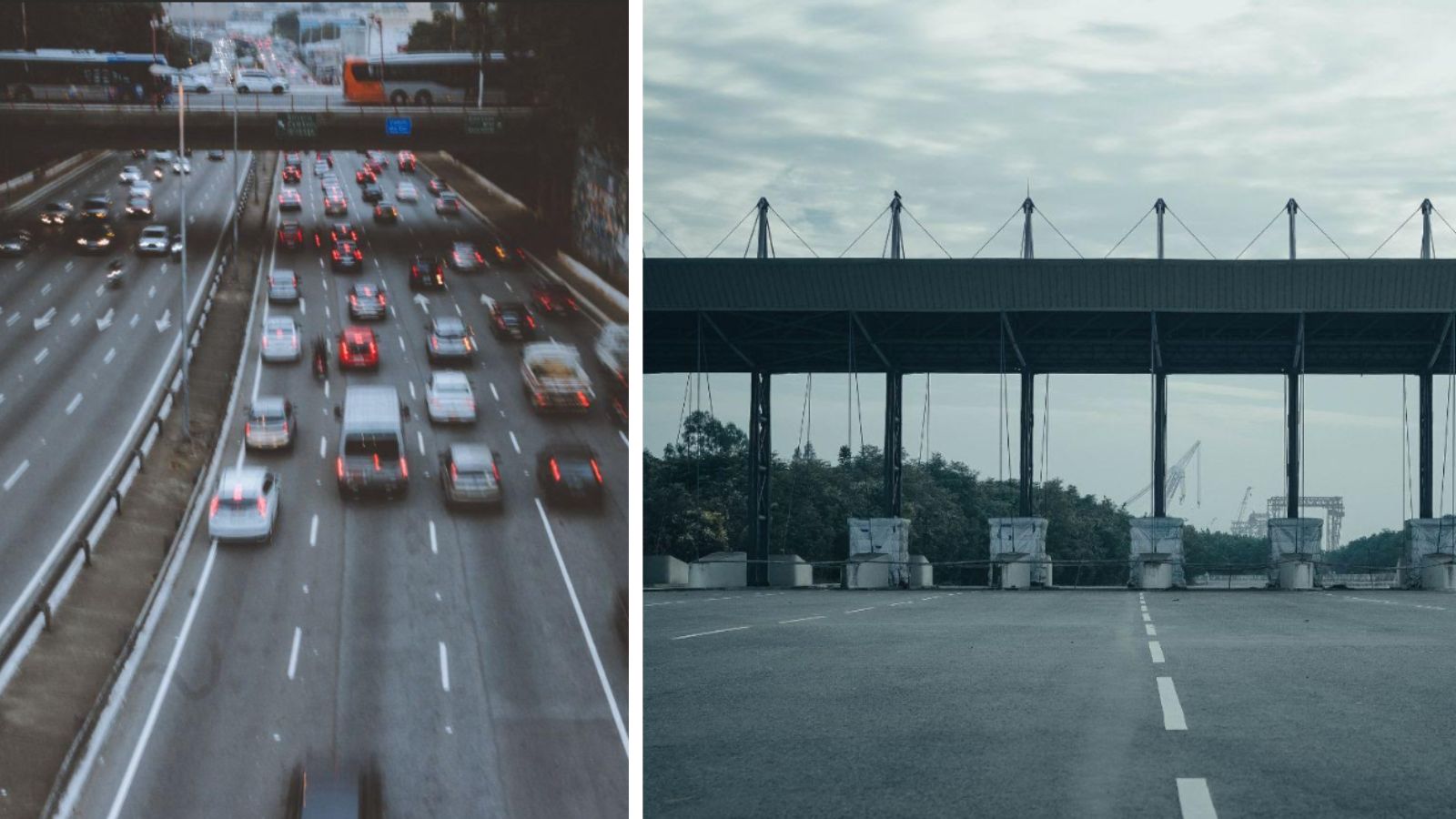
Thane’s upcoming connectivity link to Navi Mumbai International Airport (NMIA) will come at a steeper cost than the recently inaugurated Atal Setu sea bridge. The Maharashtra cabinet has cleared a 25-kilometre six-lane elevated road linking Thane and Mira-Bhayander to the new airport, with toll rates set at ₹365 for cars—substantially higher than the ₹250 charged on Atal Setu.
Officials confirmed that the project, being developed by the City and Industrial Development Corporation of Maharashtra Limited (CIDCO), carries an investment of ₹6,430 crore and will feature six interchanges. The elevated corridor is expected to cut travel time from nearly 90 minutes to just 30 minutes, offering faster access to NMIA and easing congestion across arterial routes that currently struggle with bottlenecks. For many commuters, however, the high toll will be an unavoidable part of daily travel. Compared to the Atal Setu or Mumbai Trans Harbour Link, which charges ₹250 one way and offers concessions on same-day returns, the Thane-NMIA corridor will be costlier per journey. According to experts, this premium pricing reflects both the massive construction costs and the expectation that airport-linked infrastructure will cater to a section of travellers willing to pay for speed and convenience.
The Atal Setu, stretching 22 kilometres across Mumbai Harbour, connects Sewri in South Mumbai to Nhava in Navi Mumbai and has already reshaped traffic patterns by reducing dependency on the Vashi and Airoli bridges. With NMIA projected to handle two million passengers annually in its opening phase and scaling up to nine million by 2038, pressure on connecting roads is only expected to intensify. The elevated link from Thane is therefore seen as critical in distributing traffic flows. Officials also pointed out that electric vehicles are exempt from tolls on the Atal Setu for five years, as part of the state’s green mobility policy. While no such exemptions have yet been announced for the Thane-NMIA elevated road, transport planners suggest a similar concession could encourage adoption of cleaner vehicles and align the project with sustainability goals.
Beyond commuter convenience, the corridor is expected to stimulate economic growth in the extended suburbs. Improved access to the airport is likely to spur real estate demand, draw businesses to surrounding industrial belts, and create new hubs for logistics and trade. Experts argue that the trade-off between higher tolls and reduced travel times will be weighed differently by stakeholders—while frequent airport users may absorb the cost, daily commuters could feel the pinch. As the project moves into execution, the debate over equitable pricing, sustainable mobility, and regional economic benefits will define its long-term impact. What remains clear is that Thane’s new elevated road is set to be more than just an airport link—it will be a catalyst in reshaping urban connectivity in the Mumbai Metropolitan Region.
Also Read: Mumbai To Introduce 12, 15, 18-Coach Fully AC Vande Metro Trains Soon
