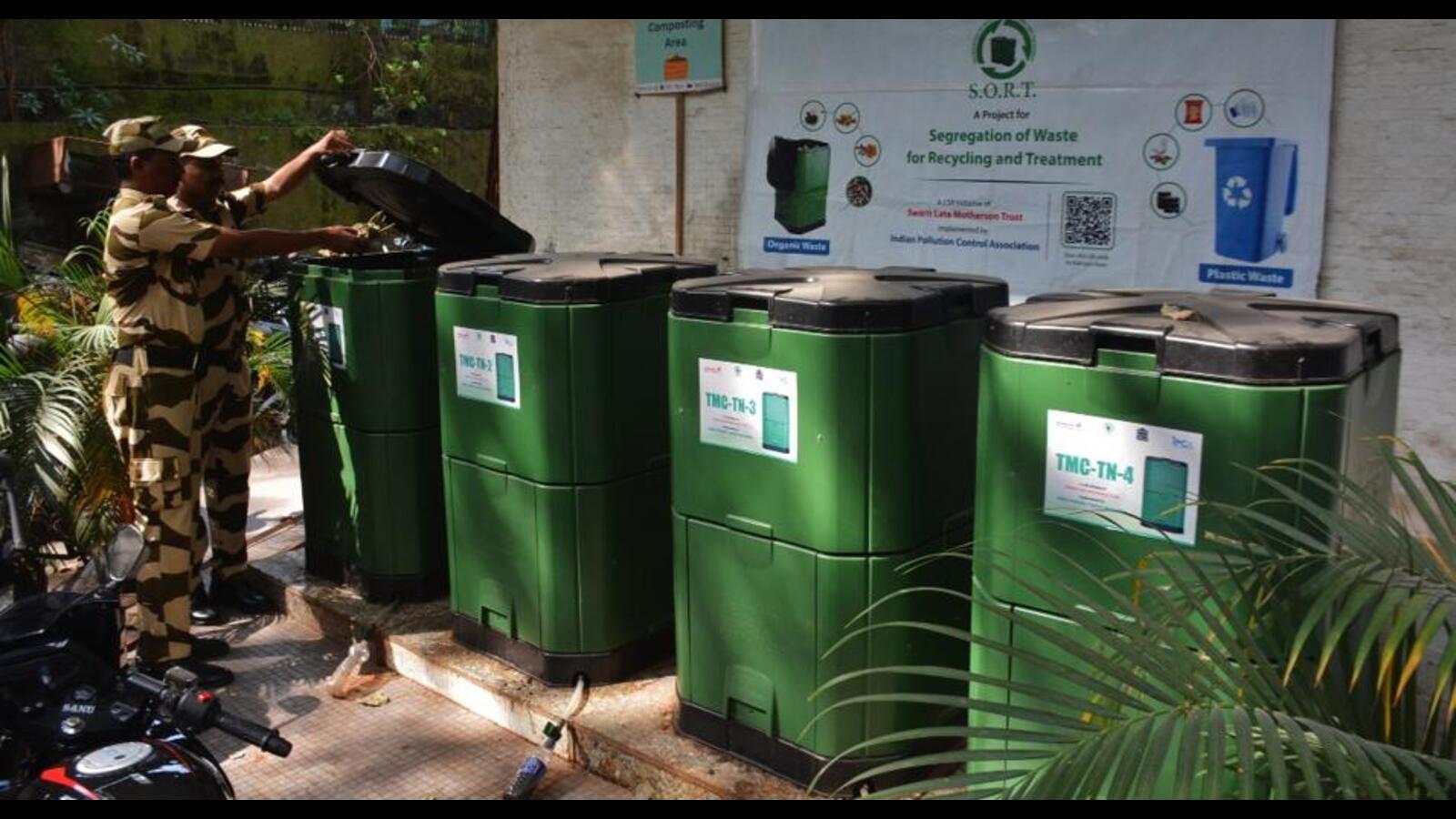
The municipal administration in Thane has begun expanding decentralised waste treatment facilities aimed at converting organic waste into fertiliser, marking a shift toward more localised waste management in the rapidly urbanising city. Officials say the initiative will gradually introduce processing units across several neighbourhoods to reduce the burden on distant dumping grounds and strengthen sustainable wet waste compost practices.
The programme comes as Thane continues to generate large volumes of municipal solid waste each day, reflecting its fast-growing population and expanding residential footprint within the Mumbai metropolitan region. Civic data indicates that the city produces more than a thousand tonnes of waste daily, with organic waste forming the majority share. Urban waste specialists note that organic material — such as food scraps and garden waste — is particularly suited for wet waste compost processing, where biodegradable matter is converted into nutrient-rich fertiliser through controlled decomposition. Decentralised systems allow this process to occur closer to the source of waste generation, reducing transportation costs and landfill pressure.
The first large facility under the new plan is being developed in the Gaimukh area along the Ghodbunder corridor. Once operational, the plant is expected to process roughly 100 tonnes of organic waste every day and convert it into compost suitable for landscaping and agricultural use. The project is supported by government funding and will be built on land allocated by the municipal corporation. Additional decentralised processing centres are planned in areas including Nagla Bandar and Digha. At the Nagla Bandar location, authorities intend to treat around 100 tonnes of municipal waste daily. In Digha, a larger facility is expected to handle several hundred tonnes of wet waste, with plans to convert certain waste streams into construction materials such as eco-bricks.
Urban planners say distributing waste processing infrastructure across multiple zones can significantly reduce dependence on large dumping sites, which often create environmental and logistical challenges. Currently, a substantial portion of Thane’s waste is transported to the Atkoli landfill area, located outside the city. To address this reliance, the civic body has also initiated the development of a large pre-processing facility at Atkoli designed to handle hundreds of tonnes of solid waste per day. This facility will sort incoming waste streams before they undergo further scientific treatment, including recycling, energy recovery and composting. Municipal authorities say decentralised wet waste compost facilities will require strong participation from residents and housing societies. Segregation of waste at the household level — separating organic material from recyclable and inert waste — will play a critical role in ensuring the efficiency of the system.
Waste management experts emphasise that segregation-based systems not only improve recycling rates but also reduce greenhouse gas emissions linked to landfill decomposition. Organic waste processed through composting can return nutrients to soil rather than generating methane in landfill sites. As cities across India search for more sustainable ways to manage urban waste, Thane’s decentralised wet waste compost strategy reflects a broader shift toward circular urban infrastructure. If implemented effectively, such systems could help metropolitan regions reduce landfill dependency while creating useful by-products from everyday household waste.
Thane Moves Toward Decentralised Wet Waste Processing