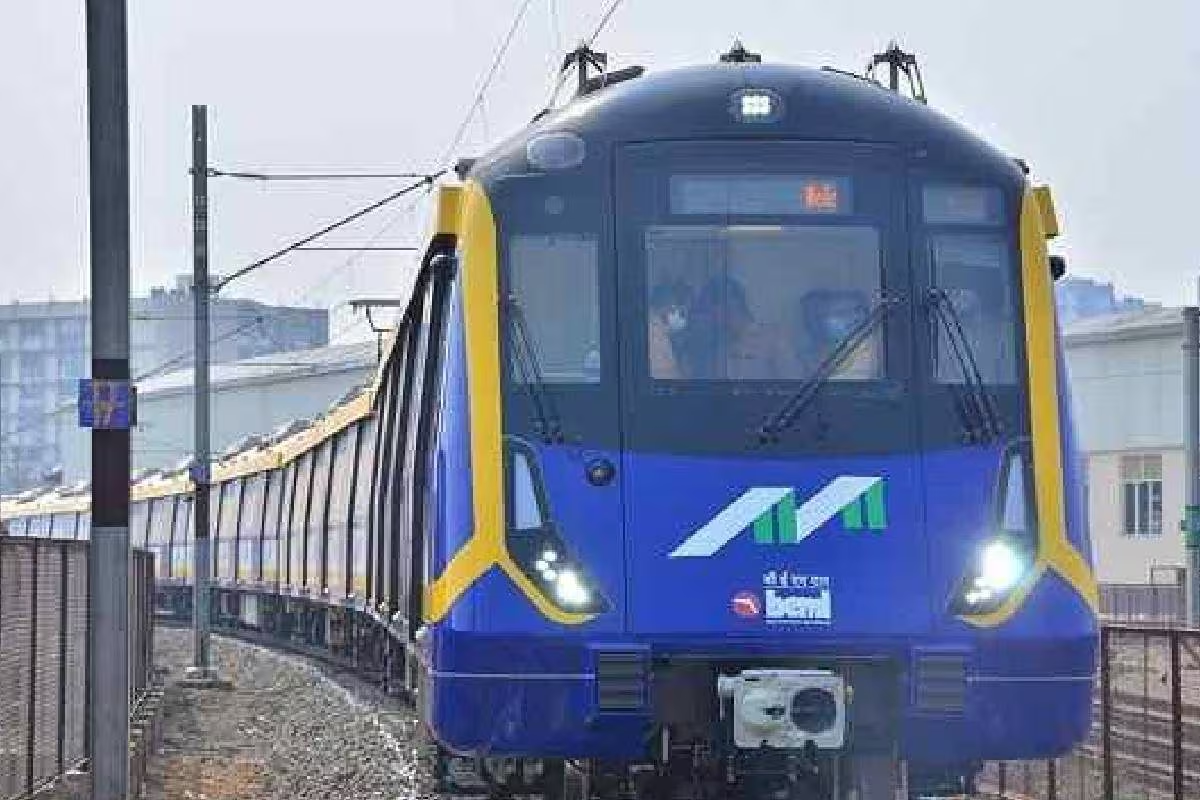
Thane is preparing to launch construction tenders for five stations on its Internal Ring Metro Railway Project, signalling the first major push towards partial operations on the long-planned corridor. The move, officials said, is aimed at speeding up a project that is expected to reshape mobility patterns and reduce dependence on carbon-intensive travel across the fast-growing city.
The agency implementing the project is finalising bids for the elevated stations at Dongripada, Vijay Nagari, Waghbil, Waterfront, and Patlipada. These stations sit along a six-kilometre stretch with fewer land and regulatory challenges, making it the most viable section to open ahead of the full network. The corridor spans 29 kilometres and includes 22 stations, with the two major interchanges at the old and new Thane railway stations planned as underground structures.Officials involved in the project said design work for the initial five stations has reached advanced stages, with the tender award process expected within days. A sixth station at Manpada or Kashinath Ghanekar may be added, subject to land clearance. The combined package for the stations is likely to cost around ₹240 crore, funded jointly by the state and union governments.
The metro is expected to offer an integrated loop connecting neighbourhoods such as Wagle Estate, Ghodbunder, Kolshet, and Saket with existing rail and upcoming metro networks. Mobility specialists say this alignment could significantly cut travel times for residents currently reliant on buses, auto-rickshaws, or private vehicles, while offering a cleaner alternative to road-based commuting.Work on viaducts, piers, and depot infrastructure will run concurrently to compress the long gestation periods typically seen in large transit projects. A senior official noted that contractors chosen for the elevated section will soon begin geo-technical investigations to determine foundation depths and identify underground utilities. Permissions from local authorities will follow, including approvals for road diversions and traffic management plans.Once operational, the six-coach trains are expected to run every 15 minutes and complete the full loop in about an hour. Planners estimate the corridor could see ridership touching 872,000 passengers a day by 2045 as Thane’s population expands and commuting patterns evolve. The project’s carbon-saving potential has also been highlighted, given that the city’s rising private vehicle use has deepened congestion and emissions in recent years.
To strengthen financial viability, the implementing agency is exploring revenue through station naming rights, access rights for businesses, and broader asset monetisation. Urban transport researchers note that such strategies, when applied responsibly, can reduce the burden on public funds and support long-term sustainable mobility goals.As Thane grows into a denser metropolitan hub, the Internal Ring Metro is viewed as a step towards building an inclusive transit system that connects peripheral communities and reduces environmental impact. The early tendering of stations marks a key milestone in a project that aims to prepare the city for a cleaner, more equitable transport future.
Thane Moves Ahead To Float Tenders For Five Stations Of Ring Metro Project