


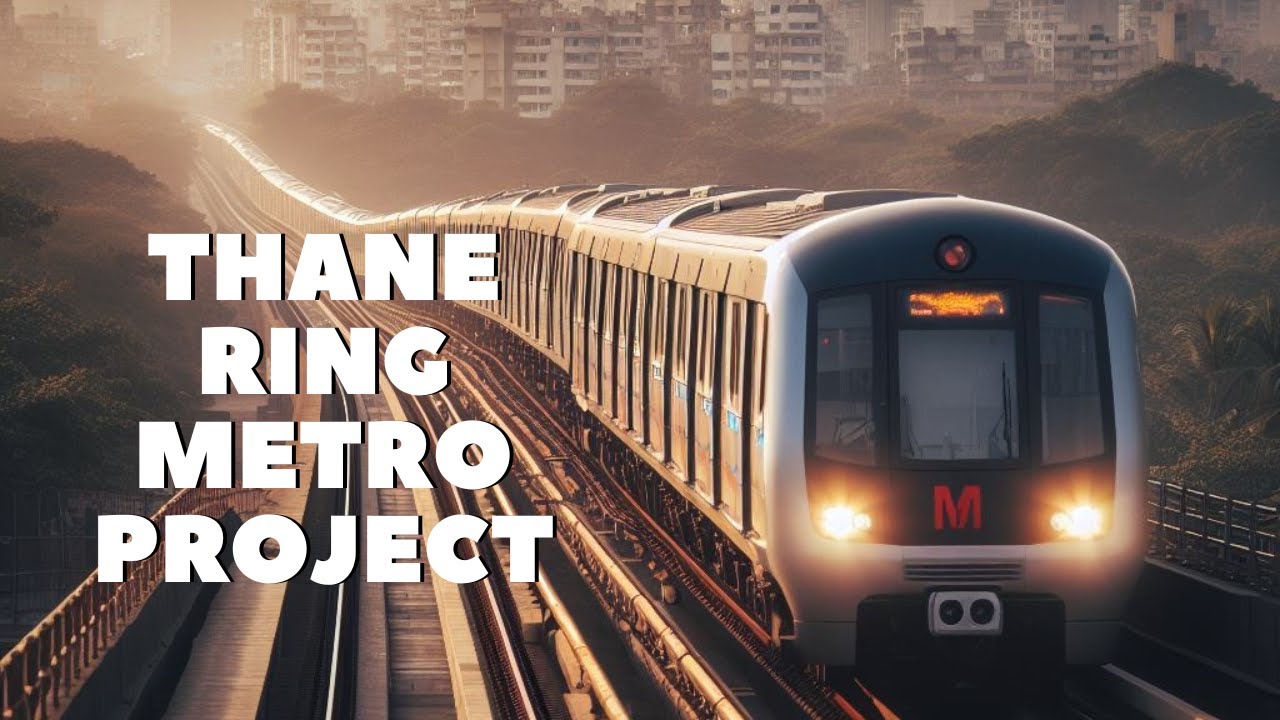
Thane is set to undergo a significant transformation in urban mobility with the development of the Thane Integral Ring Metro, a 29-kilometre circular corridor designed to enhance connectivity across the city’s western periphery. Positioned within the Mumbai Metropolitan Region, Thane has witnessed rapid urbanisation, with its population increasing dramatically over the past seven decades. The new metro line aims to address rising traffic congestion and provide efficient, high-capacity transit for daily commuters, students, and office workers.
The project, being executed by the Maharashtra Metro Rail Corporation Limited (MahaMetro), received central government approval in August 2024 and carries an estimated cost of ₹12,000 crore. Initially conceived as a heavy metro line in 2018, the project underwent multiple revisions, including a proposed metrolite redesign in 2020 for cost efficiency, before reverting to a heavy metro standard in 2023 to meet anticipated transport demand. “The metro is designed to accommodate Thane’s growing population and evolving economic landscape while ensuring sustainable urban mobility,” an official from MahaMetro stated. Phase 1 of the project includes 22 stations, primarily elevated with a small underground section at Thane Junction and New Thane stations. Modern features such as standard gauge tracks, 25 kV AC electrification, and communication-based train control (CBTC) are being implemented to ensure operational efficiency and commuter safety. The metro corridor is expected to integrate seamlessly with Mumbai Metro Lines 4 and 5, as well as the existing suburban rail network, creating a multimodal transport hub that enhances regional connectivity.
The Thane Metro is projected to handle a peak-hour peak-direction traffic (PHPDT) of 23,320 and a daily ridership of 647,000 by 2029, with demand rising to 872,000 by 2045. Industry experts note that such capacity expansion is critical for reducing road congestion, shortening travel times, and supporting economic activity. Areas such as Wagle Estate, Kolshet, Balkum, and Rabodi are likely to experience increased residential and commercial development due to improved accessibility, supporting transit-oriented development (TOD) models that encourage higher-density, mixed-use urban growth. Beyond commuter convenience, the project is expected to bolster Thane’s economy by facilitating workforce mobility for corporate offices, MSMEs, and service-based enterprises. Enhanced connectivity along key commercial corridors like Ghodbunder and LBS Road will improve retail and office space utilisation, strengthening the city’s economic vibrancy.
The Thane Integral Ring Metro represents a forward-looking infrastructure initiative, combining high-capacity transit with sustainable urban development principles. By integrating mobility, economic growth, and transit-oriented planning, the project aims to deliver a resilient, equitable, and low-carbon urban transport system for the Mumbai Metropolitan Region.
Also Read : Mumbai Metro 2A Trains Develop Rust On Roofs; Operator Begins Repairs Immediately
