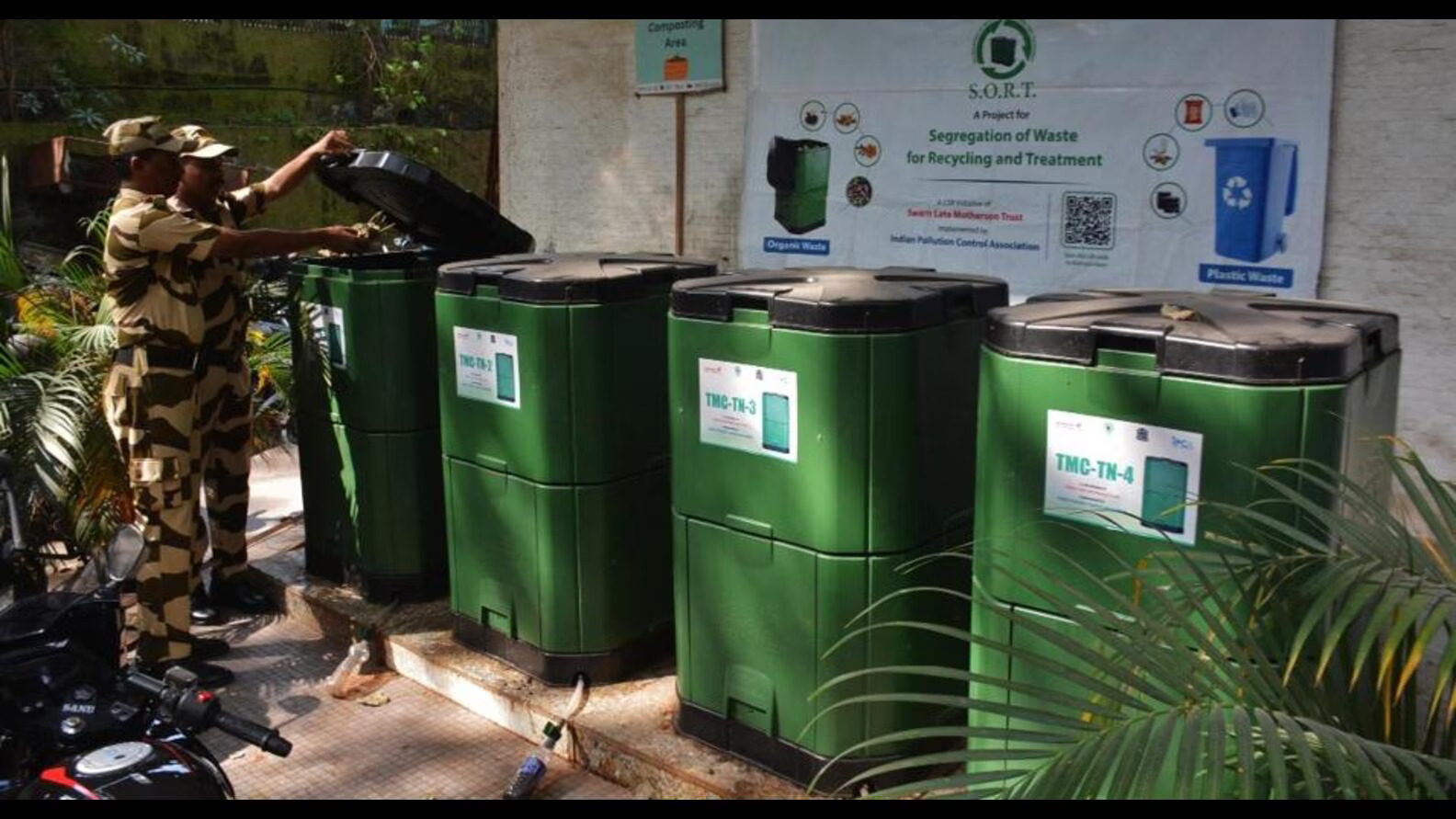
Thane Municipal Corporation (TMC) has mandated that housing societies generating over 100 kilograms of daily organic waste install recycling units on their premises. The initiative aims to convert wet waste into organic fertiliser, reduce landfill dependency, and foster an eco-friendly waste management model across the city.
TMC has already set up composting units at its headquarters, processing canteen and other wet waste into nutrient-rich compost. Officials stated that this pilot project will serve as a blueprint for replicating similar units in residential complexes across Thane, targeting kitchen and garden waste for sustainable disposal. To support the initiative, the TMC’s Solid Waste Management Department has established a Bulk Waste Generator (BWG) cell. The BWG team has surveyed over 700 residential societies, issuing notices for the installation of organic waste recycling machines, also known as ‘aerobins,’ which cost approximately ₹25,000 each. A collaboration with a pharmaceutical company has facilitated the distribution of 20 units under corporate social responsibility initiatives to societies that may face resource constraints.
According to senior TMC officials, the programme is in alignment with the Municipal Solid Wastes (Management & Handling) Rules, 2000, which mandate every municipal authority to oversee the collection, segregation, storage, transportation, and disposal of municipal solid waste. “Wet waste is biodegradable and can be converted into fertiliser or manure, reducing pressure on landfills and encouraging resource-efficient practices,” said an official. Experts highlighted that the initiative also improves overall waste segregation within societies, allowing recyclable materials such as plastics and metals to be collected separately. However, challenges remain, particularly for societies with limited space, manpower, or delayed maintenance fee collections. Residents have voiced concerns over the affordability and practicality of installing such units. Some societies have cited irregular basic services, including water supply and garbage collection, which they believe should be prioritised alongside new environmental measures.
Despite these challenges, urban planning analysts emphasise that decentralised organic waste management can significantly reduce municipal waste volumes, promote zero-waste neighbourhoods, and foster community engagement in sustainable practices. By integrating technology-driven composting solutions with regulatory enforcement, TMC aims to position Thane as a model for environmentally responsible urban living. Officials stressed that the long-term benefits of onsite recycling include reduced landfill usage, improved soil fertility for local greenery, and alignment with broader city goals of carbon reduction and eco-friendly development. The initiative reflects a growing trend among Indian cities to empower local communities in tackling urban waste while encouraging sustainable behavioural changes.
Thane Housing Societies to Adopt Onsite Organic Waste Recycling