


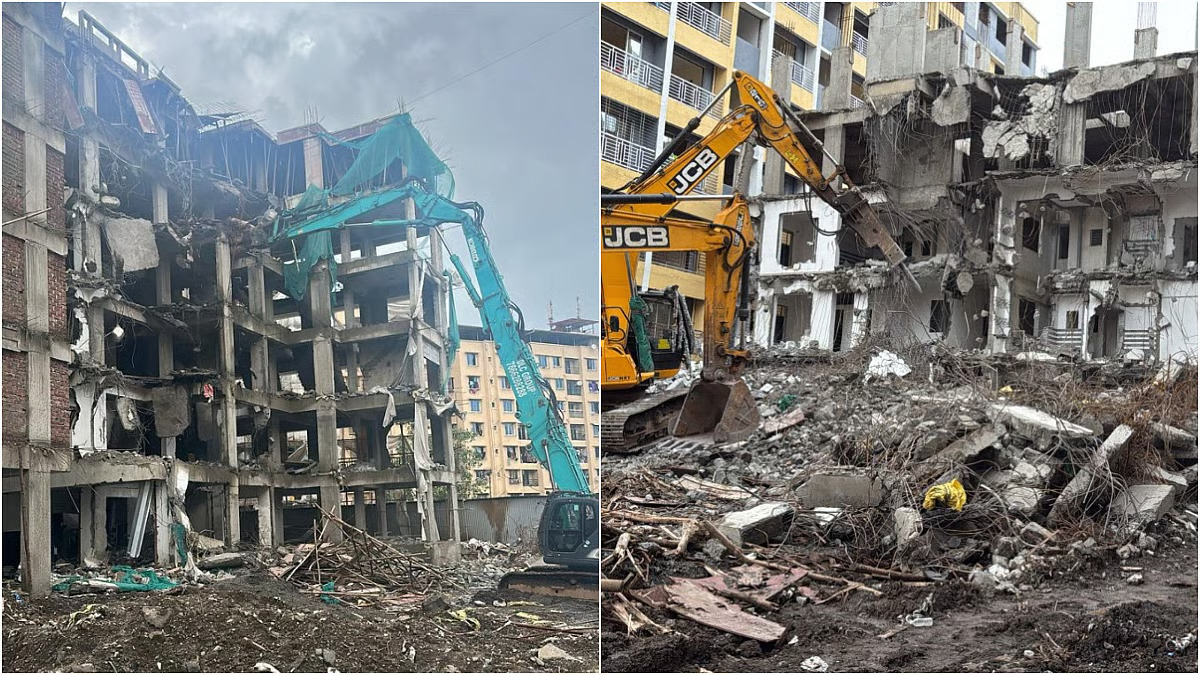
The Bombay High Court has mandated immediate enforcement action against unauthorized constructions and encroachments in Yeoor Hills, an environmentally sensitive region under Sanjay Gandhi National Park. The ruling requires the Thane Municipal Corporation and the district collector to issue fresh notices and consider demolition of structures identified in a 2009 survey.
During the hearing of a public interest litigation filed by tribal rights activists, the TMC disclosed that a 2009 survey had identified 219 unauthorized structures in Yeoor Hills, but could not produce records of any follow-up action or enforcement measures. The bench emphasised that encroachment on public lands and forest zones cannot be tolerated and that administrative authorities are obligated to enforce the law diligently. The petition contends that tribal land — allocated under the Maharashtra Restoration of Lands to Scheduled Tribes Act of 1974 — was transferred illegally and occupied by bungalow owners, political appointees, and commercial entities. In response, the court affirmed that affected tribespeople can pursue statutory remedies to reclaim ancestral land via the 1974 Act.
The bench instructed the Thane municipal commissioner and collector to serve notices to individuals planning or occupying illegal constructions. Legal due process must be followed—including hearings—before any demolition is ordered for structures deemed unlawful. Officials are also to provide progress reports on enforcement actions within a stipulated timeline. Yeoor Hills, situated at the fringes of Thane and Borivali, has witnessed a proliferation of illegal developments in recent years—ranging from upscale bungalows to bar facilities and event venues—raising concerns over loss of green cover, habitat disruption, and marginalisation of tribal communities who originally held rights to portions of the land.
In parallel, civic authorities have launched a municipal survey of the area, identifying several unlicensed turf clubs and commercial venues operating without environmental clearance. Eight such clubs have already been sealed, and further enforcement is imminent. A high-level coordination committee, comprising municipal, forest, police, electricity and NGO representatives, has been proposed to oversee sustained compliance due to the zone’s ecological sensitivity. Legal experts suggest that this intervention by the High Court serves as a crucial precedent—reinforcing the responsibility of civic agencies to tackle land misuse in ecologically sensitive zones. The move also marks a shift in accountability, placing clear directives on officials to act.
Environmental activists have welcomed the ruling as overdue validation of long-standing claims that illegally constructed estates have compromised forest integrity and tribal land rights. They argue that the enforcement is not just a matter of legality but also of ecological justice and equitable city planning. As enforcement proceeds, the court’s directive underscores the wider imperative: protecting public land, disabling clandestine developmental privileges, and ensuring forest zones remain insulated from commercial exploitation. For the tribal communities and ecological stakeholders, the judgment offers a path toward restitution and transparent governance.
Also Read : Maharashtra May Receive Weak August Monsoon But Heavier September Rains Forecasted
