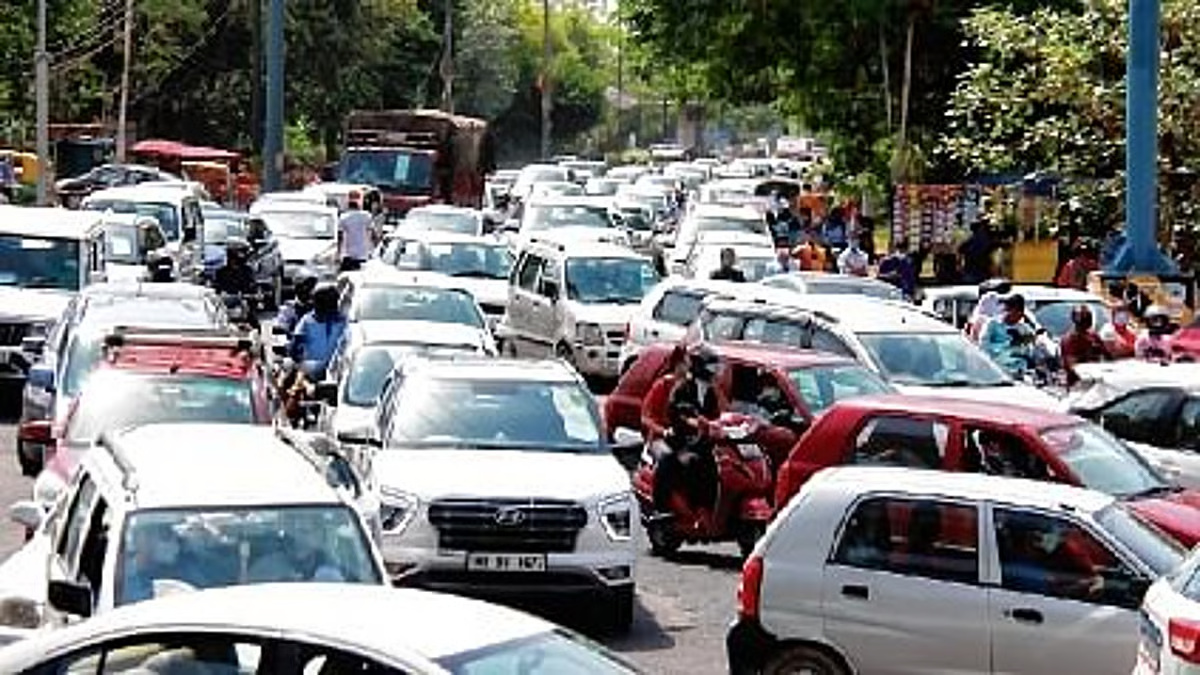
Traffic movement on one of Thane’s most critical arterial corridors was severely affected for several hours early Sunday after an industrial transport vehicle released a large quantity of crude glycerin onto the carriageway near the Gaimukh stretch of Ghodbunder Road. While no injuries were reported, the incident triggered prolonged congestion and raised fresh questions about hazardous material logistics, emergency preparedness, and the resilience of urban transport infrastructure in fast-growing metropolitan regions.
Ghodbunder Road serves as a vital east–west connector linking Thane city with the western suburbs of Mumbai and the Gujarat highway network. Any disruption along this corridor has immediate spillover effects on freight movement, daily commuting, and regional supply chains. The early-morning leak, detected shortly after midnight, resulted in traffic slowing to a crawl for over two hours as authorities moved to stabilise the roadway and prevent further risk to motorists. According to officials involved in the response, the container vehicle was transporting approximately 25 tonnes of crude glycerin as part of an inter-state industrial shipment. The substance, a by-product of biodiesel and soap manufacturing, began seeping onto the road surface due to a containment failure while the vehicle was negotiating the ghat section. Emergency teams from traffic control, fire services, and disaster response units were deployed to manage the situation.
To reduce the risk of skidding and secondary accidents, responders applied soil to absorb the slick residue before allowing phased traffic movement. The leak was eventually secured, and normal vehicular flow was restored gradually. Authorities emphasised that crude glycerin is not categorised as flammable or acutely hazardous, though its viscosity can significantly compromise road safety when spilled in large volumes. Urban mobility experts note that such incidents highlight structural vulnerabilities in metropolitan freight management systems. Thane’s rapid industrialisation and expanding logistics footprint have increased the movement of chemical and industrial by-products through densely populated corridors originally designed for lighter traffic volumes. Without designated freight routes, time-window restrictions, or stricter compliance audits for container safety, cities remain exposed to avoidable disruptions.
From a sustainability and planning perspective, the episode underscores the importance of integrating industrial transport risk into urban resilience frameworks. Climate-resilient cities are not defined only by flood control or emissions reduction, but also by how effectively they manage supply chains that intersect with public infrastructure. Even non-hazardous industrial materials can create cascading economic and mobility costs when safeguards fail. Officials have since notified the logistics operator responsible for the consignment and are reviewing containment protocols. For residents and businesses dependent on Ghodbunder Road, the incident serves as a reminder that infrastructure efficiency depends as much on regulation and coordination as it does on physical road capacity. Strengthening oversight of industrial freight movement may be the next critical step in ensuring safer, more reliable urban transport networks.
Thane Ghodbunder Road Blocked After Glycerin Spill