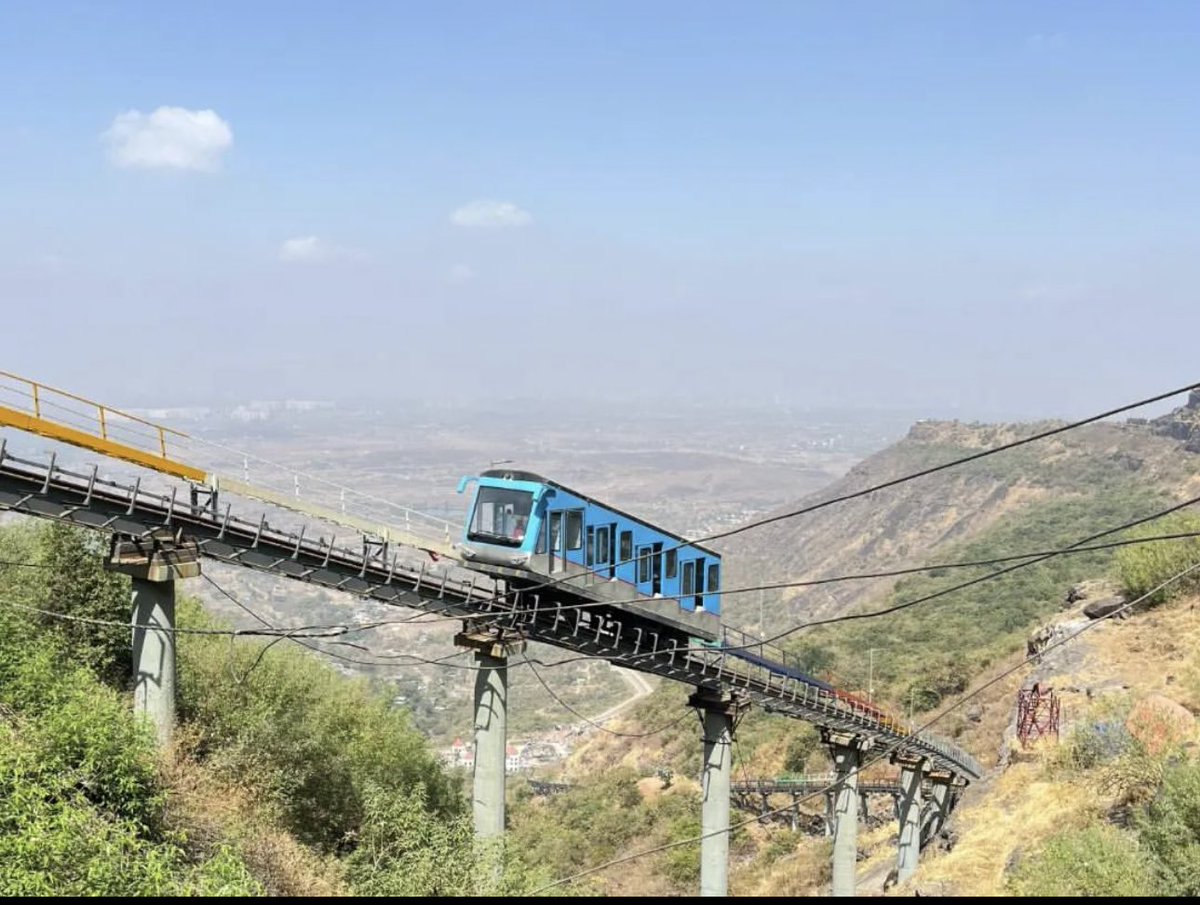
Thane Enhances Pilgrimage Tourism With Funicular Rail
Maharashtra has inaugurated a landmark hill‑transport infrastructure project in Thane district that drastically improves access to the historic Haji Malang shrine, signalling an intersection of urban planning, mobility innovation and inclusive access for local communities and visitors. A newly operational funicular railway mounted on the steep slopes of the Malanggad hill near Kalyan will cut what was a strenuous two‑hour climb to a 10‑minute automated journey, enhancing safety, accessibility and tourist potential in the region.
The 1.2‑kilometre funicular system — now one of India’s longest of its type — was inaugurated by a senior state legislator alongside other officials after more than a decade of engineering, approvals and construction hurdles. Initially proposed in the early 2000s, the project faced delays due to complex terrain, technical clearances and administrative reshuffles before final commissioning in early 2026. Hill railways of this kind employ cable‑driven cars moving on inclined tracks, combining aspects of rail and ropeway systems to negotiate steep gradients with high safety and energy efficiency. For Haji Malang — a site that draws devotees from across the Mumbai Metropolitan Region, as well as hikers and heritage visitors — the funicular now ensures all users, including the elderly and those with mobility constraints, can reach the shrine with relative ease.
Transport planners note that improving access to traditional and cultural landmarks also has wider economic and social payoffs. By shortening journey time and lowering physical barriers to entry, the funicular is expected to bolster local tourism, generate ancillary business opportunities for vendors, guest houses and eateries, and stimulate daily commerce for families residing on the hill slopes. The project also reflects broader state efforts to integrate transportation infrastructure with community‑centric outcomes. Historically, such funicular systems have enabled equitable mobility in challenging topographies, aligning with inclusive urban development goals that balance cultural preservation with modern accessibility enhancements. Evidence from similar projects globally suggests that reduced travel barriers can diversify visitor demographics and strengthen economic resilience in peripheral urban zones.
Operationally, the system is staffed by trained personnel and can carry multiple passengers per trip, with initial public access offered free of charge to encourage adoption. Over time, fare structures and service optimisation will determine the balance between sustainability and affordability for frequent users and casual visitors alike. Despite the celebratory launch, planning experts stress that maximising benefits will require integrated support systems — including improved last‑mile connectivity from nearby transit hubs, clear signage, pedestrian pathways, and linkage to broader regional transport networks. With these in place, the funicular can serve as a blueprint for infrastructure that enhances both mobility and heritage experience in similar settings across India.
As this new transport link enters operation, stakeholders will watch how it reshapes footfall patterns, local economies and peri‑urban heritage tourism in the Mumbai Metropolitan Region.