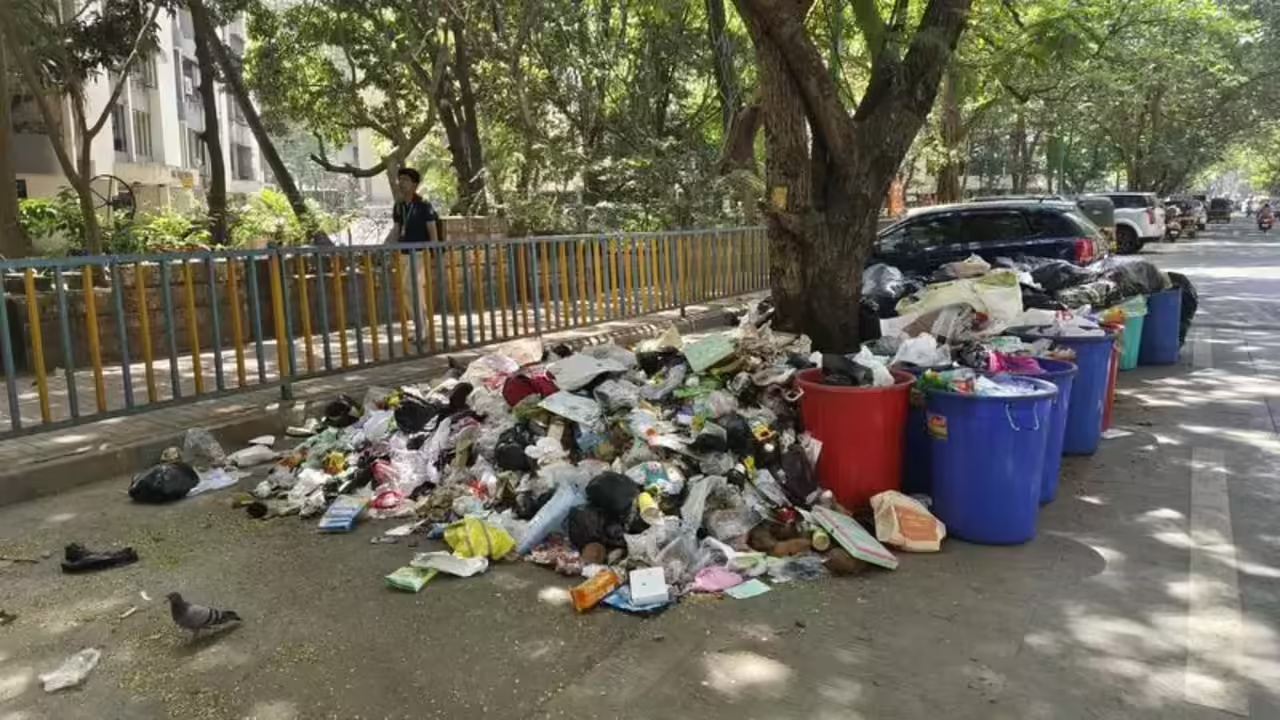
Thane’s waste management system came under sharp scrutiny this week after uncollected garbage in the Kalwa and Mumbra areas triggered a public demonstration at the municipal headquarters. With rubbish piling up across residential pockets for four consecutive days, citizens staged a protest demanding immediate intervention from the municipal administration. The disruption has raised questions about the city’s preparedness to manage solid waste responsibly and equitably, especially as urban populations grow.
Residents from the affected neighbourhoods reported strong odour, blocked footpaths, and unhygienic conditions near homes and public spaces. Commuters also faced inconvenience, as waste mounds narrowed road stretches and attracted stray animals. According to civic observers, the issue highlights persistent gaps in waste collection logistics, particularly in localities that have long complained of receiving delayed or irregular services. Protesters arrived at the Thane Municipal Corporation headquarters on Monday morning, transporting a truckload of accumulated waste from Kalwa. The act, symbolic but deliberate, was intended to draw attention to what citizens described as “repeated neglect” of these regions. A representative of the protesting group said the failure to collect waste despite written complaints reflected systemic inequity, arguing that daily-wage labourers, students and vulnerable communities were the most affected by the lapse.
Municipal officials attributed the disruption to the absence of an operational dumping ground, stating that contractors assigned to the Kalwa–Mumbra belt had reportedly halted pick-ups. An official explained that the corporation was attempting to resolve contractual and logistical gaps, but admitted that the sudden stoppage had placed severe pressure on staff and collection vehicles. Urban planners note that decentralised, climate-resilient waste systems—such as micro-composting centres, collection clusters, and data-driven fleet management—could significantly reduce the risk of service breakdowns. They argue that cities expanding rapidly must prioritise non-discriminatory waste services to maintain public health and ensure a fair distribution of civic amenities.
During the demonstration, residents warned that if waste collection was not restored immediately, they would escalate the protest by depositing garbage outside the homes and offices of senior municipal officers. While civic officials urged restraint, residents insisted on clear timelines and permanent solutions rather than temporary clean-up drives. The incident has renewed discussions about sustainable waste governance in fast-growing cities such as Thane. Experts emphasise that effective systems rely not only on infrastructure but also on transparent contracts, robust monitoring mechanisms, and citizen-inclusive planning. As Kalwa and Mumbra continue to urbanise rapidly, equitable and environmentally responsible waste management will be critical to improving liveability and reducing climate-related risks.
A municipal spokesperson later stated that emergency measures were being undertaken to clear backlog waste and restore routine collection. However, residents maintain that unless long-term reforms are implemented, similar crises will recur, disproportionately impacting low-income communities and undermining the city’s environmental commitments.
Thane Faces Massive Waste Pile-Up As Protesters Dump Garbage At TMC Office