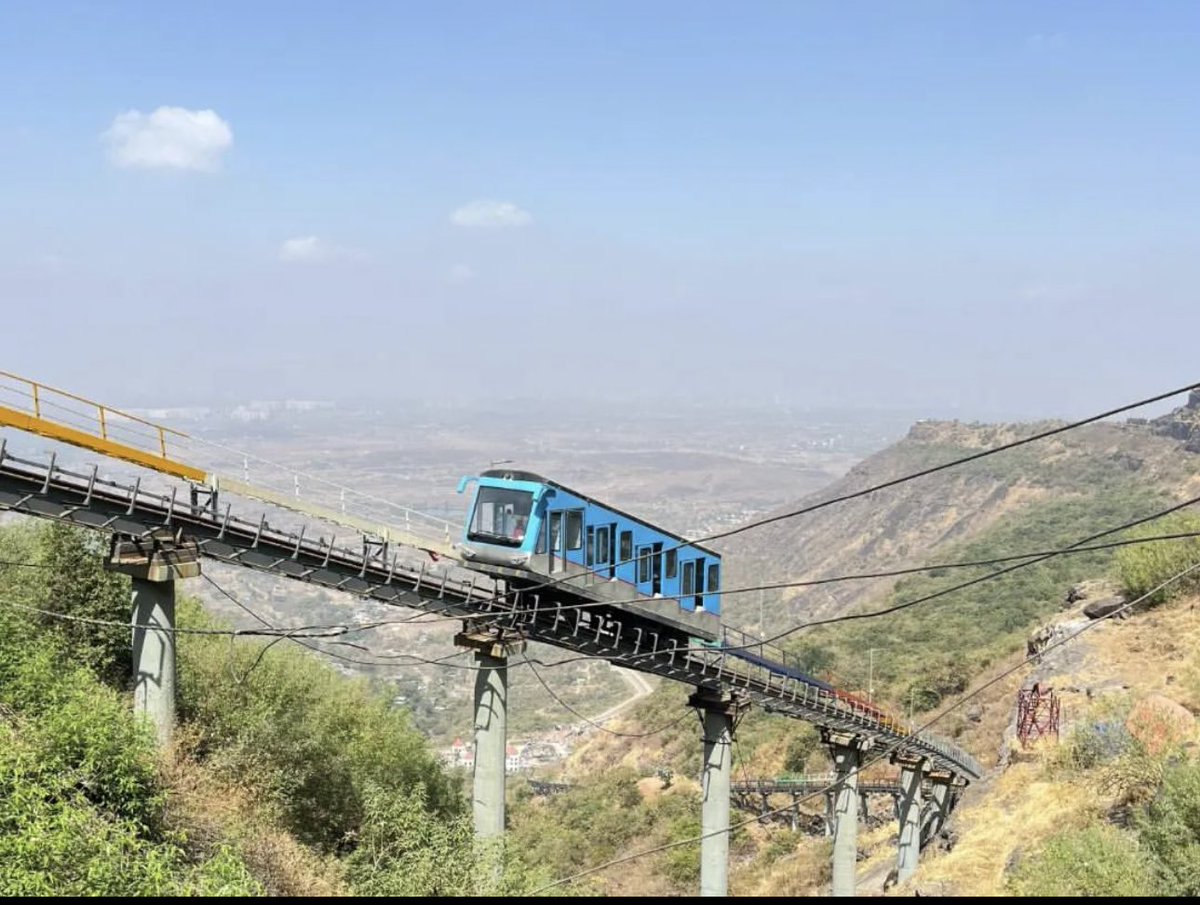
Thane Enhances Pilgrimage Tourism With Funicular Rail
A landmark transport innovation in the Sahyadri foothills of Maharashtra is rapidly reshaping regional tourism and pilgrimage dynamics. The newly inaugurated funicular railway at Malang Gad hill, now recognised as India’s longest of its kind, has turned a steep, two-and-a-half-hour climb into a seven-minute ascent, dramatically broadening access to one of the region’s most visited spiritual and trekking sites.
Strategically perched near Kalyan, the hill draws devotees of multiple faiths to its historic shrine and beckons adventure visitors to nearby trekking points. Before the railway’s launch, reaching the summit involved scaling roughly 2,600 steps — a challenge that limited participation for older adults, families and those with mobility challenges. The cable-operated system, spanning approximately 1,174 metres, now makes ascent manageable for a much wider cross-section of travellers.Early usage data shows a compelling shift. In just a few weeks since operations began, daily ridership averages around 3,500 visitors, with peak days exceeding 8,000. Over the past three weeks, about 72,000 passengers have taken advantage of the funicular, roughly a four- to five-fold increase compared with foot traffic before the railway opened.
This surge has had tangible economic impact for local residents who depend on tourism-linked commerce. Between 2,500 and 3,000 people — vendors, hospitality workers, guides and small enterprise owners — report heightened demand for services connected to the shrine and trekking circuits. For these micro-entrepreneurs, improved access isn’t just convenience; it’s a source of sustained livelihood growth on the hill slopes and in adjacent towns.Urban planners and tourism analysts frame the funicular as more than an engineering achievement: it is a connectivity catalyst with implications for inclusive regional development. By shortening arduous travel and embedding accessibility into infrastructure design, the project supports people-first mobility outcomes — enabling equal participation by elderly visitors, families and individuals with varying physical abilities. It also diversifies tourism flows beyond coastal and city hubs into hinterland destinations, aligning with broader state goals to distribute economic opportunity across rural and peri-urban economies.
From an environmental standpoint, the funicular offers a low-emission alternative to motorised access routes that can erode hillside ecosystems. Cable-driven railways typically generate fewer on-site emissions compared with road-based vehicles, an important consideration given the hill’s proximity to sensitive ecological zones. Strict adherence to forest and environmental clearances during construction also demonstrates a balance between development and conservation — critical for maintaining the integrity of vulnerable landscapes.However, experts caution that infrastructure alone can’t sustain growth indefinitely without broader place-making efforts — including effective waste management, crowd control planning during peak pilgrimage seasons, and enhanced amenities for overnight stays. Ensuring that local communities share equitably in the economic upswing will require continued engagement with planners, tourism boards and civic bodies.
As Malang Gad’s funicular railway begins regularly ferrying pilgrims and trekkers upward, it stands as a symbol of how thoughtfully integrated mobility solutions can unlock regional potential while fostering inclusive, climate-aware urban development beyond core metropolitan centres.