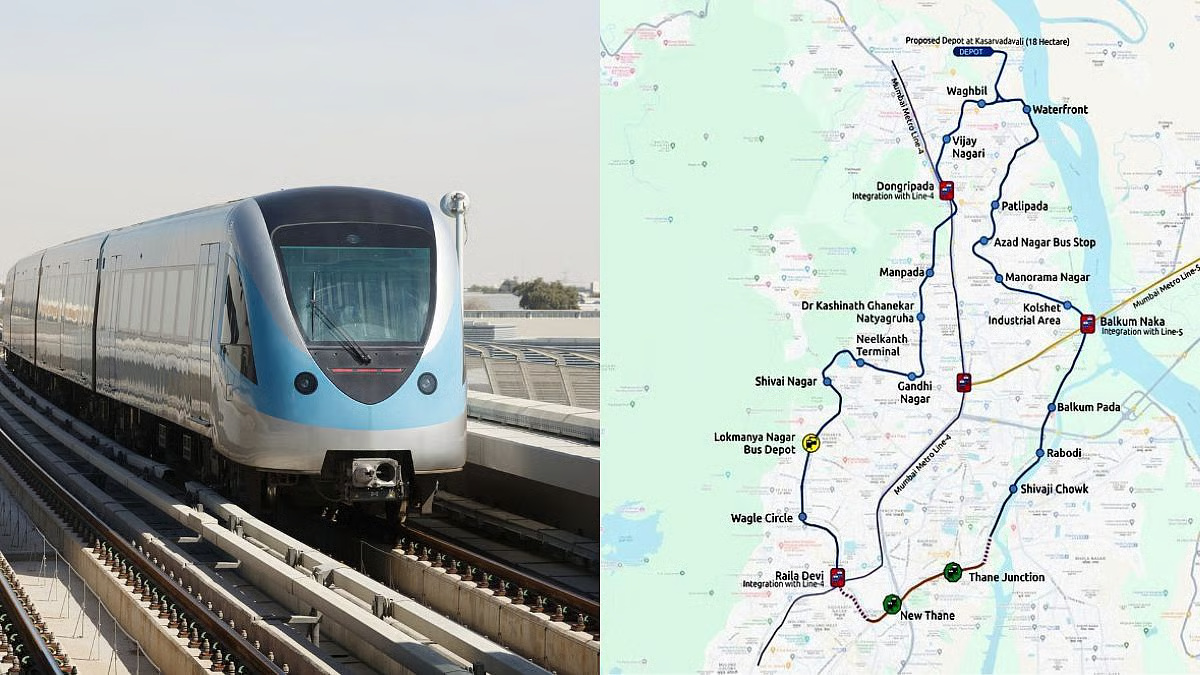
The long-delayed Metro Line 10 between Thane and Mira-Bhayander is expected to take a significant step forward, with the regional development authority preparing to float construction tenders within the next two weeks. The move comes after a high-level review meeting, signalling renewed institutional focus on improving cross-district mobility and reducing dependency on road-based travel in the congested north-western belt of the Mumbai Metropolitan Region (MMR).
The proposed 9.2-kilometre elevated corridor, stretching from Gaimukh in Thane to Shivaji Chowk in Mira-Bhayander, is considered one of the most technically complex alignments undertaken in the region. Officials involved in the review noted that the route intersects forested areas and hilly terrain, requiring a wide range of environmental permissions and design refinements before construction can formally begin. According to early estimates, the project is expected to cost around ₹8,000 crore. Technical experts engaged by the authority have highlighted specific engineering challenges, including designing adequate curves for the track and ensuring compliant vertical clearance throughout the ghat sections. These requirements may involve trimming slopes or smoothing gradients to maintain the minimum 6.5-metre height above the road level. Officials emphasised that securing all environmental and land-use clearances in advance will be crucial to preventing mid-construction delays—an issue that has historically affected several Metro lines across MMR.
The corridor has been described by planners as a transformative mobility link that could significantly ease daily travel for residents of Thane, Ghodbunder Road, and Mira-Bhayander, who currently rely on a single arterial road beset by chronic congestion. Present alternatives require long diversions through Bhiwandi or Powai, or circuitous journeys via Mumbai’s central railway and Metro networks. Once operational, the new line is expected to integrate with the broader Metro ecosystem, offering faster, cleaner, and more predictable travel across northern MMR. Officials from Thane and Mira-Bhayander municipal corporations have been asked to expedite administrative processes, particularly those related to land acquisition. An official present at the meeting said that municipal coordination will play a decisive role in keeping the project timeline on track, given the corridor’s alignment through mixed-use zones and sensitive ecological patches.
The push for Metro Line 10 aligns with the region’s broader shift towards low-carbon, high-capacity public transport. Urban mobility specialists note that enhanced rail-based connectivity remains vital for cities looking to reduce transport emissions, improve road safety, and offer equitable access to jobs and services. With construction expected to take roughly three years once work begins, stakeholders argue that early planning and community engagement will be essential to ensuring that the project delivers long-term benefits without compromising environmental safeguards. If implemented efficiently, the Thane–Bhayander link could support a more sustainable and inclusive mobility future for one of MMR’s fastest-growing commuter belts, easing pressure on roads while strengthening mass transit options for millions of daily travellers.
Thane-Bhayander Metro Line 10 Set For Tender Launch In Two Weeks