


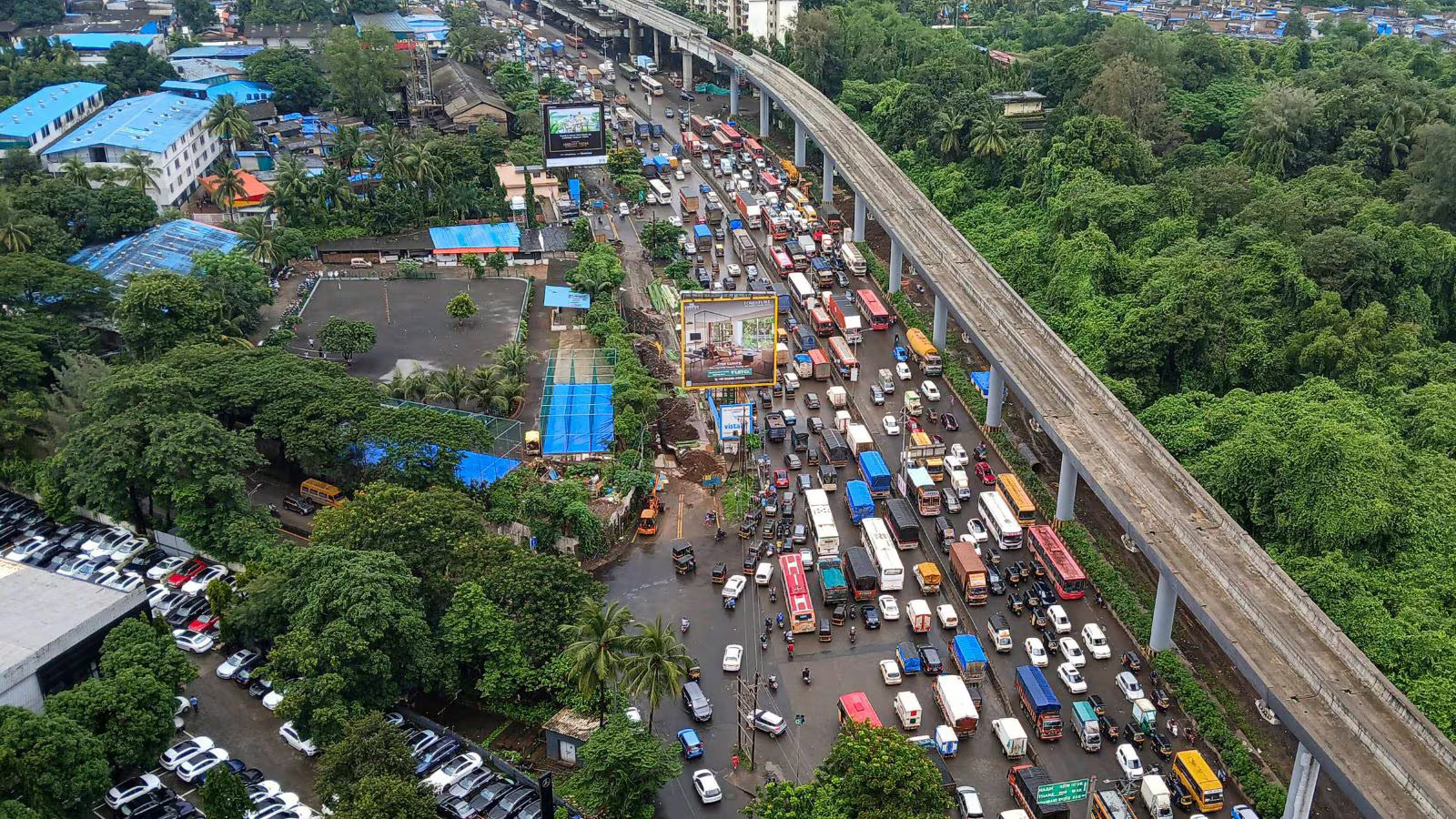
Thane’s road network is set for a significant overhaul with the approval of a new elevated corridor designed to ease chronic congestion along one of the city’s busiest arterial stretches. The 8.24-kilometre Anand Nagar–Saket link, to be executed by the metropolitan development authority, is expected to provide a signal-free connection over multiple traffic-choked junctions and bring meaningful relief for motorists travelling between Thane, Mumbai, and the wider metropolitan region.
Planned as a six-lane structure, the elevated road will run parallel to the Eastern Express Highway (EEH), beginning at Anand Nagar and ending in Saket. Officials estimate the project cost at nearly ₹1,850 crore, with construction targeted for completion by 2028. The proposal aims to bypass several conflict-heavy intersections—including Teen Hath Naka, Cadbury Junction, Nitin Junction and Golden Dyes Junction—which currently face persistent congestion despite existing flyovers. According to officials, the problem lies not in a lack of infrastructure but in unregulated merging patterns created by slip roads and service roads feeding directly onto the highway. These continual inflows cause slowdowns even during non-peak hours. By elevating through-traffic above these intersections, the new corridor is expected to reduce waiting times, improve travel reliability, and lower emissions from idling vehicles—an important step for a city grappling with deteriorating air quality.
Urban mobility experts say that elevated corridors, while often criticised for being car-centric, can offer interim relief when paired with broader efforts to strengthen public transport. One transport planner noted that “such projects must complement, not replace, investments in sustainable mobility such as metro connectivity, walking access and bus networks.” The elevated link, they added, should be supported by safe pedestrian crossings and better last-mile connectivity to avoid reinforcing automobile dependency. The Anand Nagar–Saket project forms part of a wider mobility strategy underway across Thane and its neighbouring growth centres. A proposed railway flyover connecting Retibandar to Mankoli aims to cut travel time to Dombivli to around 25 minutes, offering a faster east-west alternative for commuters. Another major proposal—a 26-kilometre double-decker corridor from Patni Chowk to Vashi, with a dedicated connector to the upcoming Navi Mumbai International Airport—seeks to streamline regional travel and reduce pressure on the Thane–Belapur Road.
Meanwhile, metro construction along the Wadala–Kasarvadavli route has reached an advanced stage and is expected to reshape east-west connectivity upon commissioning. Work is also underway to widen Ghodbunder Road by merging service lanes with the main carriageway, though residents and experts have raised safety concerns about pedestrian movement. Complementing this is a 13.44-kilometre coastal arterial road between Balkum and Gaimukh, intended to serve as an alternative parallel route and further decongest Ghodbunder Road once completed. Collectively, these projects reflect Thane’s attempt to keep pace with rising population demand and improve the efficiency of its regional transport network. The challenge, experts say, lies in ensuring that such investments support a more sustainable, low-carbon urban future rather than simply expanding road capacity. With careful integration and citizen-centric planning, the upcoming infrastructure could help ease congestion while enabling more resilient and equitable mobility across the city.
Also Read : Mumbai Report Shows One Third Citizens Still Without Reliable Public Transport Options
