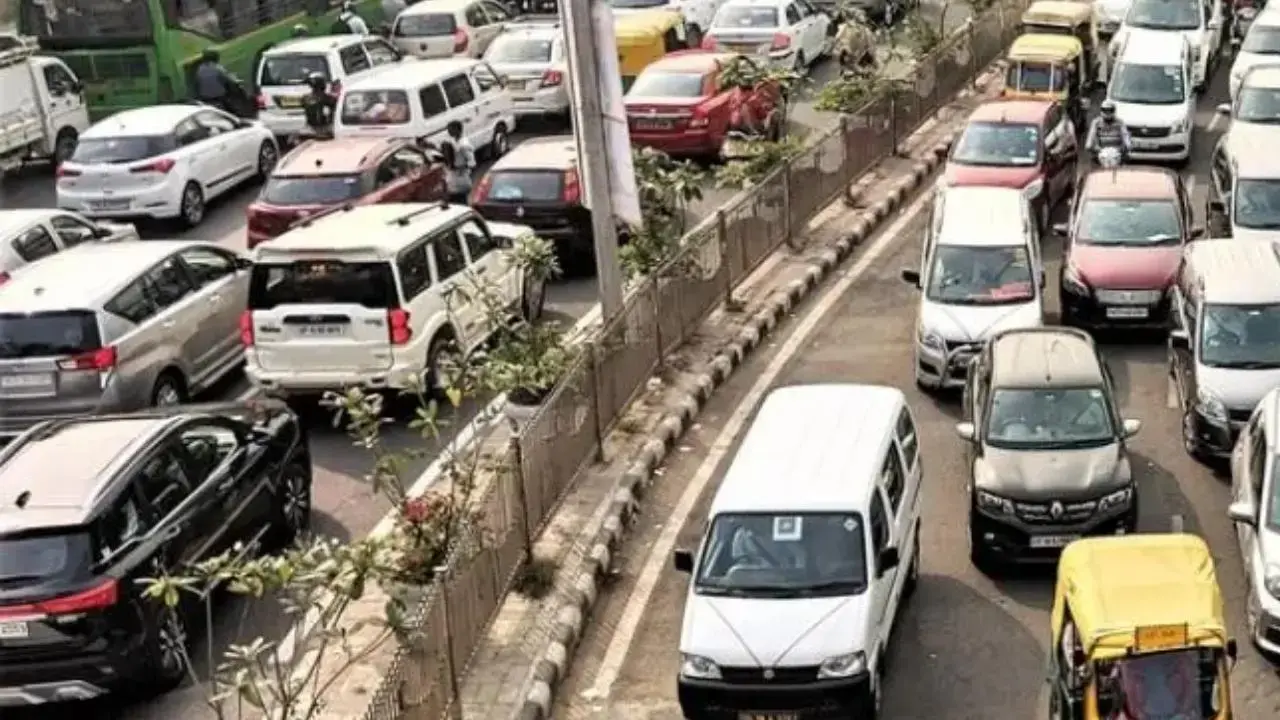
Mumbai’s western suburbs will face temporary traffic restrictions this week as the city’s election machinery moves into its most logistically intensive phase. The Mumbai Traffic Police have announced short-term road closures across parts of Kandivali and Malad to support the movement, storage and counting of electronic voting machines for the Brihanmumbai Municipal Corporation polls, a process that underpins one of India’s largest urban elections.
The measures, effective from early Wednesday through late Friday, are designed to create secure corridors around schools and public buildings designated as election hubs. These locations will handle the dispatch and retrieval of voting equipment, as well as house strong rooms where machines will be stored ahead of counting day. Traffic officials say the restrictions are preventive, intended to minimise congestion, reduce delays and ensure uninterrupted access for election personnel and emergency services. Several arterial and internal roads in Kandivali West and Malad West will be fully restricted to general traffic during the period, with access reserved for authorised vehicles linked to election duties. Commuters will need to rely on designated diversions, including alternate connections to SV Road and the use of the southbound carriageway on Marve Road, to navigate the affected zones.
Urban mobility experts note that such election-related traffic plans highlight the pressure civic processes place on dense neighbourhoods with limited road width and mixed land use. Kandivali and Malad, with their combination of residential towers, commercial strips and informal activity, already operate close to capacity during peak hours. Temporary closures, even for essential democratic functions, can ripple across local travel patterns, affecting office commutes, school transport and last-mile delivery services. From a governance perspective, the Mumbai Traffic Police’s approach reflects a growing emphasis on anticipatory traffic management rather than reactive enforcement. Senior officials involved in election planning say advance notifications and clearly marked diversions are critical to reducing emissions from idling vehicles and avoiding last-minute congestion — an increasingly important consideration as Mumbai grapples with air quality and climate resilience challenges.
Residents and businesses in the affected areas have been advised to plan movements carefully, especially during morning and evening peaks. While the restrictions are time-bound, transport planners argue that each such operation offers lessons for the city’s broader mobility strategy. Better coordination between civic agencies, clearer wayfinding and improved public transport integration could reduce dependence on private vehicles during large civic events. As counting concludes and normal traffic patterns resume, attention will shift back to everyday congestion challenges in the western suburbs.
The episode underscores a larger urban reality: in megacities like Mumbai, the smooth functioning of democratic institutions is closely tied to how well streets, neighbourhoods and transport systems are managed. Short-term disruptions may be unavoidable, but they also point to the need for more resilient, people-first urban infrastructure capable of absorbing civic demands without paralysing daily life.
Temporary Traffic Changes Announced For Kandivali Malad