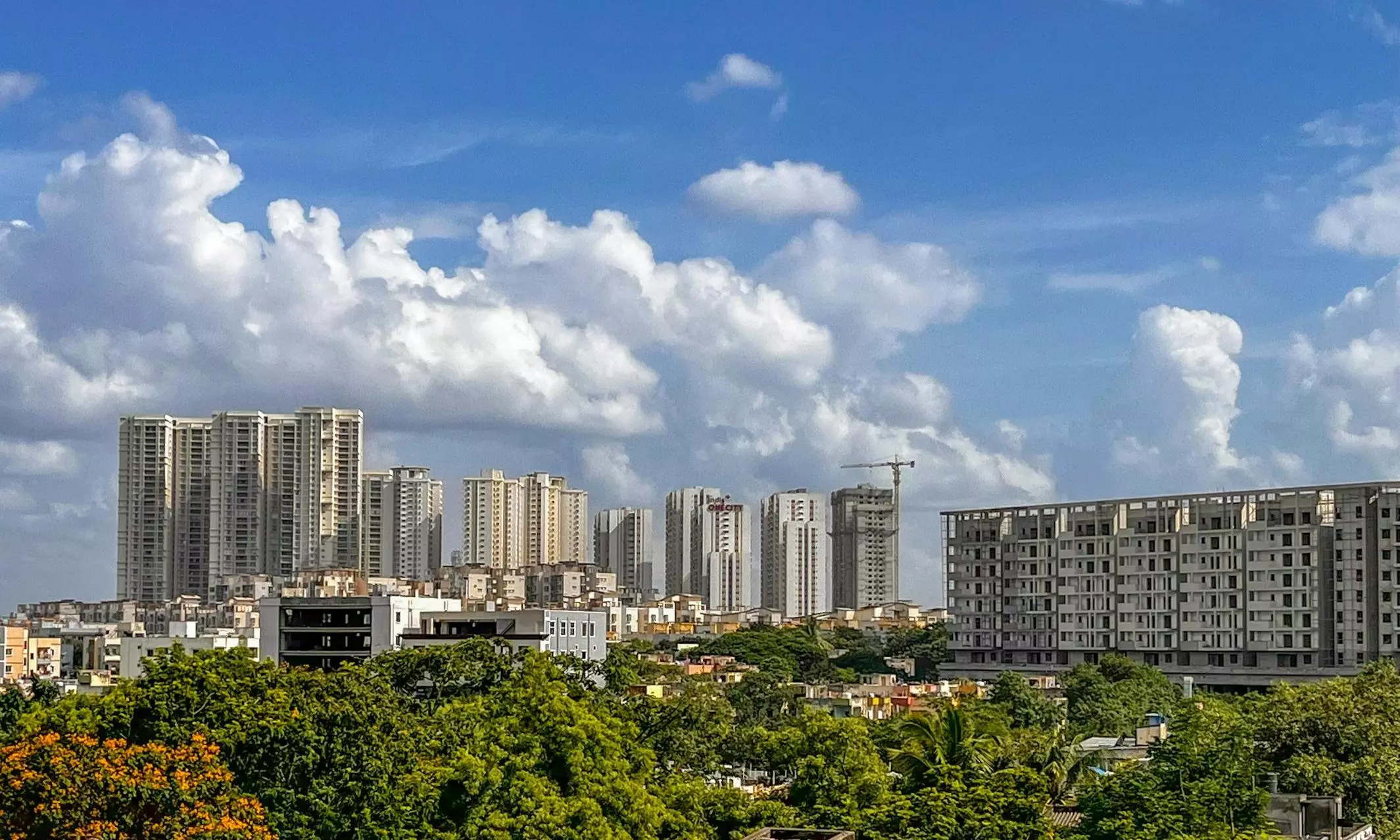
Telangana Real Estate Expands Beyond Hyderabad Core
A widening arc of housing demand across Telangana’s smaller cities is reshaping the state’s property landscape, with activity no longer concentrated around Hyderabad’s growth corridors. Fresh regulatory data and market signals indicate that Tier 2 and Tier 3 centres are emerging as significant real estate hubs, driven by infrastructure upgrades, returning migrants, and investor diversification.
At the centre of this shift is Warangal, which has seen one of the highest volumes of residential project registrations outside the capital region. Industry assessments suggest that a combination of improved connectivity, institutional development, and expanding civic infrastructure has made the city increasingly attractive for both end-users and investors. As a result, the Telangana tier two housing demand is translating into rising property values and larger-scale residential developments. Pricing trends illustrate the transition. Apartments that were once considered affordable in smaller cities are now entering mid-income urban brackets, while plotted developments and villa projects are gaining traction. Developers are also experimenting with gated communities and integrated layouts, signalling a shift in buyer expectations towards organised housing and better urban amenities.
Urban planners point out that this decentralisation could ease pressure on Hyderabad’s overstretched infrastructure. However, they caution that rapid expansion in emerging cities must be accompanied by investments in water systems, public transport, and climate-resilient planning. Without this, the Telangana tier two housing demand could replicate the same congestion and resource stress seen in larger metros. Beyond Warangal, cities such as Karimnagar, Khammam and Nizamabad are witnessing similar patterns. These locations are benefiting from highway connectivity, industrial activity, and government-backed urban development programmes. Plotted developments remain particularly popular, reflecting a cultural preference for land ownership and incremental homebuilding in smaller towns. A notable driver of this trend is the growing participation of professionals working in metropolitan centres or overseas. Many are investing in their hometowns, seeking long-term asset appreciation while maintaining regional ties.
This inflow of capital is also pushing developers to adopt more transparent practices, with increasing compliance under the state’s real estate regulatory framework.Experts say this evolution represents a structural shift rather than a temporary spike. As economic opportunities disperse and infrastructure improves, smaller cities are likely to play a larger role in accommodating population growth. For policymakers, the challenge lies in ensuring that expansion aligns with sustainable urban design, equitable access to services, and resilient infrastructure systems. If managed effectively, this broader distribution of growth could create more balanced regional development, reducing dependence on a single metropolitan engine while improving housing access across income groups.