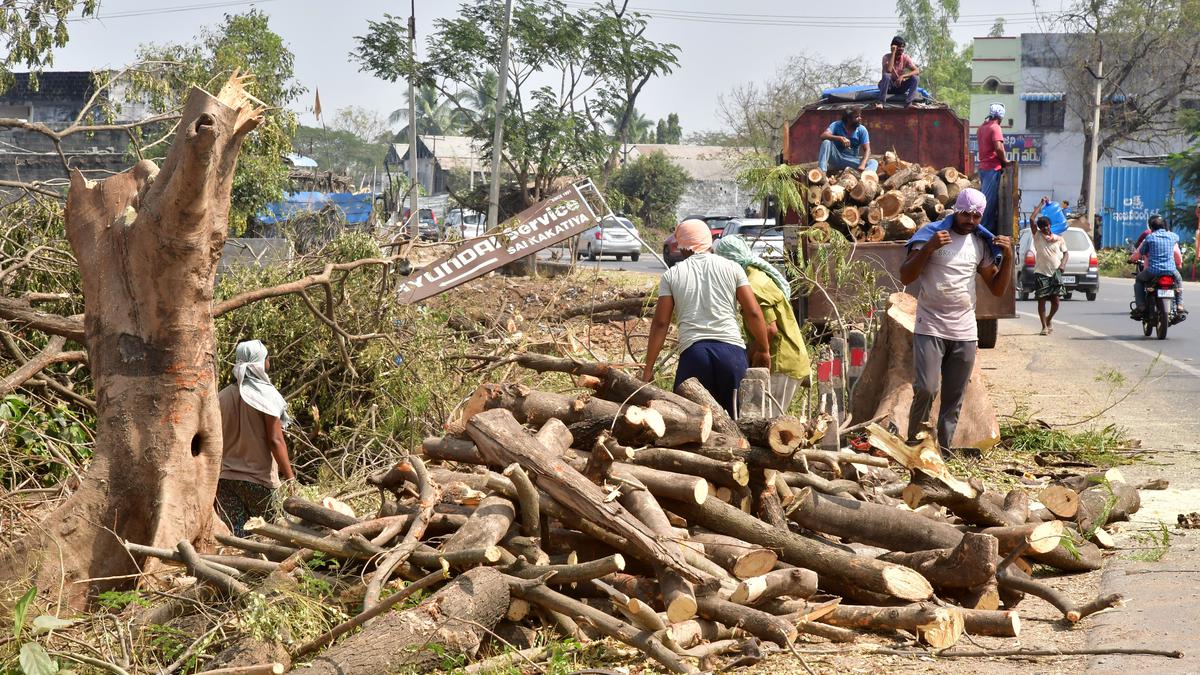
Over the past few years, Telangana has witnessed a significant loss of its natural resources, with more than 12 lakh trees being felled and 11,422 hectares of forest land diverted for various development projects.
The impact on the environment has raised alarms among environmentalists and citizens, who are concerned about the long-term ecological consequences. Between 2016 and 2019, extensive deforestation took place across the state, with trees being cut down for infrastructure projects, urban expansion, and real estate development. The scale of the deforestation has been described as one of the largest in recent history, particularly in forested areas that were home to diverse wildlife and plant species. Additionally, large tracts of forest land were diverted for projects that critics argue could have been located elsewhere, potentially minimizing the ecological damage.
One of the most alarming aspects of this loss is the decline in the state’s forest cover. Despite claims of massive plantation drives such as the Haritha Haaram initiative, satellite data reveals a worrying reduction in green cover across Telangana. The initiative, which aimed to plant hundreds of crores of saplings to combat deforestation, has faced increasing scrutiny over the years. Environmental experts point out that the benefits of such programs may be overshadowed by the large-scale land clearances and tree felling that occurred simultaneously. Projects such as the Kaleshwaram Lift Irrigation Scheme, which has cost the state over Rs 1 lakh crore, have been particularly contentious. The scheme saw the destruction of thousands of acres of forest land, much of it located in ecologically sensitive zones. Critics argue that the environmental toll of these mega-projects far outweighs the supposed benefits they were designed to provide.
The push for urban development has also seen vast areas of biodiversity-rich forests cleared for residential complexes, IT parks, and commercial developments. In places like Kokapet and Neopolis, once lush green lands were sold off for profit, generating significant revenue but at a devastating environmental cost. As Telangana continues to grapple with these challenges, the question remains whether the state can balance its development ambitions with the preservation of its ecological heritage. Experts stress the importance of long-term planning that integrates sustainable practices and prioritizes the protection of forest resources. The coming years will determine how effectively the state can reverse the damage caused by unchecked deforestation and ensure that future development projects are more mindful of environmental sustainability.
Telangana Loses 12 Lakh Trees and 11422 Hectares of Forest Land