


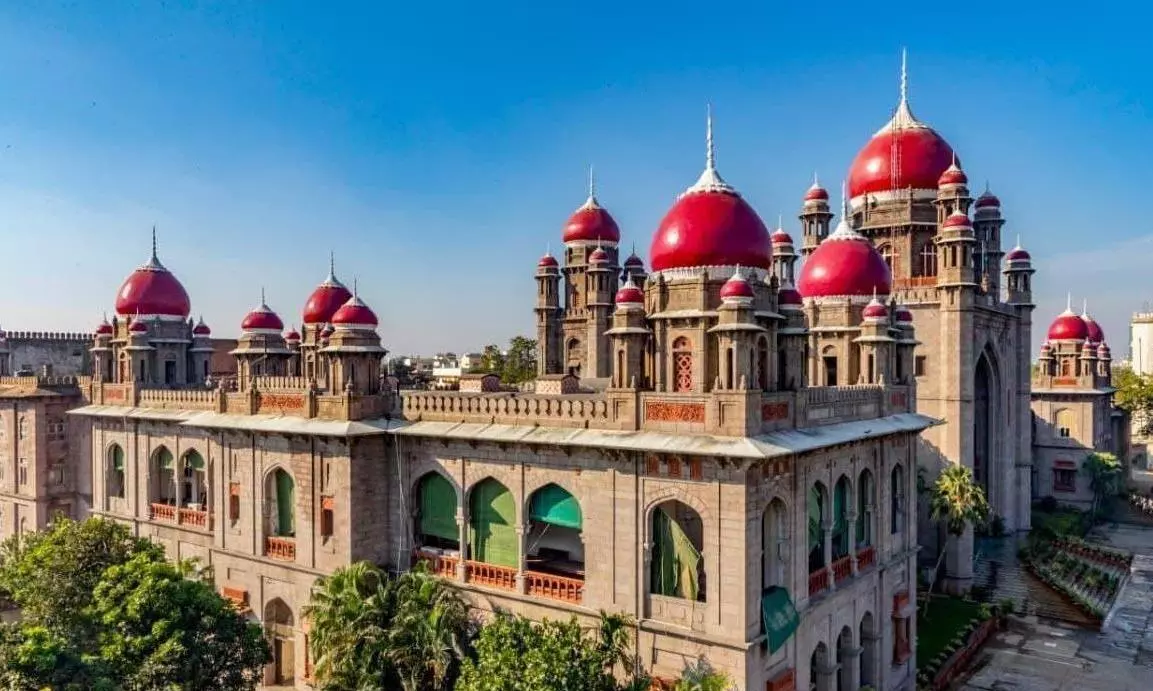
The Telangana High Court has directed the state’s municipal administration department and the Greater Hyderabad Municipal Corporation to submit detailed responses in a petition alleging delays in implementing GHMC ward delimitation across the city. The court has set strict timelines and indicated financial consequences for non-compliance, signalling judicial impatience over prolonged administrative inaction.
The case centres on the non-execution of ward restructuring within the GHMC limits, an exercise that determines electoral boundaries and directly influences civic representation, urban planning accountability and local service delivery. Petitioners have argued that ward reorganisation has not been carried out in accordance with a long-standing government order dating back to the mid-1990s.A division bench has granted three weeks for the authorities to file counter-affidavits, with a further week allowed for a rejoinder from the petitioners. The court made clear that any delay beyond the stipulated timeline would invite a monetary penalty payable to the State Legal Services Authority.
GHMC ward delimitation is not merely a procedural matter. In a metropolis that has expanded rapidly over the past two decades, population density, land use patterns and infrastructure stress vary sharply between core neighbourhoods and newly absorbed peri-urban areas. Without updated ward boundaries, disparities in representation can deepen, affecting budget allocations, local infrastructure priorities and citizen access to elected representatives.Urban governance experts note that ward delimitation plays a critical role in enabling equitable service delivery, especially in fast-growing zones where water supply, waste management and road infrastructure are under pressure. Delayed GHMC ward delimitation can also complicate long-term climate resilience planning, as ward-level data is central to disaster preparedness, flood mitigation and heat action strategies.
The issue has gained additional significance following administrative restructuring that altered the city’s internal zones. As Hyderabad’s metropolitan footprint stretches outward, integrating newly urbanised settlements into a balanced civic framework becomes essential for inclusive development. Real estate analysts observe that transparent and updated ward boundaries help improve planning certainty, which in turn supports responsible housing and commercial expansion.Officials familiar with municipal processes indicate that delimitation exercises involve demographic analysis, field surveys and public consultation, often making them politically sensitive. However, governance specialists argue that periodic boundary revision is fundamental to maintaining democratic legitimacy in urban local bodies.
The High Court’s intervention now places the spotlight squarely on the state’s approach to decentralised governance. With Hyderabad positioning itself as a technology and investment hub, institutional clarity at the ward level will shape how effectively the city manages growth while ensuring equitable access to services.As the matter returns to court in the coming weeks, the outcome could determine not only electoral mapping but also how GHMC ward delimitation aligns with the broader agenda of sustainable, people-first urban development.
Also Read: Pune Dense Zones Face Heat Stress Surge
Telangana High Court Flags GHMC Ward Delimitation
