


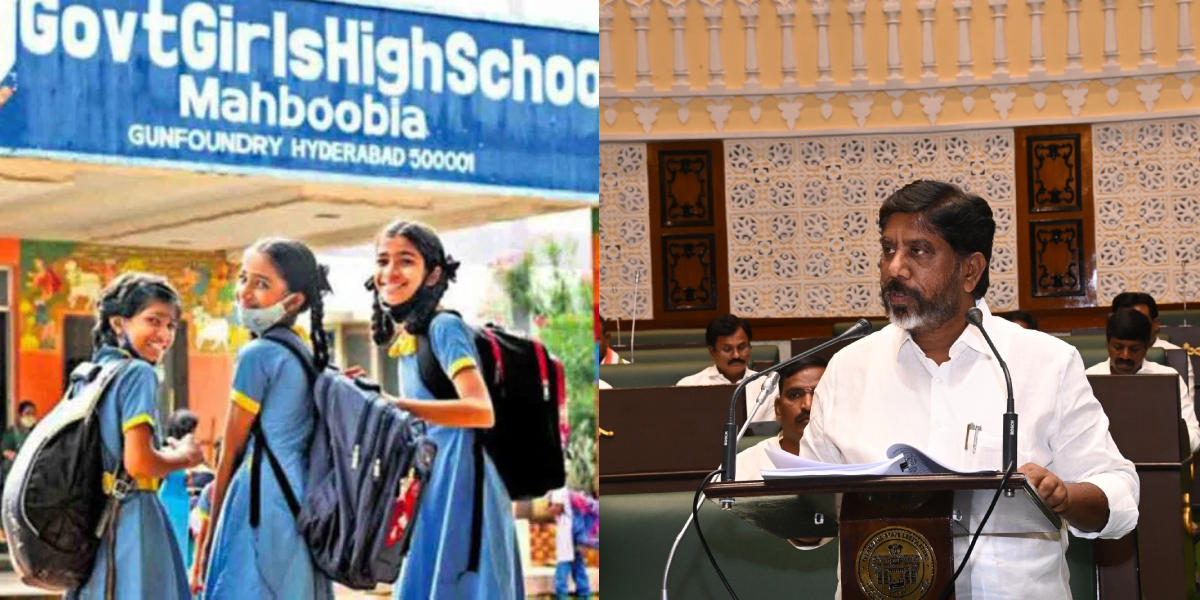
Telangana has earmarked 9 per cent of its 2025–26 expenditure towards education, placing the state below the national average and behind several large peers in proportional allocation. The latest budget figures arrive at a time when the state is positioning itself as a knowledge-driven economy, raising wider questions about how fiscal priorities align with long-term urban growth, workforce readiness and equitable development.
The Telangana education budget share becomes more complex on closer examination of accounting practices. Expenditure on residential and special schools serving Scheduled Castes and Scheduled Tribes is classified under social welfare rather than core education. While this approach reflects administrative categorisation, it reduces the apparent size of the education envelope in headline budget documents.Social welfare allocations account for roughly 8 per cent of the state’s total outlay. Even if combined with the formal education head, the cumulative proportion remains below the all-India average of 14.5 per cent. Public finance analysts note that how spending is recorded can influence perception, policy debate and investor confidence in social infrastructure.
Higher education funding patterns further illustrate the tension between ambition and allocation. A recent policy review by NITI Aayog shows Telangana committing around 2 per cent of its Gross State Domestic Product to higher education. This is modest compared with some states that spend a significantly higher share of their economic output on learning and research ecosystems.However, the same review places Telangana among leading states in per capita higher education spending. This suggests that while the proportional slice of the economy may be limited, the state channels substantial resources into universities and technical institutions relative to its population base.
Education economists argue that the debate cannot rest solely on percentages. Foundational literacy and numeracy outcomes remain uneven, especially in government schools serving low-income communities. Surveys cited by policy experts indicate that a large share of primary students struggle with basic time-reading and arithmetic tasks, highlighting systemic gaps in early learning.For a rapidly urbanising state anchored by Hyderabad’s technology and services sectors, human capital formation is critical. Education investment influences labour productivity, innovation capacity and the resilience of real estate markets tied to employment growth. School infrastructure, digital connectivity and teacher capacity also intersect with climate adaptation and sustainable city planning, as education campuses increasingly integrate energy-efficient buildings and green design.
State officials maintain that targeted welfare schemes, residential schooling models and scholarship programmes are designed to expand access among marginalised communities. Yet urban planners caution that long-term competitiveness depends on sustained, transparent and well-prioritised public investment.As Telangana prepares future budget cycles, the Telangana education budget share will remain a key metric watched by industry, civic groups and policy institutions alike. Aligning fiscal signals with the state’s aspirations for inclusive and knowledge-led growth may determine how effectively it converts demographic potential into durable economic strength.
Telangana education budget share trails peers
