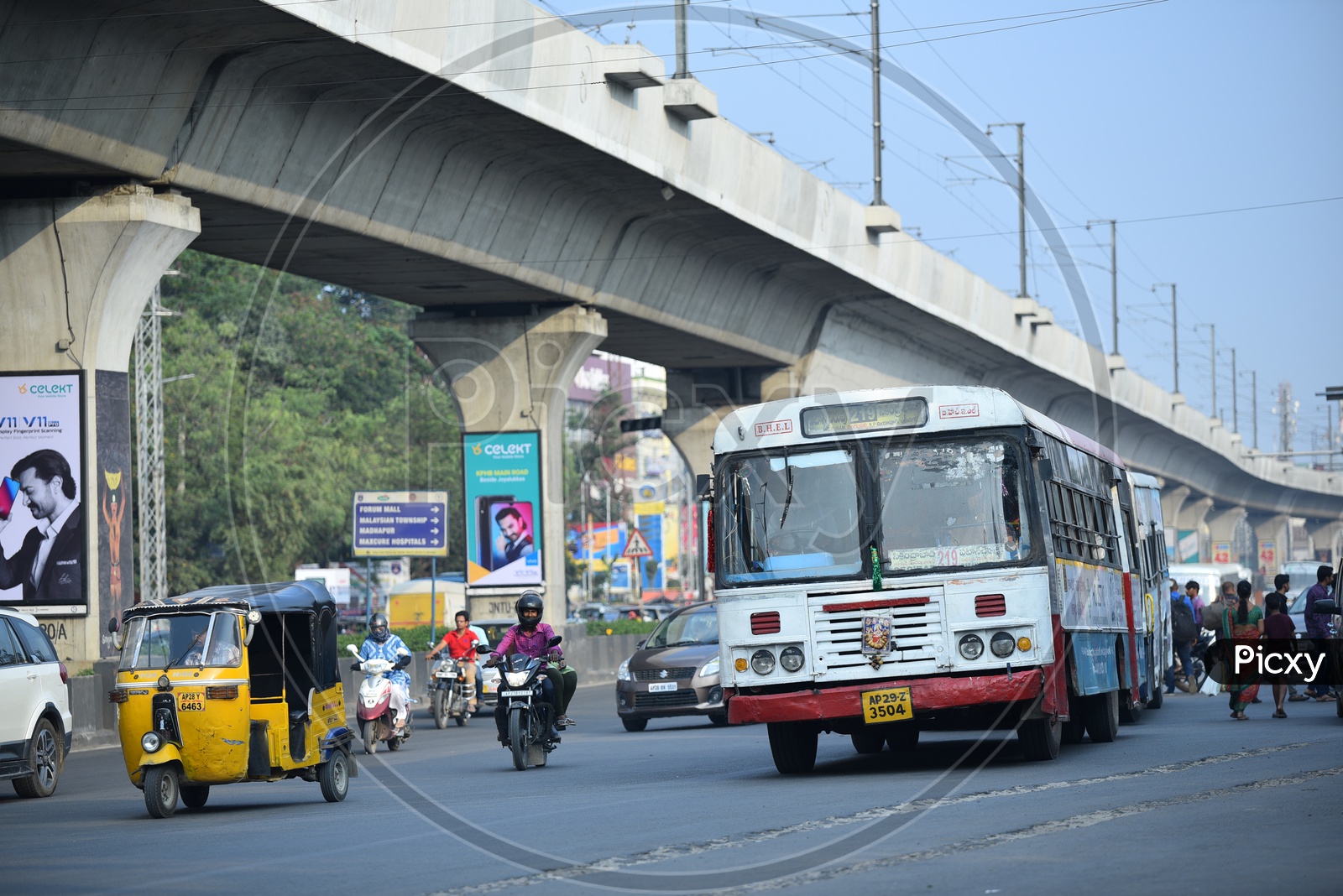
Telangana Drives New Era Of Connected Transport
Telangana has announced one of its most ambitious transport infrastructure blueprints yet, outlining a ₹60,799-crore investment plan aimed at reshaping mobility, logistics, and regional connectivity across the state. The roadmap, aligned with the government’s long-term “Telangana Rising 2047” vision, signals a pivot towards resilient and inclusive infrastructure, with projects ranging from new airports and ropeways to major highways and elevated corridors.
A two-year progress report released by the state’s Roads and Buildings Department confirms that groundwork has begun to operationalise airports in Warangal, Adilabad, and Ramagundam. Cargo services from Warangal Airport are scheduled to begin next year — a development that officials say will “strengthen local exports, support MSMEs, and position regional centres as logistics hubs rather than just feeders to Hyderabad.” Tourism and mobility at hill and heritage destinations have also received renewed focus. Ropeway systems are being planned at locations such as Yadagirigutta, Hanuman Hill (Nalgonda), Nagarjuna Sagar, and Ramgiri Fort. Urban planners note that ropeways, when designed responsibly, offer lower ecological disturbance than extensive hill road expansion while enhancing economic opportunities for surrounding communities.
Highways and long-distance mobility form a major share of the upcoming capital expenditure. A six-lane corridor is being prepared on the Hyderabad–Vijayawada stretch, while the long-awaited Regional Ring Road — estimated at ₹36,000 crore — is expected to decentralise economic activity and reduce pressure on Hyderabad’s urban core. Separately, a new elevated corridor from Mannanur to Srisailam will support religious tourism and inter-state connectivity. To ensure high-quality public roads without long-term fiscal strain, 419 road projects worth ₹11,399 crore will be developed under the Hybrid Annuity Model. According to an R&B official, this model “helps maintain road quality over the asset’s lifecycle rather than shifting full risk to the public exchequer upfront,” a shift that experts believe will help bridge urban–rural transport gaps. Since taking office, the current government has cleared 239 infrastructure works totalling ₹6,617.86 crore, covering the construction or upgrade of 1,659 km of roads and 62 bridges.
Meanwhile, public projects worth nearly ₹7,000 crore — including the High Court building complex and several medical and educational institutions — are nearing completion. Industry observers expect investment momentum to accelerate further with Telangana set to host the Indian Road Congress next year. With the state positioning itself as a future-ready gateway for trade, tourism, and equitable development, the challenge ahead will be ensuring that the massive growth in infrastructure translates into low-carbon mobility, reduced spatial inequalities, and safer transport access for all citizens — not only metro residents or industrial clusters. If executed sustainably, Telangana’s transport expansion could become a model for second-generation Indian infrastructure — one that prioritises economic opportunity while protecting people, heritage, and the environment.
Telangana Drives New Era Of Connected Transport