


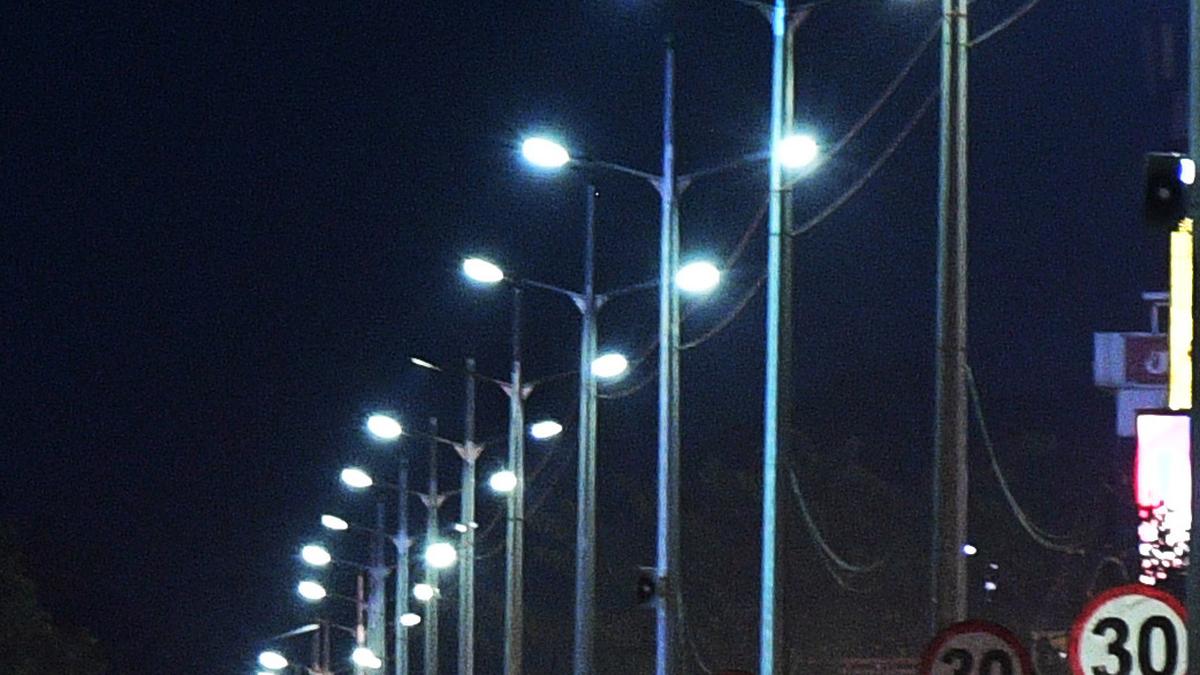
Street lighting systems across several urban centres in Telangana are facing operational stress, as thousands of LED streetlights installed over the past decade remain unrepaired or non-functional in multiple municipalities. The disruption follows the lapse of long-term operation and maintenance arrangements that underpinned one of the State’s largest energy-efficiency upgrades, raising questions around urban asset management, public safety, and fiscal planning.
The issue has surfaced most sharply outside the Greater Hyderabad region, where smaller urban local bodies depend heavily on centrally structured service contracts and State-level financial support. With maintenance responsibilities reverting to municipalities after the expiry of external agreements, many civic administrations have struggled to absorb the technical and financial burden of managing large-scale lighting infrastructure.Urban governance experts note that LED streetlights are no longer a peripheral amenity but a critical component of urban mobility and safety. Inadequate lighting affects pedestrian movement, night-time commerce, and public transport access, particularly in mixed-use neighbourhoods and peri-urban growth corridors. For women, older residents, and informal workers, poorly lit streets directly influence personal security and access to livelihoods.
The LED streetlight programme had delivered measurable economic and environmental benefits during its initial years. Statewide deployment significantly reduced peak electricity demand and lowered municipal power bills, freeing up limited urban budgets for other services. It also contributed to lower carbon emissions, aligning with India’s broader climate commitments and net-zero transition goals.However, officials familiar with municipal operations point out that the programme’s long-term sustainability depended on predictable funding flows, trained maintenance staff, and timely renewal of service contracts. In several municipalities, delayed payments, staff shortages, and the absence of dedicated lighting cells have led to extended outages and patchwork repair efforts. Temporary arrangements with local contractors have yielded uneven results, often lacking performance accountability or technical depth.
The situation is further complicated in urban areas that have undergone recent administrative restructuring. Where municipal boundaries have expanded or merged into larger corporations, clarity over asset ownership and maintenance responsibility has lagged behind physical integration. As a result, entire neighbourhoods remain caught between jurisdictions, with no agency taking full charge of lighting upkeep.From an urban development perspective, the episode highlights a recurring challenge in Indian cities: infrastructure creation often outpaces institutional capacity for long-term operations. Analysts argue that future smart city and climate-resilient infrastructure projects must embed maintenance financing, local skill development, and lifecycle accountability into project design, rather than treating them as post-completion concerns.
State-level urban planners indicate that revised maintenance frameworks and funding mechanisms are under discussion. For cities facing rapid growth and densification, restoring reliable street lighting is not only a matter of service delivery but a prerequisite for inclusive, low-carbon, and economically vibrant urban environments.
Also Read:Kolkata Real Estate Sees Major IT Asset Ownership Shift
