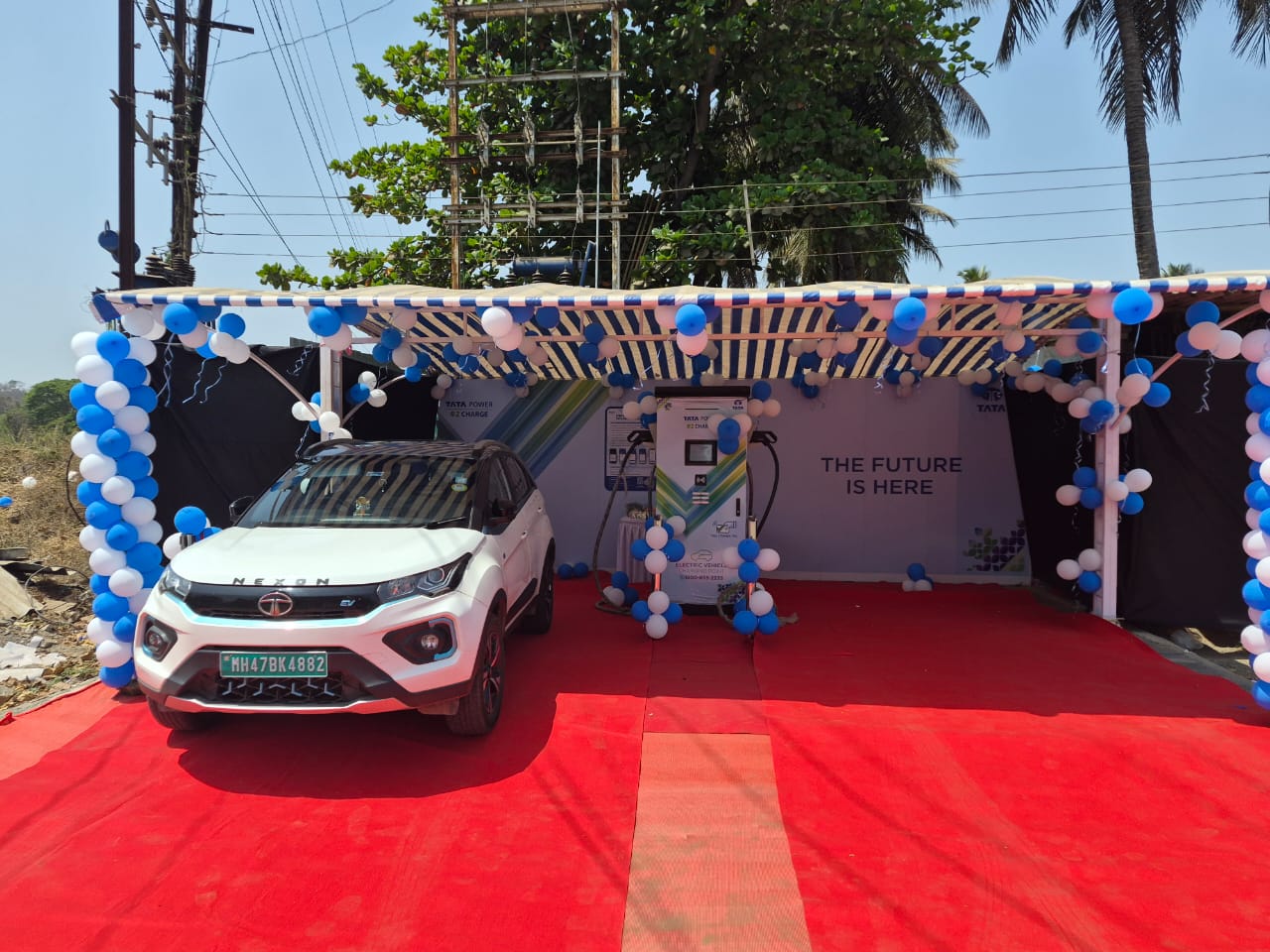
India’s push towards electric mobility is gaining momentum along intercity corridors, with Tata Power deploying a high-capacity fast charger on the NH48 Mumbai Ahmedabad Highway. The move signals a growing focus on enabling long-distance electric vehicle (EV) travel, a critical factor in accelerating adoption beyond urban centres.
The newly installed 180 kW charging unit forms part of the company’s expanding EZ Charge network, designed to support a wide range of electric vehicles across passenger and commercial segments. Located along one of India’s busiest highway stretches, the installation aims to address a persistent gap in EV infrastructure—reliable charging access during intercity journeys. Industry observers note that while EV adoption has seen rapid growth in metropolitan areas, highway infrastructure remains a bottleneck. The availability of high-speed chargers on major transport corridors is essential to reduce “range anxiety,” a key concern among potential EV buyers. With charging times estimated at under 30 minutes for partial battery replenishment, such installations improve trip feasibility for both private users and fleet operators.
The Mumbai–Ahmedabad corridor serves as a vital economic link connecting financial, industrial, and logistics hubs. By strengthening EV infrastructure along this route, the initiative aligns with broader efforts to decarbonise freight and passenger movement across high-density corridors. Urban mobility experts suggest that electrifying such routes could significantly reduce transport-related emissions, especially as traffic volumes continue to rise. Beyond individual convenience, the development has implications for regional planning and real estate. Improved EV infrastructure can influence investment patterns along highways, encouraging the growth of service hubs, logistics parks, and mixed-use developments that cater to evolving mobility needs. Experts highlight that charging infrastructure is increasingly becoming a key consideration in infrastructure-led development strategies.
The charger is also integrated with a digital platform, enabling users to locate stations, check availability, and complete transactions. This reflects a shift towards ecosystem-based mobility solutions, where infrastructure, technology, and user experience are closely interlinked. As EV networks expand, such integrations are expected to play a crucial role in ensuring efficiency and reliability. From a sustainability perspective, the deployment reinforces the role of private sector participation in advancing clean mobility goals. However, experts caution that scaling up EV infrastructure must go hand in hand with renewable energy integration to maximise environmental benefits. Without this alignment, the emissions reduction potential of electric mobility may remain partially unrealised.
As India works towards building a low-carbon transport ecosystem, the expansion of fast-charging networks on highways represents a foundational step. The effectiveness of such initiatives will depend on network density, interoperability, and long-term planning that supports both urban and intercity mobility needs.
Tata Power Expands EV Charging On Mumbai Ahmedabad Route