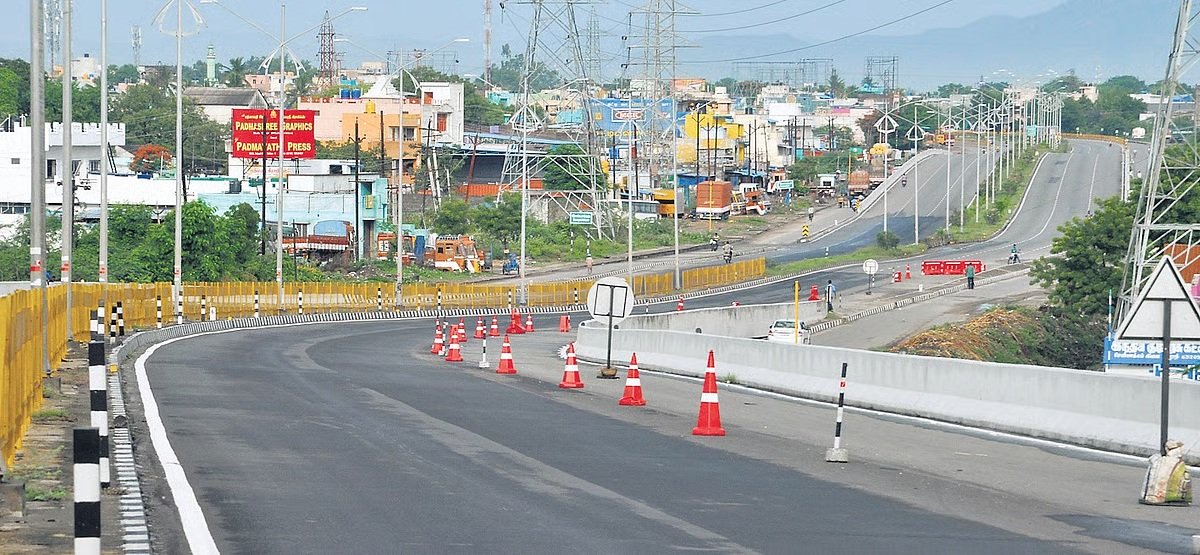
Tamil Nadu Plans New Chennai-Tiruvannamalai Highway
Chennai is set to see a major infrastructure upgrade with the Tamil Nadu government planning a new 140-kilometre expressway linking Oragadam in the city’s industrial belt to the pilgrimage town of Tiruvannamalai. Designed as a six-lane, access-controlled corridor, the project aims to halve current travel times, fostering faster passenger and freight movement while opening new avenues for economic and tourism growth.
The expressway, following a modified alignment of the previously shelved Chennai-Salem route, will connect key industrial nodes, including Cheyyar SIPCOT and Desur, with Chennai’s expanding logistics network via the Chennai Peripheral Ring Road (CPRR). Urban planners highlight that the route could become a catalyst for sustainable industrial expansion, enhancing connectivity between southern Tamil Nadu’s production centres and the Ennore and Kattupalli ports.
The project is planned in two phases. Phase I covers the 68-kilometre stretch from Oragadam to Cheyyar SIPCOT, where land acquisition is reportedly in advanced stages. Phase II will extend approximately 72 kilometres from Cheyyar SIPCOT to Tiruvannamalai, traversing 34 villages. State authorities are reviewing compensation frameworks for affected landowners, with assessments underway across multiple taluks. Transport analysts point out that this expressway could have a transformative impact on both commuter and freight efficiency. Currently, road travel between Chennai and Tiruvannamalai takes around four hours; the new alignment is expected to reduce this to roughly two hours. For industrial stakeholders, the corridor offers a streamlined route for goods movement from Cheyyar and Kancheepuram districts to northern ports, potentially reducing transport costs and easing congestion on existing highways.
From an urban development perspective, the expressway is expected to support the growth of Tiruvannamalai as a regional hub, balancing the pressure on Chennai’s urban core. Experts note that careful planning will be required to minimise environmental and social disruption, especially given the project’s passage through agricultural and semi-urban areas. Incorporating green infrastructure, such as noise barriers and tree corridors, could align the project with Tamil Nadu’s broader climate-resilient development goals. While the project remains contingent on approvals for Phase II land acquisition and tender finalisation for the first segment, government officials indicate that execution could begin within months. For citizens, logistics operators, and the tourism sector alike, the Chennai-Tiruvannamalai expressway represents a significant step towards faster, safer, and more sustainable regional connectivity.