


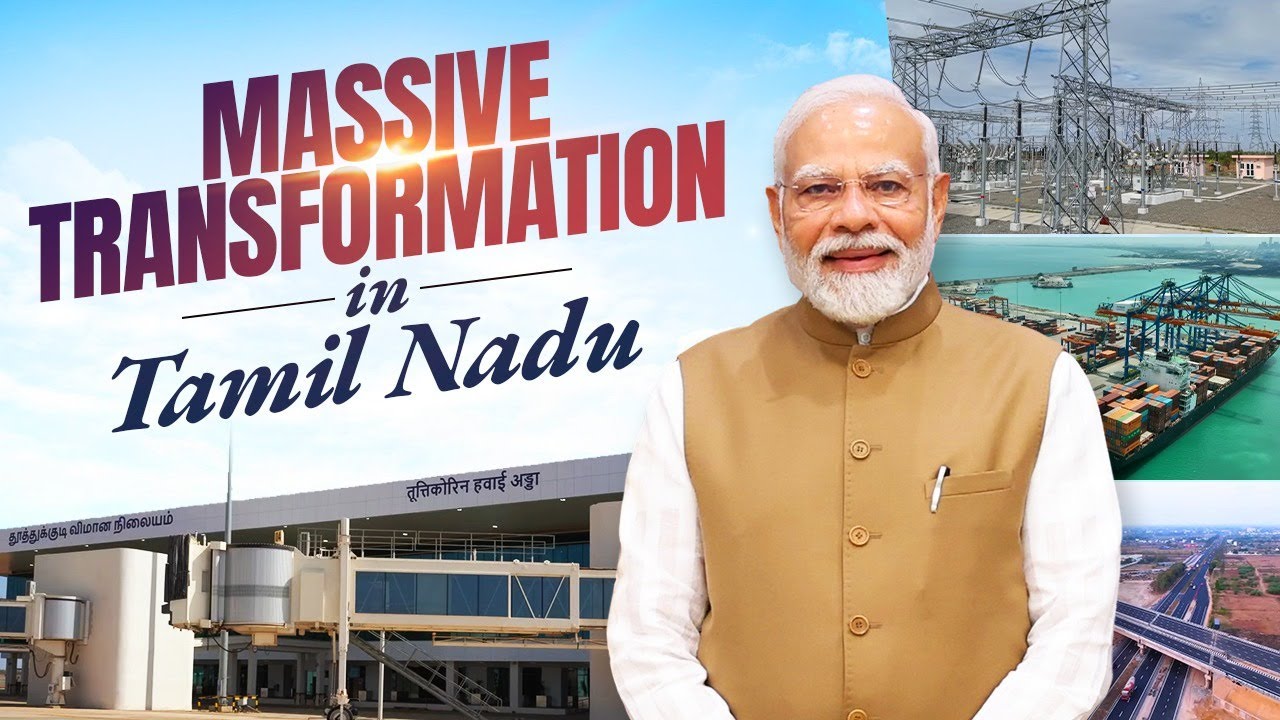
Tamil Nadu emerged at the centre of a parliamentary debate on the Union government’s Viksit Bharat Budget, with the Finance Minister outlining a series of infrastructure, manufacturing and social sector measures positioned to benefit the state’s industrial and urban economy.Responding to concerns raised in the Upper House about regional allocation patterns, the minister detailed projects spanning high-speed rail, electric vehicle manufacturing, textiles, fisheries and heritage development. The exchange underscores the growing scrutiny over how national capital expenditure translates into state-level economic momentum.
Among the headline interventions are proposed high-speed rail corridors and logistics investments intended to strengthen Tamil Nadu’s position in southern freight and passenger mobility networks. Transport economists note that improved rail connectivity can reshape land values and industrial clustering patterns, particularly around growth centres such as Chennai and Coimbatore.The budgetary emphasis on EV manufacturing support is seen as particularly significant for Tamil Nadu. The state already hosts major automotive and component supply chains, and industry analysts suggest that targeted incentives could accelerate its shift towards battery electric vehicles and allied technologies. Chennai, often described as an automobile capital, is positioning itself as both a medical services hub and an EV production centre, leveraging port access and skilled labour pools.
Textile and leather clusters in Tirupur and Coimbatore are also expected to benefit from sector-specific support measures. Export-oriented industries in these districts have been navigating global demand fluctuations and sustainability compliance pressures. Financial backing and infrastructure upgrades could enhance competitiveness while pushing factories towards cleaner production processes.The budget references rare-earth and mineral corridor development, a move aligned with India’s broader strategy to secure supply chains for clean energy technologies. If implemented with environmental safeguards, such corridors could support battery manufacturing and electronics assembly, sectors increasingly tied to climate-transition goals.
Tourism and heritage investments, including archaeological site development in southern districts, aim to expand local economic activity beyond manufacturing. Urban planners caution, however, that eco-tourism infrastructure must integrate conservation frameworks to avoid ecological degradation.Social infrastructure elements — including girls’ hostels and urban economic region planning — were also highlighted. Education-linked facilities are critical to workforce participation, particularly for women in smaller towns transitioning into industrial employment zones.
Policy analysts argue that the true impact of the Viksit Bharat Budget for Tamil Nadu will depend on execution timelines, intergovernmental coordination and private sector response. Capital announcements alone do not guarantee transformation; land acquisition, environmental clearances and financing structures often determine project viability.For Tamil Nadu, the budget signals continuity in central investment support across transport, manufacturing and social infrastructure. The coming fiscal cycle will reveal whether these commitments translate into measurable gains in employment, exports and low-carbon industrial growth.
Also Read:Mumbai SRA Probes Dharavi Housing Eligibility
