


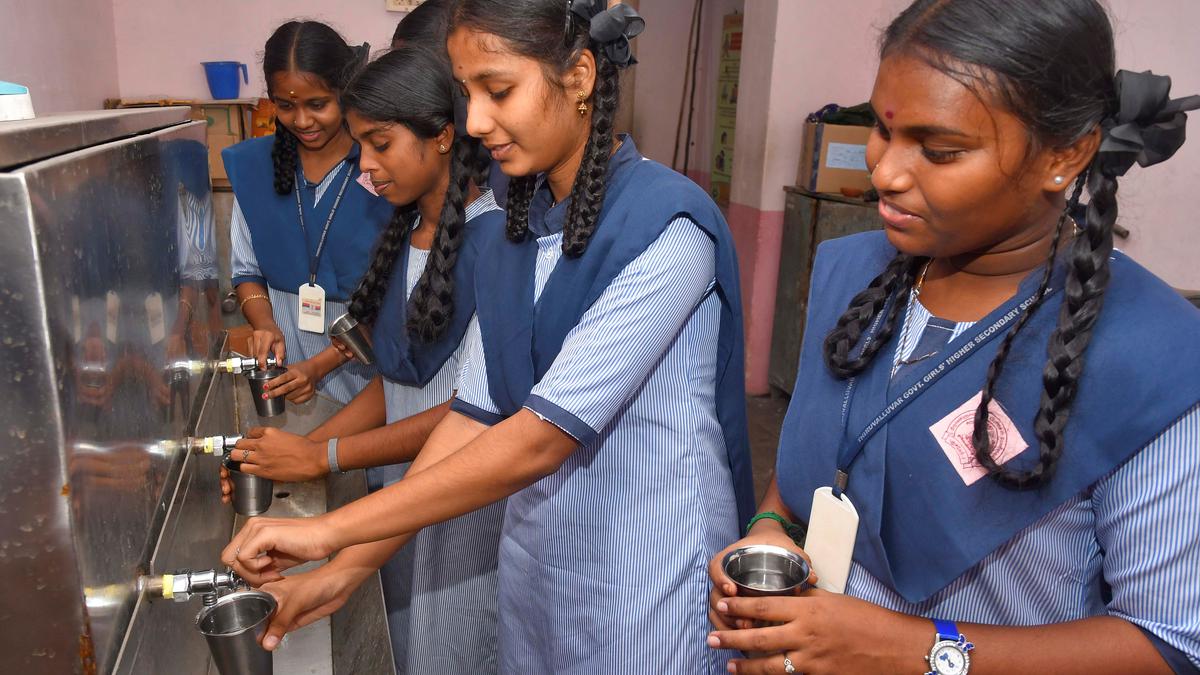
Tamil Nadu School Education Department has officially extended the innovative “Water Bell” initiative to all private schools across the state. The system, which encourages students to hydrate at regular intervals during the school day, was initially rolled out in government and aided schools. Following widespread support from parents, educators, and child health experts, the state is now making it mandatory for private institutions to follow suit.
The Directorate of Private Schools (DPS), headquartered in Chennai, has issued a circular to all District Educational Officers (DEOs), directing them to ensure that private schools adopt the system with immediate effect. The core idea is simple yet impactful—dedicated bells will ring at specific times during school hours, prompting students to pause and drink water, all without having to leave their classrooms or disrupt their learning environment.
According to the circular, students are required to bring their own water bottles from home, and school faculty will be responsible for explaining the purpose and benefits of the initiative during morning assemblies. The water bell, which is distinct from the regular recess or class-change bells, is suggested to be rung at 11 a.m., 1 p.m., and 3 p.m., though schools have the autonomy to adjust these timings based on their schedules. Teachers are instructed to allow a brief two-to-three-minute break during each interval so students can hydrate comfortably at their desks.
The Water Bell system may seem like a minor operational tweak, but experts argue it could have major health and educational benefits. Dehydration in children, even at mild levels, has been linked to reduced concentration, fatigue, irritability, and diminished cognitive function. With long school hours and rising temperatures across Tamil Nadu, many students forget—or are simply not encouraged—to drink water regularly, often returning home tired, irritable, or even suffering from headaches or dizziness.
That experience hits close to home for Coimbatore-based parent. His daughter, a Class 3 student at a private matriculation school, frequently came home visibly fatigued. “She would often skip drinking water during class because she didn’t want to interrupt lessons or ask for permission. This initiative gives children a structured reminder to stay hydrated. It’s a simple act with enormous impact,” he said. His sentiment is echoed by numerous other parents across the state who view this not only as a health measure but also a much-needed behavioural shift in the schooling environment.
The campaign owes much of its success to a proactive educators who previously advocated for the initiative in government correspondence. According to him, making hydration a non-disruptive, scheduled part of the academic day addresses a vital, often overlooked, element of student wellness. “This isn’t about bells and schedules—it’s about building lifelong health habits. Regular hydration improves brain function, attention span, and even classroom behaviour. When students are well-hydrated, they perform better,” he emphasized.
Private schools have, in many cases, already implemented similar policies on their own initiative. Officials of the Tamil Nadu Nursery, Matriculation and CBSE Schools Association, confirmed that a number of institutions had already recognized the benefits and were ahead of the mandate. “Many private schools are proactive when it comes to student well-being. The Water Bell system was already being tested in several schools and proved to be very effective in reducing complaints related to fatigue and dehydration. Making it a statewide standard only reinforces its value,” he said.
What distinguishes Tamil Nadu’s approach is the low-cost, high-impact nature of the intervention. Unlike infrastructure-heavy programs, the Water Bell system requires no new equipment, expensive materials, or structural modifications. It is grounded in behavioural nudges and mindful scheduling—a policy tool that can be scaled easily and monitored effectively. Teachers are also being briefed on their role in reinforcing hydration messages during morning assemblies and supporting students during the hydration breaks. With a simple ring of a bell, schools can embed health consciousness into the daily routine.
Despite the simplicity, implementation does bring its challenges. School administrations must ensure proper teacher training, student compliance, and infrastructure like clean drinking water where necessary. While most private schools expect students to bring their own bottles, institutions must still guarantee that clean water is accessible in case of need. The directive also places the onus on schools to create awareness among parents, ensuring that children do not forget to carry water bottles each day.
In addition to cognitive and physiological benefits, the initiative carries implications for student discipline and emotional health. Teachers have noted that when students are well-hydrated, they are less irritable, more attentive, and show greater endurance during academic and extracurricular activities. Several studies also link hydration to better mood regulation in children—especially relevant in a high-pressure academic environment where mental health concerns are increasingly surfacing.
The timing of this policy also aligns with broader shifts in India’s education and health sectors, which are gradually moving toward holistic, student-centric models. With rising awareness of child health, nutrition, and mental wellness, the Water Bell initiative positions Tamil Nadu at the forefront of practical, scalable school health innovations. It also complements existing programs like midday meals, menstrual hygiene awareness, and mental health counselling in schools.
As the Water Bell rings across thousands of classrooms in Tamil Nadu—from the rural hinterlands to elite urban institutions—the message it sends is unmistakably clear: student health is as important as academics. By prioritizing something as basic yet essential as hydration, the state is quietly reshaping the ethos of schooling—one sip at a time.
Also Read: Chennai’s Industrial Future Gets a Power Boost as Ample Parks Unveils ₹800-Crore Logistics Hub at Mahindra World City
Tamil Nadu Expands Water Bell System to Private Schools to Promote Student Hydration
